
 A SCHOLARLY BOOK REPOSITORY
9 start with E start with E
The most obvious effects will be on social programs such as public pension systems and the provision for medical needs of the elderly. But, the contributors demonstrate, aging will also affect markets for labor, capital, housing, and health care services. It will affect firms through their participation in the demand side of the labor market and through their provisions for pensions. And aging will influence saving rates, the rate of return on assets, the balance of payments, and, most likely, economic growth.
This volume will interest scholars and policy makers concerned with the economics of aging.
The Economics of Aging presents results from an ongoing National Bureau of Economic Research project. Contributors consider the housing mobility and living arrangements of the elderly, their labor force participation and retirement, the economics of their health care, and their financial status. The goal of the research is to further our understanding both of the factors that determine the well-being of the elderly and of the consequences that follow from an increasingly older population with longer individual life spans. Each paper is accompanied by critical commentary.
In New Jersey, one in five residents is over the age of 65. The Garden State’s legal and healthcare systems are becoming increasingly complex, making it more difficult than ever for seniors to understand their rights and take advantage of available assistance and services.
Elder Law in New Jersey provides important, practical information to New Jersey residents, especially older adults who have become entangled in an incomprehensible web of healthcare and social security bureaucracies, younger adults who are caregivers to elderly parents, and middle-class citizens who fear the debilitating physical and financial effects of chronic illness.
The legal problems most often encountered by seniors can involve frustrating losses of control over nearly all aspects of their lives. Attorney Alice Dueker, who specializes in elder law, explains complex legal issues in easily understood language. She looks at:
· various ways to obtain and pay for healthcare, including nursing home care
· how to create a will
· how to address and avoid internal family disputes, including child custody, marriage, divorce, grandparent visitation rights, and elder abuse
· employment issues such as age and disability discrimination, as well as pensions
· problems of consumer fraud
· housing issues for both tenants and homeowners
She provides contact information for agencies and programs that provide free or low cost services for seniors, and resources for locating attorneys.
Elder law is state specific, so New Jersey residents will find this book especially helpful and applicable to their own lives.

Winner of the Outstanding Publication Award, Section on Aging and the Life Course, American Sociological Association
Senior citizens from all walks of life face a gauntlet of physical, psychological, and social hurdles. But do the disadvantages some people accumulate over the course of their lives make their final years especially difficult? Or does the quality of life among poor and affluent seniors converge at some point? The End Game investigates whether persistent socioeconomic, racial, and gender divisions in America create inequalities that structure the lives of the elderly.
“Avoiding reductionist frameworks and showing the hugely varying lifestyles of Californian seniors, The End Game poses a profound question: how can provision of services for the elderly cater for individual circumstances and not merely treat the aged as one grey block? Abramson eloquently and comprehensively expounds this complex question.”
—Michael Warren, LSE Review of Books
“The author’s approach situates inequality experienced by older Americans in a real world context and links culture, social life, biological life, and structural disparities in ways that allow readers to understand the intersectionality of diversity imbued in the lives of older Americans…Abramson opens a window into the reality of old age, the importance of culture and the impact it has on shared/prior experiences, and the inequalities that structure them.”
—A. L. Lewis, Choice
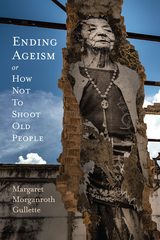
When the term “ageism” was coined in 1969, many problems of exclusion seemed resolved by government programs like Social Security and Medicare. As people live longer lives, today’s great demotions of older people cut deeper into their self-worth and human relations, beyond the reach of law or public policy. In Ending Ageism, or How Not to Shoot Old People, award-winning writer and cultural critic Margaret Morganroth Gullette confronts the offenders: the ways people aging past midlife are portrayed in the media, by adult offspring; the esthetics and politics of representation in photography, film, and theater; and the incitement to commit suicide for those with early signs of “dementia.”
In this original and important book, Gullette presents evidence of pervasive age-related assaults in contemporary societies and their chronic affects. The sudden onset of age-related shaming can occur anywhere—the shove in the street, the cold shoulder at the party, the deaf ear at the meeting, the shut-out by the personnel office or the obtuseness of a government. Turning intimate suffering into public grievances, Ending Ageism, Or How Not to Shoot Old People effectively and beautifully argues that overcoming ageism is the next imperative social movement of our time.
About the cover image:
This elegant, dignified figure--Leda Machado, a Cuban old enough to have seen the Revolution--once the center of a vast photo mural, is now a fragment on a ruined wall. Ageism tears down the structures that all humans need to age well; to end it, a symbol of resilience offers us all brisk blue-sky energy.
“Leda Antonia Machado” from “Wrinkles of the City, 2012.”
Piotr Trybalski / Trybalski.com. Courtesy of the artist.
A Declaration of Grievances
"A Declaration of Grievances" was written by Margaret Morganroth Gullette and is excerpted from her book Ending Ageism, or How Not to Shoot Old People (2017, Rutgers University Press). The poster was designed by Carolyn Kerchof.
- A Declaration of Grievances (in English): https://d3tto5i5w9ogdd.cloudfront.net/wp-content/uploads/2023/01/15175130/A-Declaration-of-Grievances_Eng.pdf
- A Declaration of Grievances (in Spanish): https://d3tto5i5w9ogdd.cloudfront.net/wp-content/uploads/2023/01/15175131/A-Declaration-of-Grievances_Spanish.pdf
- A Declaration of Grievances (in French): https://d3tto5i5w9ogdd.cloudfront.net/wp-content/uploads/2023/01/15175130/A-Declaration-of-Grievances_French.pdf
- A Declaration of Grievances (in German): https://d3tto5i5w9ogdd.cloudfront.net/wp-content/uploads/2023/01/15175131/A-Declaration-of-Grievances_German.pdf
Print the PDF (make sure to click "fit to page") and hang the Declaration up in your home or place of work. Please share this link with other people you know who care about the rights of older persons. Share on social media with the hashtags #ADeclarationOfGrievances and #EndingAgeismGullette.
For more information, an excerpt, links to reviews, and special offers on this book, go to: https://www.rutgersuniversitypress.org/ending-ageism
Related website: (https://www.brandeis.edu/wsrc/scholars/profiles/gullette.html)
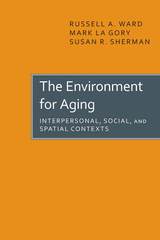
- Despite objective neighborhood problems, older persons express high neighborhood satisfaction. This partly reflects limited residential options, as well as a passive and vicarious spatial experience. The environment is experienced in diverse ways; however, urbanism and personal competence shape the nature and outcomes of person-environment interaction.
- Older persons have relatively robust interpersonal support networks. Perceived sufficiency of contact and support are more salient to morale than are more objective measures of interpersonal support.
- Although attitudes toward other older people are generally favorable, patterns of age identity reflect a detrimental view of aging. There is little evidence that socialization for aging or age-group solidarity make aging “easier” in this regard.
- Older persons exhibit moderate age homogeneity within their interpersonal networks, partly reflecting neighborhood age concentration. Contrary to the apparent benefits of planned age-segregated housing, age homogeneity in neighborhoods and networks does not contribute to well-being.
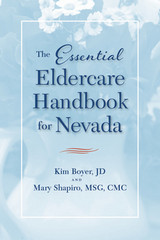
Boyer and Shapiro provide Nevada-specific information\--medical, legal, and financial\--on the wide range of problems that arise during the elder years. Case studies show how a typical family copes with troubles such as failing health or financial cares and what options they have. This guide will help any Nevada resident plan for their own senior years and take care of aging parents, spouses, and other loved ones.
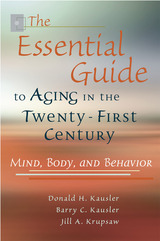
For more than a decade, The Graying of America has helped thousands of middle-aged and senior citizens find their way through the thickets and thorns of growing old. Now greatly revised and expanded to include information gleaned from studies of the past five years, this third edition has been retitled to stress its ongoing purpose: conveying a wealth of commonsense information for general readers in nontechnical language.
The book is a storehouse of concise, useful information on the effects of aging on health, the mind, and behavior. Its 588 entries (including 172 new and 150 substantially revised) cover a broad spectrum of topics—from adjusting to retirement to grandparenting, sleep disorders to Alzheimer’s disease. All are directed to the average reader; all stress successful aging and how to accomplish it.
New entries cover such topics as the incidence and causes of frailty, the cognitive benefits of diversified activity, and findings of the Women’s Health Initiative. There is new information on matters like the effects of untreated hearing impairment on spouses and the impact of insufficient exposure to sunlight on sleep, plus new insight into what to look for in searching for a quality nursing home for a loved one.
Also included are results of recent studies on interventions that help to reduce age-related declines in mental and physical health, among them revelations that reports on age-related declines in memory have been skewed by testing errors. And with memory a concern for seniors fearful of declining mental agility, the book tells how to bypass memory problems—such as how to remember where you parked your car—and how physical exercise and challenging mental games can help reduce the risk of dementia. Other “how to avoid” entries offer ways to protect against eye fatigue in computer use, hip fractures when falling, and back injuries while lifting heavy objects.
No other book is so specifically geared to the challenges of how to reduce or even eliminate many of the problems associated with growing old. Aging in the Twenty-First Century can help seniors come to grips with their own aging process—and help younger adults understand what is happening to older family members.
READERS
Browse our collection.
PUBLISHERS
See BiblioVault's publisher services.
STUDENT SERVICES
Files for college accessibility offices.
RECENTLY PUBLISHED





UChicago Accessibility Resources
home | accessibility | search | about | contact us
BiblioVault ® 2001 - 2025
The University of Chicago Press