
 A SCHOLARLY BOOK REPOSITORY
5 start with E start with E
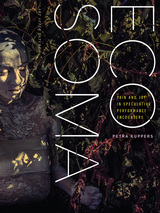
Modeling a disability culture perspective on performance practice toward socially just futures
In Eco Soma, Petra Kuppers asks readers to be alert to their own embodied responses to art practice and to pay attention to themselves as active participants in a shared sociocultural world. Reading contemporary performance encounters and artful engagements, this book models a disability culture sensitivity to living in a shared world, oriented toward more socially just futures.
Eco soma methods mix and merge realities on the edges of lived experience and site-specific performance. Kuppers invites us to become moths, sprout gills, listen to our heart’s drum, and take starships into crip time. And fantasy is central to these engagements: feeling/sensing monsters, catastrophes, golden lines, heartbeats, injured sharks, dotted salamanders, kissing mammoths, and more. Kuppers illuminates ecopoetic disability culture perspectives, contending that disabled people and their co-conspirators make art to live in a changing world, in contact with feminist, queer, trans, racialized, and Indigenous art projects. By offering new ways to think, frame, and feel “environments,” Kuppers focuses on art-based methods of envisioning change and argues that disability can offer imaginative ways toward living well and with agency in change, unrest, and challenge.
Traditional somatics teach us how to fine-tune our introspective senses and to open up the world of our own bodies, while eco soma methods extend that attention toward the creative possibilities of the reach between self, others, and the land. Eco Soma proposes an art/life method of sensory tuning to the inside and the outside simultaneously, a method that allows for a wider opening toward ethical cohabitation with human and more-than-human others.
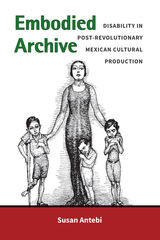
Embodied Archive focuses on perceptions of disability and racial difference in Mexico’s early post-revolutionary period, from the 1920s to the 1940s. In this period, Mexican state-sponsored institutions charged with the education and health of the population sought to strengthen and improve the future of the nation, and to forge a more racially homogeneous sense of collective identity and history. Influenced by regional and global movements in eugenics and hygiene, Mexican educators, writers, physicians, and statesmen argued for the widespread physical and cognitive testing and categorization of schoolchildren, so as to produce an accurate and complete picture of “the Mexican child,” and to carefully monitor and control forms of unwanted difference, including disability and racialized characteristics. Differences were not generally marked for eradication—as would be the case in eugenics movements in the US, Canada, and parts of Europe—but instead represented possible influences from a historically distant or immediate reproductive past, or served as warnings of potential danger haunting individual or collective futures.
Weaving between the historical context of Mexico’s post-revolutionary period and our present-day world, Embodied Archive approaches literary and archival documents that include anti-alcohol and hygiene campaigns; projects in school architecture and psychopedagogy; biotypological studies of urban schoolchildren and indigenous populations; and literary approaches to futuristic utopias or violent pasts. It focuses in particular on the way disability is represented indirectly through factors that may have caused it in the past or may cause it in the future, or through perceptions and measurements that cannot fully capture it. In engaging with these narratives, the book proposes an archival encounter, a witnessing of past injustices and their implications for the disability of our present and future.
Presenting thirteen essays, editors James C. Wilson and Cynthia Lewiecki-Wilson unite the fields of disability studies and rhetoric to examine connections between disability, education, language, and cultural practices. Bringing together theoretical and analytical perspectives from rhetorical studies and disability studies, these essays extend both the field of rhetoric and the newer field of disability studies.
The contributors span a range of academic fields including English, education, history, and sociology. Several contributors are themselves disabled or have disabled family members. While some essays included in this volume analyze the ways that representations of disability construct identity and attitudes toward the disabled, other essays use disability as a critical modality to rethink economic theory, educational practices, and everyday interactions. Among the disabilities discussed within these contexts are various physical disabilities, mental illness, learning disabilities, deafness, blindness, and diseases such as multiple sclerosis and AIDS.

READERS
Browse our collection.
PUBLISHERS
See BiblioVault's publisher services.
STUDENT SERVICES
Files for college accessibility offices.
RECENTLY PUBLISHED





UChicago Accessibility Resources
home | accessibility | search | about | contact us
BiblioVault ® 2001 - 2026
The University of Chicago Press