
 A SCHOLARLY BOOK REPOSITORY
21 start with E start with E

Economy and Society in Baroque Portugal, 1668–1703 was first published in 1981. Minnesota Archive Editions uses digital technology to make long-unavailable books once again accessible, and are published unaltered from the original University of Minnesota Press editions.
The late seventeenth century in Portugal was a period of apparent calm, and few historians have given it much attention. Portugal's Golden Age of worldwide expansion had made sixteenth-century Lisbon a great commercial center, but other European nations with more advanced economies surpassed Portugal's achievement, and during the seventeenth century agricultural, economic, and political problems all contributed to Portugal's decline. In 1668, at the conclusion of a long war with Spain to restore Portuguese sovereignty, Pedro II began a reign of 38 years, first as regent for a feckless brother ad after 1683 as king. The history of Portugal during his reign is the subject of this book.
Carl A. Hanson looks at this relatively unexamined era and finds, behind the facade of baroque calm, subtle but dramatic shifts in the socio-economic foundations of the age. In an effort to cope with economic depression Pedro's government hearkened to enthusiastic reports of Colbert's mercantile policies in France, and tried to encourage the expansion of domestic manufacturing. Linked to these efforts were attempts to curb the inquisitorial persecution of New Christian merchants. Hanson explores the motives of anti-Semitism, greed and class warfare that underlay the persecution and describes the efforts of an eloquent Jesuit, Father Antonio Vieira, to protect the New Christians from the worst excesses of the Inquisition.
The triumph of the Inquisition, and thus of the established social order, and the failure of Portugal's experiment in mercantilism coincided with a new wave of commodity-borne prosperity. After 1690, increased exports of Brazilian gold, tobacco, hides, and sugar, and of Port wine changed Portugal's economic status. With the signing of the Anglo- Portuguese treaty of Methuen in 1703, Portugal entered a gilded—if not golden—age. Yet, as Hanson makes clear, the new prosperity was deceptive, for Portugal was to slip into increasingly dependent relationships with the more advanced economies — especially England's—which absorbed great quantities of Luso-Atlantic commodities in exchange for its own manufactures. And, at home, the victorious social order, no longer threatened by a mercantile class, was to find security under an increasingly absolutist government. The reign of Pedro II is significant, then, as a period of transition when, for the first time, the foundations of the old order were threatened. The baroque facade survived but the edifice itself had begun to crumble.
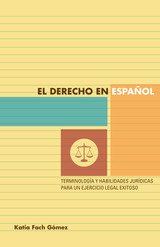
El español es el segundo idioma más hablado en el mundo. Un número creciente de personas en los Estados Unidos y en otros países son conocedores de este idioma y además lo utilizan profesionalmente en el ámbito jurídico. No obstante, a muchos de ellos les gustaría mejorar su comprensión idiomática y jurídica del mismo. En la actualidad existen pocos recursos didácticos y profesionales a los que recurrir. El derecho en español: Terminología y habilidades jurídicas para un ejercicio legal exitoso es el único libro actualmente en el mercado que ofrece al mismo tiempo instrucción avanzada en español jurídico e información selecta sobre los marcos legales contemporáneos en los que este idioma se utiliza.
Este libro monolingüe en español puede ser utilizado en el aula y también como herramienta de auto-aprendizaje por parte de universitarios y profesionales que posean un nivel intermedio de conocimiento del idioma. El libro contiene diez lecciones, cada una de ellas dedicada a un área clave del derecho: constitucional, contratos, actividades bancarias, penal, familia, inmigración, derechos humanos, litigios internacionales y arbitraje. Todas estas lecciones presentan un vocabulario escogido sobre el tema jurídico abordado en ellas, y después ofrecen una serie de ejercicios basados en documentos jurídicos reales procedentes de diversos países de habla hispana. El último capítulo es una guía para facilitar la comprensión de varias películas que contienen interesantes cuestiones legales y que pueden ser utilizadas para el análisis contextual de los temas abordados en las lecciones precedentes. A través de todos estos materiales de capacitación, los lectores aprenderán a utilizar el vocabulario español jurídico en su contexto operativo adecuado, y podrán entender las diferencias lingüísticas y conceptuales entre los distintos países de América Latina y España. Al mismo tiempo se familiarizarán con las disposiciones y los documentos más utilizados en la práctica jurídica en español. Finalmente, también podrán mejorar sus habilidades de escucha y de redacción jurídica.
Covered in this bibliography are all emblem books published from the beginning to the end of the Spanish Golden Age, as well as a wide range of secondary sources on relevant subjects, among them mythography, paradoxography, numismatics, fetes, funerals, proverbs, apothegms, antiquarianism, collecting, and pertinent studies in art history and architecture. Providing call numbers for library locations, information on facsimile reprints, and microform editions, the work is extensively indexed—by date and place of publication, by printers and booksellers, by authors and artists, and by dedicatees, as well as by subject.
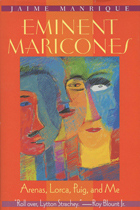
Jaime Manrique weaves into his own memoir the lives of three important twentieth-century Hispanic writers: the Argentine Manuel Puig, author of Kiss of the Spider Woman; the Cuban Reinaldo Arenas, author of Before Night Falls; and Spanish poet and playwright Federico García Lorca. Manrique celebrates the lives of these heroic writers who were made outcasts for both their homosexuality and their politics.
"Manrique's double vision yields insights into Puig, Arenas, and Lorca unavailable to a writer less attuned to the complex interplay of culture and sexuality, as well as that of race and class in Latino and Anglo societies."—George DeStefano, The Nation
"A splendid memoir of Manuel Puig. It evokes him—how he really was—better than anything I've read."—Susan Sontag
"Where Manrique's tale differs from others is in its unabashed and sensitive treatment of sexuality. One reads his autobiographical account with pleasure and fascination."—Jose Quiroga, George Washington University
"Manrique's voice is wise, brave, and wholly original. This chronicle of self-discovery and literary encounters is heartening and deep."—Kennedy Fraser
"In this charmingly indiscreet memoir, Jaime Manrique writes with his customary humor and warm sympathy, engaging our delighted interest on every page. He has the rare gift of invoking and inviting intimacy, in this case a triangulated intimacy between himself, his readers, and his memories. These are rich double portraits."—Phillip Lopate

Empire's End showcases the work of scholars of literature, cultural studies, and history, centering on four interrelated issues crucial to understanding the end of the Spanish empire: the mappings of the Hispanic Atlantic, race, human rights, and the legacies of empire.

As Brazil, Russia, India, China, and the European Union now rise in global influence, twenty leading historians from four continents take a timely look backward and forward to discover patterns of eclipse in past empires that are already shaping a decline in U.S. global power, including:
• erosion of economic and fiscal strength needed for military power on a global scale
• misuse of military power through micro-military misadventures
• breakdown of alliances among major powers
• weakened controls over the subordinate elites critical for any empire’s exercise of global power
• insufficient technological innovation to sustain global force projection.

The collection ranges across topics such as eighteenth-century sensibility, nineteenth-century concerns with the transmission of emotions, early twentieth-century cinematic affect, and the contemporary mobilization of political emotions including those regarding nonstate national identities. The complexities and effects of emotions are explored in a variety of forms—political rhetoric, literature, personal letters, medical writing, cinema, graphic art, soap opera, journalism, popular music, digital media—with attention paid to broader European and transatlantic implications.

In 1654, England’s Lord Protector Oliver Cromwell conceived a plan of breathtaking ambition: the conquest of Spain’s vast American empire. As the first phase of his Western Design, a large expedition sailed to the West Indies, under secret orders to take Spanish colonies. The English Conquest of Jamaica presents entrenched imperial fantasies confronting Caribbean realities. It captures the moment when the revolutionary English state first became a major player in the Atlantic arena.
Although capturing Jamaica was supposed to be only the first step in Cromwell’s scheme, even that relatively modest acquisition proved difficult. The English badly underestimated the myriad challenges they faced, starting with the unexpectedly fierce resistance offered by the Spanish and other residents who tenaciously defended their island. After sixteen long years Spain surrendered Jamaica and acceded to an English presence in the Americas in the 1670 Treaty of Madrid. But by then, other goals—including profit through commerce rather than further conquest—had superseded the vision behind the Western Design.
Carla Gardina Pestana situates Cromwell’s imperial project in the context of an emerging Atlantic empire as well as the religious strife and civil wars that defined seventeenth-century England. Though falling short of its goal, Cromwell’s plan nevertheless reshaped England’s Atlantic endeavors and the Caribbean region as a whole. Long before sugar and slaves made Jamaica Britain’s most valuable colony, its acquisition sparked conflicts with other European powers, opened vast tropical spaces to exploitation by the purportedly industrious English, and altered England’s engagement with the wider world.
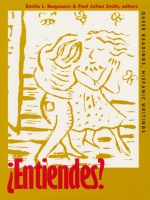
Combining intimate knowledge of Spanish-speaking cultures with contemporary queer theory, these essays address texts that share both a common language and a concern with lesbian, gay, and bisexual identities. Using a variety of approaches, the contributors tease the homoerotic messages out of a wide range of works, from chronicles of colonization in the Caribbean to recent Puerto Rican writing, from the work of Cervantes to that of the most outrageous contemporary Latina performance artists. This volume offers a methodology for examining work by authors and artists whose sexuality is not so much open as "an open secret," respecting, for example, the biographical privacy of writers like Gabriela Mistral while responding to the voices that speak in their writing. Contributing to an archeology of queer discourses, ¿Entiendes? also includes important studies of terminology and encoded homosexuality in Argentine literature and Caribbean journalism of the late nineteenth century.
Whether considering homosexual panic in the stories of Borges, performances by Latino AIDS activists in Los Angeles, queer lives in turn-of-the-century Havana and Buenos Aires, or the mapping of homosexual geographies of 1930s New York in Lorca’s "Ode to Walt Whitman," ¿Entiendes? is certain to stir interest at the crossroads of sexual and national identities while proving to be an invaluable resource.
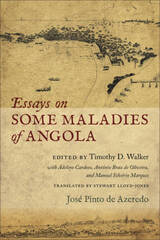
This first English-language edition of Essays on Some Maladies of Angola was translated by Stewart Lloyd-Jones (University of Stirling) and includes scholarly essays by Timothy Walker (University of Massachusetts Dartmouth), Adelino Cardoso (Universidade Nova de Lisboa), António Braz de Oliveira (Biblioteca Nacional de Portugal) and Manuel Silvério Marques (Universidade de Lisboa).

To address this oversight, Loureiro draws from his own experiences as well as from a wide range of previous theoretical works on autobiography, especially from the writings of Emmanuel Levinas, who believed that the self does not begin as a self-positing consciousness but as a response to an address from the other. On this basis, Loureiro then brilliantly traces the complex interplays between the political, discursive, rhetorical, and ethical dimensions of autobiography.
After laying out these theoretical foundations, Loureiro puts them to work in analyzing four of the most fascinating autobiographies written by Spanish exiles: The Life of Joseph Blanco White, who lived from 1775 to 1841, Memoria de la Melancolia by Maria Teresa Leon (1904-1988), Coto vedado and En los reinos de taifa by Juan Goytisolo (born 1931), and Literature or Life by Jorge Semprun (born 1923). The lives of these authors, all of whom were exiled for political reasons, were disrupted by some of the most crucial events in Spain's tortuous road to modernity and democracy.
The book closes with a discussion of why there have been so few critical examinations of autobiographies written in modern Spain. Loureiro proposes that, even in today's Spain, stifling social and political forces smother ethical responsibility, which is an essential ingredient in creating autobiographies that dare to be more than a humdrum inventory of personal recollections. Only in exile have Spanish authors seemed able to find the conditions to write their lives in a truly responsible manner. This answer to a call that grounds the subject in an other is ultimately the only form of truth available in autobiography.

Starting in the late nineteenth century, the region of South America known as the Rio de la Plata (containing modern-day Uruguay and Argentina) boasted the highest literacy rates in Latin America. In Everyday Reading, William Acree explores the history, events, and culture that gave rise to the region's remarkable progress. With a specific focus on its print culture, in the form of newspapers, political advertisements and documents, schoolbooks, and even stamps and currency, Acree creates a portrait of a literary culture that permeated every aspect of life.
Everyday Reading argues that the introduction of the printing press into the Rio de la Plata in the 1780s hastened the collapse of Spanish imperial control and played a major role in the transition to independence some thirty years later. After independence, print culture nurtured a new identity and helped sustain the region through the tumult of civil war in the mid-1800s. Acree concludes by examining the role of reading in formal education, which had grown exponentially by the early twentieth century as schoolchildren were taught to fulfill traditional roles in society.
Ultimately, Everyday Reading humanizes literary culture, demonstrating its unrecognized and unexpected influence in everyday lives.
This new edition, with additional interviews and a new introduction, illuminates the dangers of the rise of right-wing nationalist revisionism by using Spain as a case study for how nations face, or don't face, difficult questions about their past.

The first study of its kind to place the exiles' ideological evolution in a broad historical context, Exile and Cultural Hegemony takes into account developments in both Spanish and Mexican politics from the early 1930s through the 1970s. Faber pays particular attention to the intellectuals' persistent nationalism and misplaced illusions of pan-Hispanist grandeur, which included awkward and ironic overlaps with the rhetoric employed by their enemies on the Francoist right. This embrace of nationalism, together with the intellectuals' dependence on the increasingly authoritarian Mexican regime and the international climate of the Cold War, eventually caused them to abandon the Gramscian ideal of the intellectual as political activist in favor of a more liberal, apolitical stance preferred by, among others, the Spanish philosopher Jose Ortega y Gasset.
With its comprehensive approach to topics integral to Spanish culture, both students of and those with a general interest in twentieth-century Spanish literature, history, or culture will find Exile and Cultural Hegemony a fascinating and groundbreaking work.
At the end of the Spanish civil war, Mexico was the only country to offer open refuge to the thousands of Republican emigrés who fled from Spain in 1939–1940. Exiles and Citizens is a study of these political exiles, especially those with intellectual and professional backgrounds and ambitions. It focuses on their adjustment to Mexico, on their continued ties to Spain, and on their impact on Mexican development.
The critical dilemma faced by the Spanish exiles was that, despite having fought for their political and social ideals in Spain, they forfeited in exile their active role in Spanish history. In Mexico they found a political and social system that seemed to include many of the ideals that had inspired the Spanish Republic; moreover, they were able to incorporate themselves economically, professionally, and intellectually into Mexican national life. Yet, because they were not native-born citizens, they had little or no creative part to play in the politics of their adopted country.
For Mexico, the impact of the refugees from Spain was enormous. Integrated from the first into nearly all intellectual, professional, and cultural fields, their skills proved an important catalyst to Mexican development. Yet, outside these fields, Mexico was never an effective "melting pot." The Republicans themselves were divided in their loyalties, and the Mexicans, from the beginning, were reluctant to encourage the full participation of their guests in national affairs.
Two goals were shared by most of the exiles: to ensure that the world would remember the liberal, creative, and open Spain they had created and thus reject Franco; to show their gratitude by working for the benefit and progress of Mexico. These goals, although frequently contradictory, sustained the emigration and gave meaning to exile. The refugees tried to maintain their identity by coming together in formal and informal associations that were intended either to act on behalf of the homeland or to re-create the Spanish Republican structures and values in exile. To maintain a Spanish identity, however, proved difficult, and for the second and third generations in Mexico, the initial goals had already lost their meaning. For them, economic and professional, as well as familial, ties were strongly Mexican.
Spanish Republicans in Mexico represented a fairly rare phenomenon: a large group of skilled, relatively well educated immigrants to a country where persons of their attainments and status were not numerous. Moreover, as political exiles, they approached the problems of acculturation differently from economic emigrants. Patricia Fagen's study thus offers a further understanding of an important exile community and the characteristics that set it apart from other examples of immigrant experiences. In addition, the study sheds new light on the intellectual history of Mexico and the far-reaching effects of the Spanish civil war.
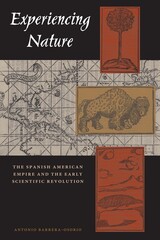
As Spain colonized the Americas during the sixteenth century, Spanish soldiers, bureaucrats, merchants, adventurers, physicians, ship pilots, and friars explored the natural world, gathered data, drew maps, and sent home specimens of America's vast resources of animals, plants, and minerals. This amassing of empirical knowledge about Spain's American possessions had two far-reaching effects. It overturned the medieval understanding of nature derived from Classical texts and helped initiate the modern scientific revolution. And it allowed Spain to commodify and control the natural resources upon which it built its American empire.
In this book, Antonio Barrera-Osorio investigates how Spain's need for accurate information about its American colonies gave rise to empirical scientific practices and their institutionalization, which, he asserts, was Spain's chief contribution to the early scientific revolution. He also conclusively links empiricism to empire-building as he focuses on five areas of Spanish activity in America: the search for commodities in, and the ecological transformation of, the New World; the institutionalization of navigational and information-gathering practices at the Spanish Casa de la Contratación (House of Trade); the development of instruments and technologies for exploiting the natural resources of the Americas; the use of reports and questionnaires for gathering information; and the writing of natural histories about the Americas.
READERS
Browse our collection.
PUBLISHERS
See BiblioVault's publisher services.
STUDENT SERVICES
Files for college accessibility offices.
RECENTLY PUBLISHED


UChicago Accessibility Resources
home | accessibility | search | about | contact us
BiblioVault ® 2001 - 2025
The University of Chicago Press