
 A SCHOLARLY BOOK REPOSITORY
18 start with F start with F
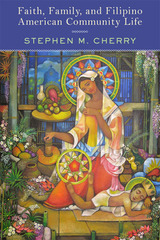
Stephen M. Cherry draws upon a rich set of ethnographic and survey data, collected over a six-year period, to explore the roles that Catholicism and family play in shaping Filipino American community life. From the planning and construction of community centers, to volunteering at health fairs or protesting against abortion, this book illustrates the powerful ways these forces structure and animate not only how first-generation Filipino Americans think and feel about their community, but how they are compelled to engage it over issues deemed important to the sanctity of the family.
Revealing more than intimate accounts of Filipino American lives, Cherry offers a glimpse of the often hidden but vital relationship between religion and community in the lives of new immigrants, and allows speculation on the broader impact of Filipino immigration on the nation. The Filipino American community is the second-largest immigrant community in the United States, and the Philippines is the second-largest source of Catholic immigration to this country. This ground-breaking study outlines how first-generation Filipino Americans have the potential to reshape American Catholicism and are already having an impact on American civic life through the engagement of their faith.

Over the past two decades, same-sex couples raising children have become more visible within US political and popular culture. Thanks to widely circulated images of well-mannered, well-dressed, and well-off two-parent families, a select number of LGBT-identified parents have gained recognition as model American citizens. In Familiar Perversions, Liz Montegary shows how this seemingly progressive view of same-sex parenting has taken shape during a period of growing racial inequality and economic insecurity in the United States. This book evaluates the recent successes of the “family equality” movement, while asking important questions about its relationship to neoliberalism, the policing of sexual cultures, and the broader context of social justice organizing at the turn of the twenty-first century.
Montegary’s investigation of the politics of LGBT family life takes us on a journey that includes not only activist events and the courtrooms where landmark decisions about same-sex families were made, but also parenting workshops, cruise ships, and gay resort towns. Through its sustained historical analysis, Familiar Perversions lays critical groundwork for imagining a queer family movement that can support and strengthen the diverse networks of care, kinship, and intimacy on which our collective survival depends.
Groves Monographs on Marriage and Familyis an edited book series based on the annual meetings of the Groves Conference on Marriage and Family, an interdisciplinary, interprofessional organization of limited invited membership founded in 1934. The Groves Monographs publishes work on the leading edges of theory development and empirical research in the field of family studies. Individual volumes are edited by the chairs of the annual Groves Conferences and include peer-reviewed chapters by the conference presenters and invited authors. Topics are timely and provocative with diverse themes.
Volume 9: Families as Sources of Strength Healing and Hope This monograph elaborates on the theme of the 2022 Groves Conference on Marriage and Family held in Paradise Island, Bahamas--- Families as Sources of Strength, Hope and Healing. The authors offer insights into and the value of employing a strengths-based mindset, whether engaging in clinical work or teaching. They also identify numerous factors which empower children, couples, and families, including things like expressing love, commitment, and relational fidelity. This volume is intended to help researchers, practitioners, and the lay public to adopt a more strengths-based and hopeful approach to relationships.



COVID-19 turned the world as we knew it upside down, impacting families around the world in profound ways. Seeking to understand this global experience, Family in the Time of COVID brings together case studies from ten countries across the world that explore how local responses to the pandemic shaped and were shaped by understandings and practices of family life.
Carried out by an international team during the first year of the pandemic, these in-depth, longitudinal, qualitative investigations examined the impact of the pandemic on families and relationships across diverse contexts and cultures. They looked at how families made sense of complex lockdown laws, how they coped with collective worry about the unknown, managed their finances, fed themselves, and got to grips with online work and schooling to understand better how life had transformed (or not). In short, the research revealed their everyday joys and struggles in times of great uncertainty.
Each case study follows the same methodology revealing experiences in Argentina, Chile, Pakistan, Russia, Singapore, South Africa, Sweden, Taiwan, the United Kingdom, and the United States. They show how local government responses were understood and responded to by families and how different cultures and life circumstances impacted everyday life during the pandemic. Ultimately the analysis demonstrates how experiences of global social upheaval are shaped by international and local policies, as well as the sociocultural ideas and practices of diverse families.
The authors reveal that parents are not dependent on help from their grown children, as was previously assumed; in fact they contribute more assistance than they receive until the age of seventy-five. Also, while daughters are still the dominant caregivers, other forms of support like visiting and providing transportation are given almost equally by sons and daughters.
Logan and Spitze also report that even though the day-to-day demands on adult children have increased with the changing economy, very few seem to be torn between these responsibilities and those those of caring for their parents. This book offers reassuring news about the strength of the American family in the midst of social change. Family Ties will be a valuable resource for anyone interested in intergenerational relationships in adulthood.
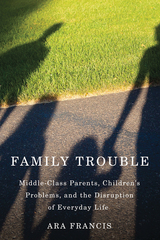
Francis interviewed the mothers and fathers of children with such problems as depression, bi-polar disorder, autism, learning disabilities, drug addiction, alcoholism, fetal alcohol syndrome, and cerebral palsy. Children’s problems, she finds, profoundly upset the foundations of parents’ everyday lives, overturning taken-for-granted expectations, daily routines, and personal relationships. Indeed, these problems initiated a chain of disruption that moved through parents’ lives in domino-like fashion, culminating in a crisis characterized by uncertainty, loneliness, guilt, grief, and anxiety. Francis looks at how mothers and fathers often differ in their interpretation of a child’s condition, discusses the gendered nature of child rearing, and describes how parents struggle to find effective treatments and to successfully navigate medical and educational bureaucracies. But above all, Family Trouble examines how children’s problems disrupt middle-class dreams of the “normal” family. It captures how children’s problems “radiate” and spill over into other areas of parents’ lives, wreaking havoc even on their identities, leading them to reevaluate deeply held assumptions about their own sense of self and what it means to achieve the good life.
Engagingly written, Family Trouble offers insight to professionals and solace to parents. The book offers a clear message to anyone in the throes of family trouble: you are in good company, and you are not as different as you might feel...

This book examines Fanti kinship terminology from a variety of analytic and formal perspectives. Based on work with a broad number of informants, David B. Kronenfeld details and analyzes internal variation in usage within the Fanti community, shows the relationship between terminology and social groups and communicative usage, and relates these findings to major theoretical work on kinship and on the intersections of language, thought, and culture.
The terminological analysis in this study employs a great variety of formal approaches, assesses the strengths and weaknesses of each approach, and covers a wide range of types of usage. This work also performs a systematic, formal analysis of behavior patterns among kin, joining this approach with the analysis of a kinship terminological system. Rather than treating kinship terminology as a special, isolated piece of culture, this study also ties its analysis to more general semantic and cultural theoretical issues. Including computational and comparative studies of kinship terminologies, this volume represents the fullest analysis of any kinship terminological system in the ethnographic record.

By taking us inside the prison system, Nurse shows how its structure actively shapes an inmate's relationship with his children. For example, visitation is sometimes restricted to blood relatives and wives. Because relationships between unmarried men and the mothers of their children are often strained, some mothers are unwilling to allow their children to go to the prison with the inmate's family. Or the father may be allowed to receive visits from only one "girlfriend," which forces a man with multiple relationships, or with children by different women, to make impossible choices. Special attention is paid to the gendered nature of prison, its patriarchal and punitive structure, and its high-stress environment. The book then follows newly paroled men as they are released and return to their children.
The author spent four years doing research at the California Youth Authority, during which time she surveyed 258 paroled fathers. The group included young white, black, and Latino men, ages sixteen to twenty-five. She conducted in-depth interviews with men selected from this group, participated in forty parenting class sessions, and observed visiting hours at three different institutions. The data provide fascinating information about the characteristics of the men, their attitudes toward fatherhood, and the ways they are involved with their children. The diversity of the fathers allows for an analysis of racial and ethnic variation in their attitudes and involvement. The study concludes with a series of policy suggestions, especially important in light of the large number of fathers now living under the care and control of the juvenile justice system.
2026 Best Book Award, Association for Borderlands Studies
2023 Finalist, Best Academic Themed Book, College Level – English, International Latino Book Awards
A contemplative exploration of cultural representations of Mexican American fathers in contemporary media.
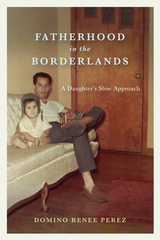
As a young girl growing up in Houston, Texas, in the 1980s, Domino Perez spent her free time either devouring books or watching films—and thinking, always thinking, about the media she consumed. The meaningful connections between these media and how we learn form the basis of Perez’s “slow” research approach to race, class, and gender in the borderlands. Part cultural history, part literary criticism, part memoir, Fatherhood in the Borderlands takes an incisive look at the value of creative inquiry while it examines the nuanced portrayal of Mexican American fathers in literature and film.
Perez reveals a shifting tension in the literal and figurative borderlands of popular narratives and shows how form, genre, and subject work to determine the roles Mexican American fathers are allowed to occupy. She also calls our attention to the cultural landscape that has allowed such a racialized representation of Mexican American fathers to continue, unopposed, for so many years. Fatherhood in the Borderlands brings readers right to the intersection of the white cultural mainstream in the United States and Mexican American cultural productions, carefully considering the legibility and illegibility of Brown fathers in contemporary media.
Unlike previous investigations that rely on literary or other secondary sources, Fatherhood Politics works from primary ethnographic material to represent a wider range of voices and actors. Interacting with and interviewing members of the most powerful and well-known national fatherhood organizations, Gavanas observed Promise Keeper rallies, men's workshops, and conferences on masculinity, fatherhood, and marriage.
Providing a detailed overview of the different organizations involved and their various rhetorical strategies, Gavanas breaks down the FRM into two major wings. The "pro-marriage" wing sees marriage as the key to solving all social problems, while the "fragile family" organizations worry about unemployment, racism, and discrimination. Gavanas uses her extensive anthropological fieldwork as the basis for discussions of gender, sexuality, and race in her analysis of these competing voices.
Taking us inside the internal struggles, tensions, and political machinations of the FRM, Gavanas offers a behind-the-scenes look at a movement having real impact on current social policy. Fatherhood Politics is an essential work for anyone interested in the politics of masculinity, parenthood, marriage, race, and sexuality.
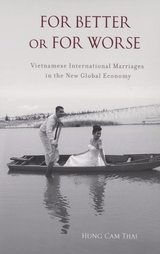
In For Better or For Worse, Hung Cam Thai takes a closer look at marriage and migration, with a specific focus on the unions between Vietnamese men living in the United States and the women who marry them. Weaving together a series of personal stories, he underscores the ironies and challenges that these unions face. He includes the voices of working-class immigrant men dealing with marginalization in their adopted country. These men speak about wanting "traditional" wives who they hope will recognize their gendered authority. Meanwhile, young Vietnamese college-educated women, undesirable to bachelors in their own country who are seeking subservient wives, express a preference for men of the same ethnicity but with a more liberal outlook on gender-men they imagine they will find in the United States.
A sense of foreboding pervades the book as Thai captures the incompatible viewpoints of the couples who appear to be separated not only geographically but ideologically.
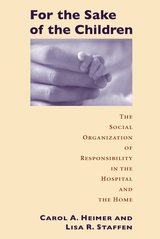
Rather than treating responsibility as an ethical issue, the authors focus on how responsibility is socially produced and sustained. The authors ask: How do staff members encourage parents to take responsibility, but keep them from interfering in medical matters, and how do parents encourage staff vigilance when they are novices attempting to supervise the experts?
The authors conclude that it is not sufficient simply to be responsible individuals. Instead, we must learn how to be responsible in an organizational world, and organizations must learn how to support responsible individuals.

“Bottom line is, I’m the kind of guy who’s happy to go to the opera, but I should like to be allowed to wear steel-toed boots with my evening suit. I like to read Harper’s with a chaser of Varmint Hunter Magazine. Maybe that’s why I enjoy a good show under canvas. Here we sit, brain-deep in arts and culture, but we’re also just people hanging out in a tent, some of us wearing boots, a few of us wearing Birkenstocks, but best of all we’re breathing free fresh air filled with music.”
From Scandihoovian Spanglish to snickering chickens, New York Times bestselling author and humorist Michael Perry navigates a wide range of topics in this collection of brief essays drawn from his weekly appearances on the nationally syndicated Tent Show Radio program. Fatherhood, dumpster therapy, dangerous wedding rings, Christmas trees, used cars, why you should have bacon in your stock portfolio, loggers in clogs—whatever the subject, Perry has a rare ability to touch both the funny bone and the heart.
READERS
Browse our collection.
PUBLISHERS
See BiblioVault's publisher services.
STUDENT SERVICES
Files for college accessibility offices.
RECENTLY PUBLISHED




UChicago Accessibility Resources
home | accessibility | search | about | contact us
BiblioVault ® 2001 - 2026
The University of Chicago Press