
 A SCHOLARLY BOOK REPOSITORY
8 start with F start with F
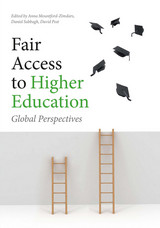
Fair Access to Higher Education addresses this challenge from a broad, transnational perspective. The chapters in this volume contribute to our thinking and reflection on policy developments and also offer new empirical findings about patterns of advantage and disadvantage in higher education access. Bringing together insights drawn from a variety of fields, including philosophy, linguistics, social psychology, sociology, and public policy, the book sheds light on how “fairness” in university admissions has been articulated worldwide.
An insightful, wide-ranging analysis of the economic hurdles facing America’s higher education system.
The US higher education sector faces numerous economic challenges, including the stagnating number of college-age domestic students, geographic mismatch between population growth and the location of colleges and universities, financial pressures, including cutbacks in government support, growing student debt burdens, sticker prices that deter prospective applicants, and the risk of low capital market returns on endowment portfolios. This volume analyzes the responses of students, families, and the financial managers of higher education institutions to these challenges. It presents new insights into the substantial disparities in the financial structure of, and the financial challenges facing, different types of institutions. The volume draws together contributions from financial economics, public finance, and industrial organization, as well as the economics of education.
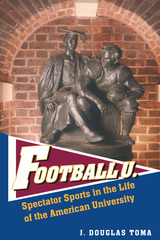
While abuses exist, the "football school" is not only a legitimate member of the academic community but an inevitable one as well--and football provides much-needed identity at every level from the local to the national scale. Pointing out that universities compete as much academically as athletically, J. Douglas Toma argues that fielding a winning sports team is a quick, effective way to win recognition and that doing so pays dividends across the board, by raising public awareness (thereby making a school more attractive to potential students and faculty) and by creating a wider constituency of "fans" whose loyalties pay off in increased contributions and appropriations that support academic programs as well. He notes that universities like Harvard and Yale, now eclipsed on the gridiron, were "football powers" in the era when America's westward expansion spawned new schools unable to challenge older institutions academically but able to win acclaim through sports. This fosters a campus and alumni culture based on "football Saturday"--a bonding experience that helped forge a larger community whose support, both personal and financial, has become integral to the life of the institution.
Football U. brings welcome impartiality to a subject all too often riven by controversy, pitting football boosters against critics who complain that academic achievement takes second place to athletic success. But as a tool for creating "brand awareness" as well as local loyalty and widespread support, high-profile athletic programs meet a variety of institutional needs in ways no other aspect of university life can. This, Toma observes, is a two-edged sword, for even as it fosters collegiality, it discourages reform when the pendulum swings too far in the direction of athletic dominance. Nevertheless, Football U. is here to stay.
J. Douglas Toma is Director and Senior Fellow, The Executive Doctorate and Penn Center for Higher Education Management, the University of Pennsylvania's Graduate School of Education.
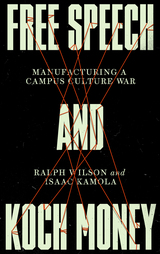
In recent years hundreds of high-profile ‘free speech’ incidents have rocked US college campuses. Milo Yiannopoulos, Ben Shapiro, Ann Coulter and other right-wing speakers have faced considerable protest, with many being disinvited from speaking. These incidents are widely circulated as examples of the academy’s intolerance towards conservative views.
But this response is not the spontaneous outrage of the liberal colleges. There is a darker element manufacturing the crisis, funded by political operatives, and designed to achieve specific political outcomes. If you follow the money, at the heart of the issue lies the infamous and ultra-libertarian Koch donor network.
Grooming extremist celebrities, funding media platforms that promote these controversies, developing legal organzations to sue universities and corrupting legislators, the influence of the Koch network runs deep. We need to abandon the ‘campus free speech’ narrative and instead follow the money if we ever want to root out this dangerous network from our universities.

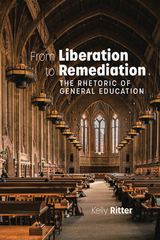
Kelly Ritter addresses how lawmakers, for-profit testing companies, and even universities fuel public misconceptions of what Gen Ed can provide for our democracy and the role that a broad-based college education plays in social uplift. Tracing the history of the public rhetoric that persuades parents and students to see these courses as a set of interchangeable precollege credits to gain (or game) by any means necessary, she examines how positive and negative public responses to the curricula affected the position of core subjects in US universities, focusing on first-year writing. She also explores the role local, state, and organizational politics played in Gen Ed’s positioning, including decisions related to race, social class, and educational attainment; the impact credit-by-exemption and seamless transfer had on the quality and import of Gen Ed programming in both high schools and colleges; and the perceived use-value of the courses themselves in the face of rising college costs. Finally, she considers which student populations have benefited from the denigration of Gen Ed’s value and which have been left behind.
Drawing on archival research and case studies, From Liberation to Remediation raises important questions about equity, access, and the role of General Education in US higher education’s future and demonstrates that recovering the original post-war democratizing principles and practices of Gen Ed is critical to the continuance of a literate, empathetic, and civic-minded democracy for the twenty-first century.
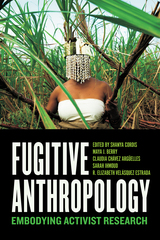
A personal, provocative, and boundary-breaking volume on the power relations that racialized, gendered, and sexualized researchers grapple with while conducting activist research.
Fugitive Anthropology is a transnational, intergenerational engagement that extends feminist theory, activist research methodologies, and the discipline of anthropology in new directions. Contributors examine the tensions that arise from conducting politically engaged, collaborative research alongside communities in struggle, in particular theorizing from the experiences of racialized women, queer, trans, and gender nonconforming researchers across distinct geographies. Essays contend with the matrices of colonial, imperial, and patriarchal violence that afflict the researchers and communities with which they seek political alignment.
Articulating an ethnographic practice grounded in Black and Indigenous political struggles and committed to collective liberation, the volume reflects on what it means to navigate violent relations of power, systemic inequities, and current onslaughts shaping field research and US academia. Ultimately, Fugitive Anthropology argues that a feminist ethos—one that embraces embodied knowledges and fugitive sensibilities—forges liberatory spaces that break from dominant masculinist frames of the “political” and challenge colonial regimes within and beyond the neoliberal university.
READERS
Browse our collection.
PUBLISHERS
See BiblioVault's publisher services.
STUDENT SERVICES
Files for college accessibility offices.
RECENTLY PUBLISHED






UChicago Accessibility Resources
home | accessibility | search | about | contact us
BiblioVault ® 2001 - 2025
The University of Chicago Press