
 A SCHOLARLY BOOK REPOSITORY
106 start with G start with G
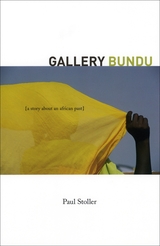
In Paul Stoller's work of fiction framed by African storytelling, David is the 52-year-old co-owner of Gallery Bundu, an African art shop in New York City. As a young man in the late 1960s, he joined the Peace Corps to avoid the draft. Assigned to teach English in Niger, he was eager to seek out adventure, and he found it—from drugged-out American expatriates and mamba-filled forests to seductive African women. In the course of his stay in Niger, David meets and falls in love with Zeinabou, a strikingly beautiful woman who professes her love to him, though David believes that he is not the only man she dates. Two weeks before his anticipated return to the United States, Zeinabou informs David that she is pregnant with what she believes is his child. Not knowing how to react, David flees Niger and returns to America ridden with guilt. The hastiness of David's decision will shadow his every move for the rest of his life and will lead him to eventually return to Niger and try to make amends.
Beautifully written and deeply felt, Gallery Bundu is a cautionary tale about the impulses of youth and the unyielding grip of regret. Stoller's vivid language and style allow readers, through David's recollections, to touch, taste, and smell the sensations of West Africa—the tasty aroma of a traditional African fish stew, the spectacle of witches, and the humorous and often frightening experiences of traveling in the bush. A lyrical novel of decisions and destiny, Gallery Bundu is rich in character and detail, bringing anthropology to a new literary height.
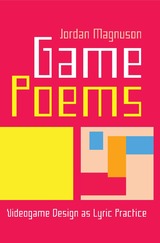
Scholars, critics, and creators describe certain videogames as being “poetic,” yet what that means or why it matters is rarely discussed. In Game Poems: Videogame Design as Lyric Practice, independent game designer Jordan Magnuson explores the convergences between game making and lyric poetry and makes the surprising proposition that videogames can operate as a kind of poetry apart from any reliance on linguistic signs or symbols.
This rigorous and accessible short book first examines characteristics of lyric poetry and explores how certain videogames can be appreciated more fully when read in light of the lyric tradition—that is, when read as “game poems.” Magnuson then lays groundwork for those wishing to make game poems in practice, providing practical tips and pointers along with tools and resources. Rather than propose a monolithic framework or draw a sharp line between videogame poems and poets and their nonpoetic counterparts, Game Poems brings to light new insights for videogames and for poetry by promoting creative dialogue between disparate fields. The result is a lively account of poetic game-making praxis.
“Everyone who loves the true power of games will benefit from the treasure trove of insights in Game Poems.” — Jesse Schell, author of The Art of Game Design
“Magnuson shines a sensitive and incisive light on small, often moving, videogames.” — D. Fox Harrell, Ph.D., Professor of Digital Media, Computing, and Artificial Intelligence, MIT
“[Game Poems] tells a new story about games— that games can be lyrical, beautiful, emotionally challenging—to inspire creators and critics alike.” —Noah Wardrip-Fruin, author of How Pac-Man Eats
“Even as the news swells with impending doom for creativity, writing, and text itself, this literate and crafty book pursues poetry not through implacable algorithms but in concrete and personal play. It should be an indispensable guide for anyone who aims to maintain the true, human promise of technical poetics.”—Stuart Moulthrop, coauthor of Twining: Critical and Creative Approaches to Hypertext Narratives
“For far too long videogames have flourished – and commanded both capital and attention – in a kind of counterculture that they seem to have created as if ex nihilo for themselves and their players. But we are these players, and their culture has always been integrated with all of our own. In this evenhanded artist-scholar’s ars poetica Jordan Magnuson respects the material cultural specificity of videogames while regarding them through the ‘lens of poetry’ in order to discover – and help create – a practice and an art of Game Poems within the wider field. Magnuson formally, int(erv)entionally embraces this art as lyrically poetic.”—John Cayley, Brown University
“In Game Poems, Magnuson listens carefully to videogames, and hears them speak to questions of art, language, and meaning that connect our written past to our software future. Read this book and you will hear it too.”—Frank Lantz, Director, NYU Game Center
“Jordan Magnuson has created a work that ties together the worlds of poetry and videogames in a deep and enlightening way. For those of us who care about the potential of poetic games, Jordan greatly improves the language of how we talk about them and expands our ability to see what this unique form can become. This is one of my favorite books on game design and I apologize in advance to those whom I will end up cornering and not being able to stop talking to about it.”—Benjamin Ellinger, Game Design Program Director, DigiPen Institute of Technology
“A groundbreaking and accessible book that helps us think about games as poems. With patient tenacity, Magnuson teases out what he felt for years as he engaged in his own practice of making videogames. His mission to help us apply a ‘lyric reading’ to games so that our engagement with, and appreciation of, games can be enhanced feels deeply personal. Drawing from a wide range of games and computational media scholars, poetry scholars, game creators, and poets, Magnuson provides a rigorous, balanced, and unique interdisciplinary contribution. A must-read for videogame scholars, practicing game makers, and anyone interested in the potential of ‘game poems.’”—Susana Ruiz, University of California, Santa Cruz
“This book tenaciously wrenches videogame hermeneutics from the insatiable maws of rhetoric and narratology—to the cheers of poets everywhere. In elucidating the lyric characteristics of the "game poem," Magnuson demonstrates not just that poetry is a useful lens for understanding videogames, but also that videogames can be a useful lens for understanding poetry. A rewarding text for scholars, game designers, poets, and anyone in between.”—Allison Parrish, Interactive Telecommunications Program and Interactive Media Arts, NYU
“A concise, passionate articulation - and defense! - of an artistic space between poems and videogames. If game scholars wish to prove that they are not engaged merely in an apologetics for violent pornography, they need only to teach this book.”—Chris Bateman, author of Imaginary Games and 21st Century Game Design
“I feel I've found a kindred spirit in Jordan Magnuson and his practical recommendations for creating distilled, compelling, personal videogames – throw out the conventions of game design one at a time? Yes, please! The revelation for me in this book, however, is the heat and power of the language of poets and poetry brought close to videogame design. There's much in here worth pursuing to kindle the fires of new and exciting videogame poems, and Jordan is a capable and delightfully humble guide.”—Pippin Barr, author of How to Play a Video Game and The Stuff Games Are Made Of
“With Game Poems, Jordan Magnuson lays to rest any last vestige of the notion that the implicit limits of games are as ‘entertainment products’. By taking games seriously as successors of the lyric poetry tradition, he opens up new avenues for how game designers can think about what they do, how critical game theorists can approach their many-faceted object of study, and how players can more fully engage with videogames.”—Soraya Murray, author of On Video Games
“Game Poems shines an important light on a neglected area of videogame theory and provides unique guidance for those interested in exploring the poetic potential of videogames.”—Jenova Chen, designer of Flow, Flower, Journey, and Sky: Children of the Light
“Popular frameworks for video game scholarship consistently fail to account for the most avant-garde and affective works of interactive art. With Game Poems, Jordan Magnuson provides not only a lens to understand these diverse and important titles but also a guide to constructing the next generation of personal and incisive games. With numerous examples from decades of experimental games, including Magnuson's own minimalist and insightful work, this book is an excellent introduction to the form for neophytes as well as finally providing words to describe a movement that many experienced game poets previously understood only intuitively.”—Gregory Avery-Weir, creator of The Majesty of Colors and Looming
“Jordan Magnuson is one of a surprisingly small group of artists who see in the technology of videogames a versatile medium capable of expressing much more than conventional games.”—Michaël Samyn, co-founder, Tale of Tales; co-creator of Sunset, The Graveyard, and The Path
“So much has been written about what games are, and yet there’s always a new way of thinking about them. In Jordan Magnuson’s Game Poems we discover that games are also a lyrical form of art; that games can be understood as poetry, and that the making games as poetry creates new modes of artistic expression. Jordan Magnuson’s book is a fascinating exploration of games as poetry, and the poetry of play.”—Miguel Sicart, author of Play Matters, Beyond Choices: The Design of Ethical Gameplay, and Playing Software
“In Game Poems, I found a new perspective on the kind of videogames that are dearest to me: short, personal, poetic games. By looking at games through the lens of lyric poetry, Jordan Magnuson puts into focus the workings of that mysterious hodgepodge of audio, visuals, and interactivity: the language of videogames. Both experienced and novice game makers will find approachable, practical advice on the craft of videogames. And anyone who plays short games will find new ways of appreciating and talking about them. I know I will be returning to it for inspiration when making my own small games!”—Adam Le Doux, creator of Bitsy
“As a creator and researcher, Jordan Magnuson has been able to demonstrate through the utmost visual simplicity, by enhancing basic geometric forms, the empathetic capacity of the videogame medium. Game Poems explores this idea and the reconfiguration of the videogame beyond its ludic component, highlighting the artistic and poetic potential of games.”—Antonio César Moreno Cantano, University Complutense of Madrid
“Poems ask us to slow down, pay attention, and take the time to appreciate our experiences. Emerging from Magnuson's need to find ways to talk about his own creative practice, this book is all about discovering ways to do this with videogames. Magnuson explores what it means to view videogames as poetry, and provides insight, as a practitioner, on how to make game poems that enable and encourage this type of reflection. Drawing on a wide range of sources, from literature and philosophy to game studies and game design, this book covers a lot of material, but always remains grounded in concrete examples and solid theory. The book ends with a call to “go make some game poems!” After reading the book, I was keen to do exactly that. I urge you to do the same!”—Alex Mitchell, National University of Singapore
“To many, poetry is a dying – or dead – art form. Few people sit down at night to open their favorite poet’s chapbook with the latest streaming service at hand or their favorite videogame console sitting nearby. Spectacle seems to be the cultural norm, and this can be no more evident than in videogames: when the latest and greatest offers 60+ hours of spine-tingling excitement, why would someone want to launch a smaller-form game about expressions such as love, death, loneliness, or even God? But, as Jordan Magnuson, in his new book Games Poems, shows, poems have always been an integral piece of forming human culture. Poems have the ability to get right to the heart of the matter and, in fact, pierce the heart of the reader. Poems can be a form of cultural resistance, and even launch revolutions. Magnuson’s book highlights what it means to use the medium of game design as poetry. Magnuson presents several examples of the intricacies of poetry in general, as well as work that fuses the ideals of poetry with game design. Magnuson succinctly examines how the imagination, rhythm, intensity, style – and brevity – of poetry can enlighten the game design process in order to form possibility spaces within videogames that are pointed and powerful.”—Tim Samoff, Games and Interactive Media Program Director, Azusa Pacific University

Combining the tools of the anthropologist, composer, music theorist, and performer, Tenzer moves fluidly between ethnography and technical discussions of musical composition and structure. In an approach as intricate as one might expect in studies of Western classical music, Tenzer's rigorous application of music theory and analysis to a non-Western orchestral genre is wholly original. Illustrated throughout, the book also includes nearly 100 pages of musical transcription (in Western notation) that correlate with 55 separate tracks compiled on two accompanying compact discs.
The most ambitious work on gamelan since Colin McPhee's classic Music in Bali, this book will interest musicians of all kinds and anyone interested in the art and culture of Southeast Asia, Indonesia, and Bali.

Garden as Art: Beatrix Farrand at Dumbarton Oaks features essays and photographs of this remarkable landscape as a living and breathing work of art. Published on the occasion of the centennial of the Dumbarton Oaks Gardens in 2021, the book illuminates the stewardship of one of the most beautiful gardens on earth.
Edited by Thaïsa Way, this volume includes essays from scholars and practitioners as well as photographs by landscape photographer Sahar Coston-Hardy. The essays place the garden in the context of its historical surroundings, explore its archival significance, and reflect on its effects on the world of contemporary design. Accompanying the essays is a collection of newly commissioned photographs by Coston-Hardy that document the seasons and growth in the gardens over the course of a year and that invite the reader to contemplate the art of garden design and the remarkable beauty of the natural world. Archival images of the gardens offer a chronicle of evolving design concepts as well as illustrate how gardens change over time as living works of art. Garden as Art offers an inspiring view of a place that has been remarkably influential in design and the art of landscape architecture.
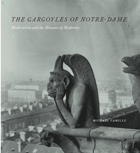
Michael Camille begins his long-awaited study by recounting architect Eugène Viollet-le-Duc’s ambitious restoration of the structure from 1843 to 1864, when the gargoyles were designed, sculpted by the little-known Victor Pyanet, and installed. These gargoyles, Camille contends, were not mere avatars of the Middle Ages, but rather fresh creations—symbolizing an imagined past—whose modernity lay precisely in their nostalgia. He goes on to map the critical reception and many-layered afterlives of these chimeras, notably in the works of such artists and writers as Charles Méryon, Victor Hugo, and photographer Henri Le Secq. Tracing their eventual evolution into icons of high kitsch, Camille ultimately locates the gargoyles’ place in the twentieth-century imagination, exploring interpretations by everyone from Winslow Homer to the Walt Disney Company.
Lavishly illustrated with more than three hundred images of its monumental yet whimsical subjects, The Gargoyles of Notre-Dame is a must-read for historians of art and architecture and anyone whose imagination has been sparked by the lovable monsters gazing out over Paris from one of the world’s most renowned vantage points.
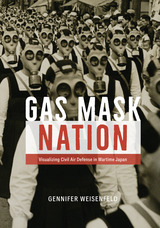
Airplanes, gas masks, and bombs were common images in wartime Japan. Yet amid these emblems of anxiety, tasty caramels were offered to children with paper gas masks as promotional giveaways, and magazines featured everything from attractive models in the latest civil defense fashion to futuristic weapons.
Gas Mask Nation explores the multilayered construction of an anxious yet perversely pleasurable visual culture of Japanese civil air defense—or bōkū—through a diverse range of artworks, photographs, films and newsreels, magazine illustrations, postcards, cartoons, advertising, fashion, everyday goods, government posters, and state propaganda. Gennifer Weisenfeld reveals the immersive aspects of this culture, in which Japan’s imperial subjects were mobilized to regularly perform highly orchestrated civil air defense drills throughout the country.
The war years in Japan are often portrayed as a landscape of privation and suppression under the censorship of the war machine. But alongside the horrors, pleasure, desire, wonder, creativity, and humor were all still abundantly present in a period before air raids went from being a fearful specter to a deadly reality.

The Gazer's Spirit focuses on leading examples of ecphrastic poetry, or poems that directly confront particular works of art. Hollander, who is one of the most distinguished contemporary practitioners of the ecphrastic tradition, has crafted a survey of enormous range, taste, and depth, from the Renaissance to the twentieth century. The heart of the book is its gallery of poems and images set side by side.
There are poems whose presence in this book is all but inevitable, such as Auden's "Musee des Beaux Arts" paired with Breugel the Elder's Landscape with the Fall of Icarus, and delightful surprises, such as Edith Wharton's sonnet that casts fresh light on Leonardo's Mona Lisa. Here are Robert Browning and Michelangelo; Walt Whitman and George Inness; and Randall Jarrell and Albrecht Dürer writing and drawing about The Knight, Death and the Devil.
Among the poets are many visually sophisticated writers such as James Merrill, Richard Howard, Marianne Moore, and Richard Wilbur; the visual objects in the book are both celebrated and obscure, as various as a Greek sculplture, a medieval tapestry, a famous Renoir, or a fountain by an anonymous architect. In some cases, obvious affinities, such as a poem by Vicki Hearne on a white horse by Gauguin, produce unexpected poetic results.
In the immediate aftermath of the Revolutionary War, only the wealthiest Americans could afford to enjoy illustrated books and prints. But, by the end of the next century, it was commonplace for publishers to load their books with reproductions of fine art and beautiful new commissions from amateur and professional artists.
Georgia Brady Barnhill, an expert on the visual culture of this period, explains the costs and risks that publishers faced as they brought about the transition from a sparse visual culture to a rich one. Establishing new practices and investing in new technologies to enhance works of fiction and poetry, bookmakers worked closely with skilled draftsmen, engravers, and printers to reach an increasingly literate and discriminating American middle class. Barnhill argues that while scholars have largely overlooked the efforts of early American illustrators, the works of art that they produced impacted readers' understandings of the texts they encountered, and greatly enriched the nation's cultural life.
Born since the mid-1990s, members of Generation Z comprise the first generation never to know the world without the internet, and the most diverse generation yet. As Gen Z starts to emerge into adulthood and enter the workforce, what do we really know about them? And what can we learn from them? Gen Z, Explained is the authoritative portrait of this significant generation. It draws on extensive interviews that display this generation’s candor, surveys that explore their views and attitudes, and a vast database of their astonishingly inventive lexicon to build a comprehensive picture of their values, daily lives, and outlook. Gen Z emerges here as an extraordinarily thoughtful, promising, and perceptive generation that is sounding a warning to their elders about the world around them—a warning of a complexity and depth the “OK Boomer” phenomenon can only suggest.
Much of the existing literature about Gen Z has been highly judgmental. In contrast, this book provides a deep and nuanced understanding of a generation facing a future of enormous challenges, from climate change to civil unrest. What’s more, they are facing this future head-on, relying on themselves and their peers to work collaboratively to solve these problems. As Gen Z, Explained shows, this group of young people is as compassionate and imaginative as any that has come before, and understanding the way they tackle problems may enable us to envision new kinds of solutions. This portrait of Gen Z is ultimately an optimistic one, suggesting they have something to teach all of us about how to live and thrive in this digital world.

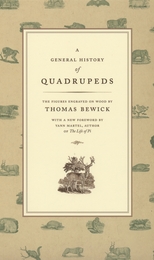
In the late eighteenth century, the British took greater interest than ever before in observing and recording all aspects of the natural world. Travelers and colonists returning from far-flung lands provided dazzling accounts of such exotic creatures as elephants, baboons, and kangaroos. The engraver Thomas Bewick (1753–1828) harnessed this newfound interest by assembling the most comprehensive illustrated guide to nature of his day.
A General History of Quadrupeds, first published in 1790, showcases Bewick’s groundbreaking engraving techniques that allowed text and images to be published on the same page. From anteaters to zebras, armadillos to wolverines, this delightful volume features engravings of over four hundred animals alongside descriptions of their characteristics as scientifically understood at the time. Quadrupeds reaffirms Bewick’s place in history as an incomparable illustrator, one whose influence on natural history and book printing still endures today.
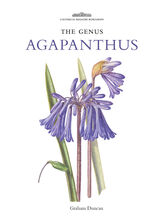
Renowned for its stunning blue flowers, agapanthus—sometimes known as the blue lily or lily of the Nile—is a group of rhizomatous plants native to southern Africa. First cultivated in the Netherlands in the late seventeenth century, it rose to prominence as a conservatory plant in England during the eighteenth and nineteenth centuries after certain varieties were found to be hardy enough to withstand the colder climate of the British Isles. Graham Duncan’s The Genus Agapanthus provides both a revised classification of this plant group and a superbly illustrated celebration of their unique beauty. Featuring new watercolors from South African artist Elbe Joubert and color photographs showing the species in their spectacular and varied natural habitats, the book also highlights a selection of more than 150 of the most notable agapanthus cultivars from growers across Europe, Africa, and Oceania. The agapanthus’s natural history is spotlighted as well, with comprehensive descriptions of each species, maps of their global distribution, and information on how to successfully cultivate, propagate, and care for them. This book’s blend of science, horticulture, and art makes it essential for all varieties of plant lovers.
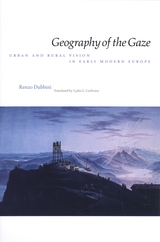
He begins with the idea of the "view," explaining its role in the invention of landscape painting and in the definition of landscape as a cultural space. Among other topics, Dubbini explores how the descriptive and pictorial techniques used in mariners' charts, view-oriented atlases, military cartography, and garden design were linked to the proliferation of highly realistic paintings of landscapes and city scenes; how the "picturesque" system for defining and composing landscapes affected not just art but also archaeology and engineering; and how the ever-changing modern cityscapes inspired new ways of seeing and representing the urban scene in Impressionist painting, photography, and stereoscopy. A marvelous history of viewing, Geography of the Gaze will interest everyone from scientists to artists.

Fascinated by the relationship between culture, society, and economic life, Simmel took an interest in myriad phenomena of aesthetics and the arts. A friend of writers and artists such as Auguste Rodin, Rainer Maria Rilke, and Stefan George, he wrote dozens of pieces engaging with topics such as the work of Michelangelo, Rembrandt, and Rodin, Japanese art, naturalism and symbolism, Goethe, “art for art’s sake”, art exhibitions, and the aesthetics of the picture frame.
This is the first collection to bring together Simmel’s finest writing on art and aesthetics, and many of the items appear in English in this volume for the first time. The more than forty essays show the protean breadth of Simmel’s reflections, covering landscape painting, portraiture, sculpture, poetry, theater, form, style, and representation. An extensive introduction by Austin Harrington gives an overview of Simmel’s themes and elucidates the significance of his work for the many theorists who would be inspired by his ideas.
Something of an outsider to the formal academic world of his day, Simmel wrote creatively with the flair of an essayist. This expansive collection of translations preserves the narrative ease of Simmel’s prose and will be a vital source for readers with an interest in Simmel’s trailblazing ideas in modern European philosophy, sociology, and cultural theory.
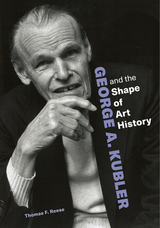
Art historian George A. Kubler (1912–1996) was a foundational scholar of ancient American art and archaeology as well as Spanish and Portuguese architecture. During over five decades at Yale University, he published seventeen books that included innovative monographs, major works of synthesis, and an influential theoretical treatise. In this biography, Thomas F. Reese analyzes the early formation, broad career, and writings of Kubler, casting nuanced light on the origins and development of his thinking.
Notable in Reese’s discussion and contextualization of Kubler’s writings is a revealing history and analysis of his Shape of Time—a book so influential to students, scholars, artists, and curious readers in multiple disciplines that it has been continuously in print since 1962. Reese reveals how pivotal its ideas were in Kubler’s own thinking: rather than focusing on problems of form as an ordering principle, he increasingly came to sequence works by how they communicate meaning. The author demonstrates how Kubler, who professed to have little interest in theory, devoted himself to the craft of art history, discovering and charting the rules that guided the propagation of structure and significance through time.

"Patten consistently manages with great deftness to intertwine the personal and the historical, the strands of Cruikshank's life and those of his caricatures, illustrations, and moralities without a sign of jargon or pedantry. . . . This is a monumental life and works."--Ronald Paulson, The Johns Hopkins University
"At last, an authoritative, exhaustively researched biography of one of nineteenth-century England's greatest popular artists! It will rescue him from the biographical obscurity in which he has dwelt and inspire a fresh estimate of his achievement as a rough-and-tumble caricaturist and prolific book illustrator."--Richard D. Altick, Ohio State University
The etchings and wood engravings by George Cruikshank (1792-1878) recorded, commented on, and satirized his times to such an extent that they have been frequently used to represent the age. Cruikshank, a popular artist in the propaganda war against Napoleon, an ardent campaigner for Reform and Temperance, and the foremost illustrator of such classics as Grimms' Fairy Tales, Scott's novels, and Dickens's Oliver Twist, is known for his versatility, imagination, humor, and incisive images. His long life, marked by a ceaseless struggle to win recognition for his art, intersected with many of Britain's important political, social, and cultural leaders.
Robert Patten provides the first documentary biography of Cruikshank. In this first volume of a two-volume work, which covers the artist's Regency caricatures and early book illustrations, Patten demonstrates the ways that Cruikshank was, as his contemporaries frequently declared, the Hogarth of the nineteenth century. Having reviewed over 8,500 unpublished letters and most of Cruikshank's 12,000 or more printed images, Patten gives a thorough and reliable account of the artist's career. He puts Cruikshank's achievement into a variety of larger contexts--publishing history, political and cultural history, the traditions of figurations practiced by Cruikshank's contemporaries, and the literary and social productions of nineteenth-century Britain.
Published to coincide with the Fall 1992 bicentennial celebrations of the artist's birth, this biography provides both the general reader and the specialist with a wealth of new information conveyed in a lively, non-technical prose. Patten's book contributes to current investigation of the rich interactions between high art and low art, texts and pictures, politics and imagination.
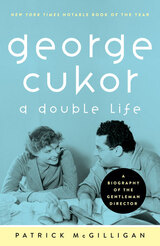
One of the highest-paid studio contract directors of his time, George Cukor was nominated five times for an Academy Award as Best Director. In publicity and mystique he was dubbed the “women’s director” for guiding the most sensitive leading ladies to immortal performances, including Greta Garbo, Ingrid Bergman, Judy Garland, and—in ten films, among them The Philadelphia Story and Adam’s Rib—his lifelong friend and collaborator Katharine Hepburn. But behind the “women’s director” label lurked the open secret that set Cukor apart from a generally macho fraternity of directors: he was a homosexual, a rarity among the top echelon. Patrick McGilligan’s biography reveals how Cukor persevered within a system fraught with bigotry while becoming one of Hollywood’s consummate filmmakers.

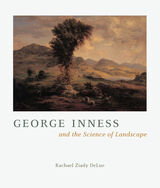
Throughout his career, Inness struggled to make visible what was invisible to the human eye by combining a deep interest in nineteenth-century scientific inquiry—including optics, psychology, physiology, and mathematics—with an idiosyncratic brand of mysticism. Rachael Ziady DeLue's George Inness and the Science of Landscape—the first in-depth examination of Inness's career to appear in several decades—demonstrates how the artistic, spiritual, and scientific aspects of Inness's art found expression in his masterful landscapes. In fact, Inness's practice was not merely shaped by his preoccupation with the nature and limits of human perception; he conceived of his labor as a science in its own right.
This lavishly illustrated work reveals Inness as profoundly invested in the science and philosophy of his time and illuminates the complex manner in which the fields of art and science intersected in nineteenth-century America. Long-awaited, this reevaluation of one of the major figures of nineteenth-century American art will prove to be a seminal text in the fields of art history and American studies.
George Washington: Revolutionary general, Father of His Country, first president, authentic hero, prime mover in establishing a constitutional government, squire of Mount Vernon, itself a national shrine. The sheer ubiquity of his persona makes him an excellent focus for understanding how Americans from the centennial of the nation's birth to the present have rediscovered their colonial origins and have manipulated what they found for a variety of social, economic, and political purposes. The more modern we become, says Karal Ann Marling, the more desperately we cling to our Washingtons, to our old-fashioned heroes, to an imaginary lost paradise chock-full of colonial furniture.
Marling has pursued the figure of Washington from flea markets to World's Fairs in order to understand his significance in American culture and iconography. Of all American heroes, she points out, Washington is the one most closely tied to artifacts, relics, material possessions, style. She describes the Philadelphia Centennial Exposition of 1876, where the federal government exhibited a scene of camp life at Valley Forge, complete with Washington's coat, pants, and other personal objects that lent a strong domestic flavor to the nascent colonial revival. When the restoration of Mount Vernon was begun in the late nineteenth century, it was financed and directed by women, as was much of the historic preservation of the period. Thanks to these efforts, the American home became the scene of successive waves of a revivalism that is still very alive in the 1980s.
In describing Washington's talismanic importance, Marling shows the efforts of twentieth-century politicians to co-opt his incorruptible image. When Harding wanted to convince Americans of his reliability and probity, he campaigned from the Colonial Revival porch of his house on Mount Vernon Avenue in Marion, Ohio. The Washington image was mined for the campaigns that celebrated Calvin Coolidge's Puritan simplicity and Herbert Hoover's engineering talents, said to be related to George Washington's career as a surveyor; more recently, Ronald Reagan at his second inaugural invoked the vision of the humble general praying in the snow at Valley Forge. The neutral and flexible Washington became whatever people wanted him to be—the decorators' darling, the doyen of the D.A.R., the model citizen held up as an example to unruly children and immigrants.
But Marling's book is about more than George Washington and the different ways in which Americans have made use of their past. In her quest for the unhistorical George, Marling has examined the subculture of American life—magazine fiction, historical romances, movies (both silent and talking), and journalism. She traces the descent of high art into such popular forms as posters, plaques, packages, and billboards, all to illuminate how Washington's iconic meaning has influenced styles and tastes on many levels.

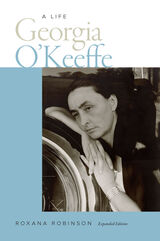
When Roxana Robinson’s definitive biography of O’Keeffe was first published in 1989, it received rave reviews and was named a New York Times Notable Book of the Year. This new edition features a new foreword by the author setting O’Keefe in an artistic context over the last thirty years since the book was first published, as well as previously unpublished letters of the young O’Keeffe to her lover, Arthur MacMahon. It also relates the story of Robinson’s own encounter with the artist. As interest in O’Keeffe continues to grow among museum-goers and scholars alike, this book remains indispensable for understanding her life and art.
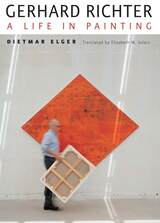
Gerhard Richter is one of the most important and influential artists of the post-war era. For decades he has sought innovative ways to make painting more relevant, often through a multifaceted dialogue with photography. Today Richter is most widely recognized for the photo-paintings he made during the 1960s that rely on images culled from mass media and pop culture. Always fascinated with the limits and uncertainties of representation, he has since then produced landscapes, abstractions, glass and mirror constructions, prints, sculptures, and installations.
Though Richter has been known in the United States for quite some time, the highly successful retrospective of his work at the MoMA in 2002 catapulted him to unprecedented fame. Enter noted curator Dietmar Elger, who here presents the first biography of this contemporary artist. Written with full access to Richter and his archives, this fascinating book offers unprecedented insight into his life and work. Elger explores Richter’s childhood in Nazi Germany; his years as a student and mural painter in communist East Germany; his time in the West during the turbulent 1960s and ’70s, when student protests, political strife, and violence tore the Federal Republic of Germany apart; and his rise to international acclaim during the 1980s and beyond.
Richter has always been a difficult personality to parse and the seemingly contradictory strands of his artistic practice have frustrated and sometimes confounded critics. But the extensive interviews on which this book is based disclose a Richter who is far more candid, personal, and vivid than ever before. The result is a book that will be the foundational portrait of this artist for years to come.

Throughout his career, the influential new media theorist Vilém Flusser kept the idea of gesture in mind: that people express their being in the world through a sweeping range of movements. He reconsiders familiar actions—from speaking and painting to smoking and telephoning—in terms of particular movement, opening a surprising new perspective on the ways we share and preserve meaning. A gesture may or may not be linked to specialized apparatus, though its form crucially affects the person who makes it.
These essays, published here as a collection in English for the first time, were written over roughly a half century and reflect both an eclectic array of interests and a durable commitment to phenomenological thought. Defining gesture as “a movement of the body or of a tool attached to the body for which there is no satisfactory causal explanation,” Flusser moves around the topic from diverse points of view, angles, and distances: at times he zooms in on a modest, ordinary movement such as taking a photograph, shaving, or listening to music; at others, he pulls back to look at something as vast and varied as human “making,” embracing everything from the fashioning of simple tools to mass manufacturing. But whatever the gesture, Flusser analyzes it as the expression of a particular form of consciousness, that is, as a particular relationship between the world and the one who gestures.

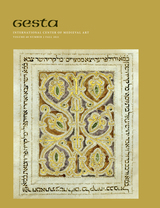
This issue features essays on a fragmentary Kufic Qurʼan of Early Abbasid style produced in Central Iran; cuttings from a twelfth-century Bible written in southeastern France for a Carthusian monastery in the orbit of the Grande Chartreuse; French archaeologist Jane Dieulafoy’s nineteenth-century documentation of Ilkhanid monuments, particularly the Emamzadeh Yahya, one of Iran’s most plundered tombs; the wartime encounter between Polish painters stationed in Baghdad and Iraqi artists during the British military reoccupation of Iraq in 1941–45; and the integration of photography and poetry in East German samizdat artists’ books of the 1980s. Shorter texts include a notice on a large folding panorama of the city of Salvador in the state of Bahia, taken around 1880 by Brazilian photographer Rodolpho Lindemann.
The free online edition of this open-access publication is at www.getty.edu/publications/grj/19/ and includes zoomable illustrations. Free PDF and EPUB downloads of the book are also available.

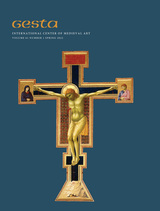
This issue features essays on the remembering and remaking of Second Empire table centerpieces by French fine metalworking firm Christofle et Cie during the Third Republic; satirical photomontages by Soviet artist trio Brigade KGK in 1934 for an illustrated edition of Joseph Stalin’s speech; a forgotten but important example of New Deal–era painting by little-known US American artist Bennett Buck mistakenly attributed to Mexican muralist José Clemente Orozco; poet David Antin’s turn to talking in the 1970s as oral art criticism; the marketing of a limited-edition portfolio published in 1976 by dealer Harry Lunn featuring prints by Gerd Sander of photographer Lisette Model’s work from the 1930s and ’40s; and the material culture and interpretive program at Eastern State Penitentiary Historic Site in Philadelphia shaping the public conversation about justice in the criminal legal system. Shorter texts include a notice on a sketchbook shared between French artist Rosa Bonheur and her father and teacher, Raymond Bonheur, during the 1840s and ’50s. This issue also includes a conversation between scholar Laura G. Gutiérrez and visual artist Felipe Baeza about art making, migration, legibility, and belonging in the context of his project, Unruly Forms.
The free online edition of this open-access publication is available at www.getty.edu/publications/getty-research-journal/20/. Also available are free PDF and EPUB downloads of the book.
James M. Harding revisits iconic sites of early 20th-century performance to examine how European avant-gardists attempted—unsuccessfully—to employ that discourse as a strategy for enforcing uniformity among a politically and culturally diverse group of artists. He then takes aim at historical and aesthetic categories that have promoted a restrictive history and theory of the avant-garde and narrow readings of avant-garde performance. Harding reveals the Eurocentric undercurrents that underlie these categories and urges a consideration of the global political dimensions of avant-garde gestures. His book will interest scholars of theater and performance, art history, and literary studies, as well as those interested in the relation of art to politics in various historical periods and cultures.
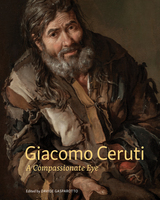
The northern Italian artist Giacomo Ceruti (1698–1767) was born in Milan and active in Brescia and Bergamo. For his distinctive, large-scale paintings of low-income tradespeople and individuals experiencing homelessness, whom he portrayed with dignity and sympathy, Ceruti came to be known as Il Pitocchetto (the little beggar).
Accompanying the first US exhibition to focus solely on Ceruti, this publication explores relationships between art, patronage, and economic inequality in early modern Europe, considering why these paintings were commissioned and by whom, where such works were exhibited, and what they signified to contemporary audiences. Essays and a generous plate section contextualize and closely examine Ceruti’s pictures of laborers and the unhoused, whom he presented as protagonists with distinct stories rather than as generic types. Topics include depictions of marginalized subjects in the history of early modern European art, the career of the artist and his significance in the history of European painting, and period discourses around poverty and social support. A detailed exhibition checklist, complete with provenance, exhibition history, and bibliography, provides information critical for the further understanding of Ceruti’s oeuvre.
This volume is published to accompany an exhibition on view at the J. Paul Getty Museum at the Getty Center from July 18 to October 29, 2023.
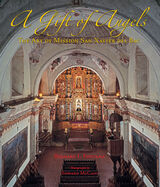
Mission San Xavier del Bac is a two-century-old Spanish church in southern Arizona located just a few miles from downtown Tucson, a metropolis of more than half a million people in the American Southwest. A National Historic Landmark since 1963, the mission’s graceful baroque art and architecture have drawn visitors from all over the world.
Now Bernard Fontana—the leading expert on San Xavier—and award-winning photographer Edward McCain team up to bring us a comprehensive view of the mission as we’ve never seen it before. With 200 stunning full-color photographs and incisive text illuminating the religious, historical, and motivational context of these images, A Gift of Angels is a must-have for tourists, scholars, and other visitors to San Xavier.
From its glorious architecture all the way down to the finest details of its art, Mission San Xavier del Bac is indeed a gift of angels.
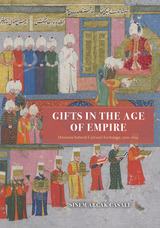
When the Safavid dynasty, founded in 1501, built a state that championed Iranian identity and Twelver Shi'ism, it prompted the more established Ottoman Empire to align itself definitively with Sunni legalism. The political, religious, and military conflicts that arose have since been widely studied, but little attention has been paid to their diplomatic relationship. Sinem Arcak Casale here sets out to explore these two major Muslim empires through a surprising lens: gifts. Countless treasures—such as intricate carpets, gilded silver cups, and ivory-tusk knives—flowed from the Safavid to the Ottoman Empire throughout the sixteenth century. While only a handful now survive, records of these gifts exist in court chronicles, treasury records, poems, epistolary documents, ambassadorial reports, and travel narratives. Tracing this elaborate archive, Casale treats gifts as representative of the complicated Ottoman-Safavid coexistence, demonstrating how their rivalry was shaped as much by culture and aesthetics as it was by religious or military conflict. Gifts in the Age of Empire explores how gifts were no mere accessories to diplomacy but functioned as a mechanism of competitive interaction between these early modern Muslim courts.
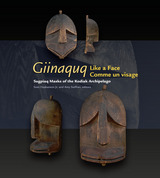
Masks are an ancient tradition of the Alutiiq people on the southern coast of Alaska. Alutiiq artists carved the masks from wood or bark into images of ancestors, animal spirits, and other mythological forces; these extraordinary creations have been an essential tool for communicating with the spirit world and have played an important role in dances and hunting festivities for centuries. Giinaquq: Like a Face presents thirty-three full-color images of these fantastic and eye-catching masks, which have been preserved for more than a century as part of the Pinart Collection in a small French museum.
These masks, collected in 1871 by a young French scholar of indigenous cultures, are presented for the first time in their complete cultural context, celebrating the rich history of the Alutiiq people and their artistic traditions. In addition to the stunning photographs, Giinaquq—Like a Face includes an informative text in three languages—English, Alutiiq, and French—in order to provide a cross-cultural understanding of the masks’ traditional meaning and use. This captivating and revealing book will be an essential resource for anyone interested in indigenous art and culture.
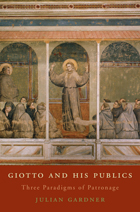
This probing analysis of three works by Giotto and the patrons who commissioned them goes far beyond the clichés of Giotto as the founding figure of Western painting. It traces the interactions between Franciscan friars and powerful bankers, illuminating the complex interplay between mercantile wealth and the iconography of poverty.
Political strife and religious faction lacerated fourteenth-century Italy. Giotto’s commissions are best understood against the background of this social turmoil. They reflected the demands of his patrons, the requirements of the Franciscan Order, and the restlessly inventive genius of the painter. Julian Gardner examines this important period of Giotto’s path-breaking career through works originally created for Franciscan churches: Stigmatization of Saint Francis from San Francesco at Pisa, now in the Louvre, the Bardi Chapel cycle of the Life of St. Francis in Santa Croce at Florence, and the frescoes of the crossing vault above the tomb of Saint Francis in the Lower Church of San Francesco at Assisi.
These murals were executed during a twenty-year period when internal tensions divided the friars themselves and when the Order was confronted by a radical change of papal policy toward its defining vow of poverty. The Order had amassed great wealth and built ostentatious churches, alienating many Franciscans in the process and incurring the hostility of other Orders. Many elements in Giotto’s frescoes, including references to St. Peter, Florentine politics, and church architecture, were included to satisfy patrons, redefine the figure of Francis, and celebrate the dominant group within the Franciscan brotherhood.
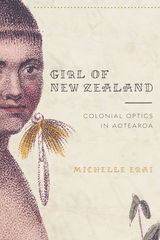
Viewed through Māori, feminist, queer, and film theories, Erai shows how images such as Girl of New Zealand (1793) and later images, cartoons, and travel advertising created and deployed a colonial optic. Girl of New Zealand reveals how the phantasm of the Māori woman has shown up in historical images, how such images shape our imagination, and how impossible it has become to maintain the delusion of the “innocent eye.” Erai argues that the process of ascribing race, gender, sexuality, and class to imagined bodies can itself be a kind of violence.
In the wake of the Me Too movement and other feminist projects, Erai’s timely analysis speaks to the historical foundations of negative attitudes toward Indigenous Māori women in the eyes of colonial “others”—outsiders from elsewhere who reflected their own desires and fears in their representations of the Indigenous inhabitants of Aotearoa, New Zealand. Erai resurrects Māori women from objectification and locates them firmly within Māori whānau and communities.

Finalist for 2016 Richard Wall Memorial Award from the Theatre Library Association
Long-listed for the 2017 Best Photography Book Award from the Kraszna-Krausz Foundation
Marlene Dietrich, Greta Garbo, and Katharine Hepburn all made lasting impressions with the cinematic cross-dressing they performed onscreen. What few modern viewers realize, however, is that these seemingly daring performances of the 1930s actually came at the tail end of a long wave of gender-bending films that included more than 400 movies featuring women dressed as men.
Laura Horak spent a decade scouring film archives worldwide, looking at American films made between 1908 and 1934, and what she discovered could revolutionize our understanding of gender roles in the early twentieth century. Questioning the assumption that cross-dressing women were automatically viewed as transgressive, she finds that these figures were popularly regarded as wholesome and regularly appeared onscreen in the 1910s, thus lending greater respectability to the fledgling film industry. Horak also explores how and why this perception of cross-dressed women began to change in the 1920s and early 1930s, examining how cinema played a pivotal part in the representation of lesbian identity.
Girls Will Be Boys excavates a rich history of gender-bending film roles, enabling readers to appreciate the wide array of masculinities that these actresses performed—from sentimental boyhood to rugged virility to gentlemanly refinement. Taking us on a guided tour through a treasure-trove of vintage images, Girls Will Be Boys helps us view the histories of gender, sexuality, and film through fresh eyes.
The long-awaited conclusion to Derrida’s seminar on the gift and time.
In 1991, Jacques Derrida published the first half of a seminar delivered from 1978 to 1979 on gifts and time, but the second installment (though expected) was not completed in his lifetime. Given Time II completes the seminar with eight sessions that showcase Derrida’s most advanced work on the problematic of the gift in Heidegger, with deep dives into some of the most difficult texts in the Heideggerian corpus, including “The Origin of the Work of Art,” “The Thing,” and “On Time and Being.”
Beyond Heidegger, Derrida engages Claude Lévi-Strauss, Marcel Mauss, Maurice Blanchot, Jacques Lacan, and others on the act of giving and receiving, the sacrificial gift, and more. Throughout, Derrida identifies a paradox of gift giving: for the gift to be received as a gift, it must not appear as such, since gifts often involve a cycle of debt and repayment. Given Time II is a uniquely Derridean treatment of an important subject in the work of Heidegger and beyond.
The celebrated Great Pyramid of Khufu, or Cheops, is the only one of the seven wonders of the ancient world still standing, but there is much more to Giza. Though we imagine the pyramids of Khufu, Khafre, and Menkaure and the Sphinx rising from the desert, isolated and enigmatic, they were once surrounded by temples, noble tombs, vast cemeteries, and even harbors and teeming towns. This unparalleled account describes that past life in vibrant detail, along with the history of exploration, the religious and social function of the pyramids, how the pyramids were built, and the story of Giza before and after the Old Kingdom. Hundreds of illustrations, including vivid photographs of the monuments, excavations, and objects, as well as plans, reconstructions, and images from remote-controlled cameras and laser scans, help bring these monuments to life.
Through the ages, Giza and the pyramids have inspired extraordinary speculations and wild theories, but here, in this definitive account, is the in-depth story as told by the evidence on the ground and by the leading authorities on the site.
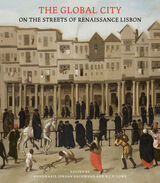
Winner, 2016 Admiral Teixeira da Mota Prize from the Academia de Marinha (Naval Academy), Lisbon
Recently identified by the editors as the Rua Nova dos Mercadores, the principal commercial and financial street in Renaissance Lisbon, two sixteenth-century paintings, acquired by Dante Gabriel Rossetti in 1866, form the starting point for this portrait of a global city in the early modern period. Focusing on unpublished objects, and incorporating newly discovered documents and inventories that allow novel interpretations of the Rua Nova and the goods for sale on it, these essays offer a compelling and original study of a metropolis whose reach once spanned four continents. The Rua Nova views painted by an anonymous Flemish artist portray an everyday scene on a recognizable street, with a diverse global population. This thoroughfare was the meeting point of all kinds of people, from rich to poor, slave to knight, indigenous Portuguese to Jews and diasporic black Africans.
The volume highlights the unique status of Lisbon as an entrepôt for curiosities, luxury goods and wild animals. As the Portuguese trading empire of the fifteenth and sixteenth century expanded sea-routes and networks from West Africa to India and the Far East, non-European cargoes were brought back to Renaissance Lisbon. Many rarities were earmarked for the Portuguese court, but simultaneously exclusive items were readily available for sale on the Rua Nova, the Lisbon equivalent of Bond Street or Fifth Avenue. Specialized shops offered West African and Ceylonese ivories, raffia and Asian textiles, rock crystals, Ming porcelain, Chinese and Ryukyuan lacquerware, jewelry, precious stones, naturalia and exotic animal byproducts. Lisbon was also a hub of distribution for overseas goods to other courts and cities in Europe. The cross-cultural and artistic influences between Lisbon and Portuguese Africa and Asia at this date are reassessed. Lisbon was imagined as the head of empire or caput mundi, while the River Tagus became the aquatic gateway to a globally connected world. Lisbon evolved into a dynamic Atlantic port city, excelling in shipbuilding, cartography and the manufacture of naval instruments. The historian Damião de Góis bragged of the "Tagus reigning over the world." Lisbon's fame depended on its river, an aquatic avenue that competed with the Rua Nova, providing a means of interaction, trade and communication along Lisbon’s coastline. Even for the cosmopolitan Góis, who traveled extensively for the Portuguese crown, Lisbon’s chaotic docks were worth describing. Of all the European cities he experienced, only Lisbon and her rival Seville could be "rightfully called Ladies and Queens of the Sea." Góis contended that they had opened up the early modern world through circumnavigation. Lisbon was destroyed in a devastating earthquake and tsunami in November 1755. These paintings are the only large-scale vistas of Rua Nova dos Mercadores to have survived, and together with the new objects and archival sources offer a fresh and original insight into Renaissance Lisbon and its material culture.
Special Issue Editors: Kenneth Paul Tan & Dorothy Lau
Letter from the Editor - YING ZHU
Cold War and New Cold War Narratives: Special Issue Editor’s Introduction - KENNETH PAUL TAN
Research Articles
Notes on Cold War Historiography - LOUIS MENAND
Tales from the Hot Cold War - MARTHA BAYLES
Bomb Archive: The Marshall Islands as Cold War Film Set - ILONA JURKONYTĖ
Das unsichtbare Visier—A 1970s Cold War Intelligence TV Series as a Fantasy of International and Intranational Empowerment; or, How East Germany Saved the World and West Germans Too - TARIK CYRIL AMAR
To Whom Have We Been Talking? Naeem Mohaiemen’s Fabulation of a People-to-Come - NOIT BANAI
The Man without a Country: British Imperial Nostalgia in Ferry to Hong Kong (1959) - KENNY K. K. NG
Imagining Cooperation: Cold War Aesthetics for a Hot Planet - MARINA KANETI
Book Reviews
Through Space and Time - Review of The Odyssey of Communism: Visual Narratives, Memory and Culture edited by Michaela Praisler and Oana-Celia Gheorghiu, Cambridge Scholars Publishing, 2021 - ISABEL GALWEY
Review of Hollywood in China: Behind the Scenes of the World’s Largest Movie Market by Ying Zhu, New Press, 2022 - YONGLI LI
The Cautionary Tale of Painting War Remembrance in China as a New Nationalism - Review of China’s Good War: How World War II Is Shaping a New Nationalism by Rana Mitter, Belknap Press, 2020 - FUWEI ZUO
Tracking American Political Currents - Review of White Identity Politics by Ashley Jardina, Cambridge University Press, 2019, and Fox Populism: Branding Conservatism as Working Class by Reece Peck, Cambridge University Press, 2019 - DAVID GURNEY
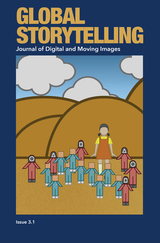
Special Issue Editors Tze-lan Sang, Lina Qu, and Ying Zhu
IN THIS ISSUE
Tze-lan Sang, Lina Qu, and Ying Zhu - East Asian Serial Dramas in the Era of Global Streaming Services: Special Issue Editors’ Introduction
Research Articles
Ying Zhu - The Therapeutic and the Transgressive: Chinese Fansub Straddling between Hollywood IP Laws and Chinese State Censorship
David Humphrey - Japanese Dramas and the Streaming Success Story that Wasn’t: How Industry Practices and IP Shape Japan’s Access to Global Streaming
Yucong Hao - Transmedia Adaptation, Sonic Affect, and Multisensory Participation in Contemporary Chinese Danmei Radio Drama
Eunice Ying Ci Lim - The Nostalgic Negotiation of Post-TV Legibility in Mom, Don’t Do That!
Winnie Yanjing Wu - How Pachinko Mirrors Migrant Life: Rethinking the Temporal, Spatial, and Linguistic Dimensions of Migration
Drama Reviews
Mei Mingxue Nan - Squid Game: The Hall of Screens in the Age of Platform Cosmopolitanism
Shuwen Yang - Review of Light the Night
Short Essay
Sheng-mei Ma - Three Bad Kids, One Loving Killer: Red China Noir in Blakean Symmetry
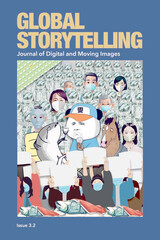
Haiqing Yu. COVID-19, Satirical Activism, and Chinese Youth Culture: An Introduction
Research Articles
Ying Zhu and Junqi Peng. From Diaosi to Sang to Tangping: The Chinese DST Youth Subculture Online
Shaohua Guo. Moments of "Madness": Cynicism in Times of COVID
Howard Choy. Laughter in the Time of Coronavirus: Epidemic Humor and Satire in Chinese Women's Digital Diaries
Shaoyu Tang. Political In Between: Streaming Stand-Up Comedy and Feminist Reckoning in Contemporary Mainland China
Jingxue Zhang and Charlie Yi Zhang. The Power of Citation: Feminist Counter-Appropriation of State Discourses in Post-Reform China
Book Reviews
Ethan Tussey. Revised Research Methodology for the Age of Media Industries Speculation - Review of Specworld: Folds, Faults, and Fractures in Embedded Creator Industries by John Thornton Caldwell, University of California Press, 2023
Michael Keane. Precarious Creativity and the State in New Era China - Review of Chinese Creator Economies: Labor and Bilateral Creative Workers by Jian Lin, New York University Press, 2023


Global Storytelling: Journal of Digital and Moving Images, housed at the Academy of Film and published by Michigan Publishing, is an open access, peer-reviewed international and interdisciplinary journal for intellectual debates concerning the politics, economics, culture, media, and technology of the moving image.

This book will appeal to a broad audience of historians and students of American visual art, as well as scholars and students of fine and decorative arts.
Hardcover is un-jacketed.
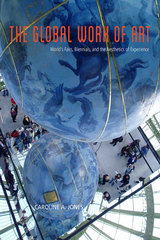
As world’s fairs brought millions of attendees into contact with foreign cultures, products, and processes, artworks became juxtaposed in a “theater of nations,” which challenged artists and critics to think outside their local academies. From Gustave Courbet’s rebel pavilion near the official art exhibit at the 1855 French World’s Fair to curator Beryl Madra’s choice of London-based Cypriot Hussein Chalayan for the off-site Turkish pavilion at the 2006 Venice Biennale, artists have used these exhibitions to reflect on contemporary art, speak to their own governments back home, and challenge the wider geopolitical realm—changing art and art history along the way. Ultimately, Caroline A. Jones argues, the modern appetite for experience and event structures, which were cultivated around the art at these earlier expositions, have now come to constitute contemporary art itself, producing encounters that transform the public and force us to reflect critically on the global condition.
For German philosophers at the turn of the nineteenth century, beautiful works of art acted as beacons of freedom, instruments of progress that could model and stimulate the moral autonomy of their beholders. Amid the Revolutionary and Napoleonic wars, Germans struggled to uphold these ideals as they contended with the destruction of art collections, looting, and questions about cultural property. As artworks fell prey to the violence they were supposed to transcend, some began to wonder how art could deliver liberation if it could also quickly become a spoil of war. Alice Goff considers a variety of works—including forty porphyry columns from the tomb of Charlemagne, the Quadriga from the Brandenburg Gate in Berlin, the Laocoön group from Rome, a medieval bronze reliquary from Goslar, a Last Judgment from Danzig, and the mummified body of an official from the Rhenish hamlet of Sinzig—following the conflicts over the ownership, interpretation, conservation, and exhibition of German collections during the Napoleonic period and its aftermath.
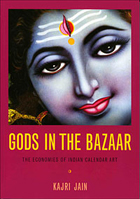
Jain draws on interviews with artists, printers, publishers, and consumers as well as analyses of the prints themselves to trace the economies—of art, commerce, religion, and desire—within which calendar images and ideas about them are formulated. For Jain, an analysis of the bazaar, or vernacular commercial arena, is crucial to understanding not only the calendar art that circulates within the bazaar but also India’s postcolonial modernity and the ways that its mass culture has developed in close connection with a religiously inflected nationalism. The bazaar is characterized by the coexistence of seemingly incompatible elements: bourgeois-liberal and neoliberal modernism on the one hand, and vernacular discourses and practices on the other. Jain argues that from the colonial era to the present, capitalist expansion has depended on the maintenance of these multiple coexisting realms: the sacred, the commercial, and the artistic; the official and the vernacular.
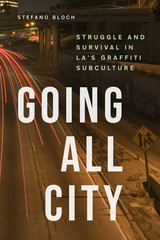
In the age of commissioned wall murals and trendy street art, it’s easy to forget graffiti’s complicated and often violent past in the United States. Though graffiti has become one of the most influential art forms of the twenty-first century, cities across the United States waged a war against it from the late 1970s to the early 2000s, complete with brutal police task forces. Who were the vilified taggers they targeted? Teenagers, usually, from low-income neighborhoods with little to their names except a few spray cans and a desperate need to be seen—to mark their presence on city walls and buildings even as their cities turned a blind eye to them.
Going All City is the mesmerizing and painful story of these young graffiti writers, told by one of their own. Prolific LA writer Stefano Bloch came of age in the late 1990s amid constant violence, poverty, and vulnerability. He recounts vicious interactions with police; debating whether to take friends with gunshot wounds to the hospital; coping with his mother’s heroin addiction; instability and homelessness; and his dread that his stepfather would get out of jail and tip his unstable life into full-blown chaos. But he also recalls moments of peace and exhilaration: marking a fresh tag; the thrill of running with his crew at night; exploring the secret landscape of LA; the dream and success of going all city.
Bloch holds nothing back in this fierce, poignant memoir. Going All City is an unflinching portrait of a deeply maligned subculture and an unforgettable account of what writing on city walls means to the most vulnerable people living within them.
There are many ways to go public in art. There’s exhibiting, publishing, or reviewing. It is only through making artworks public that they become accessible to audiences—a performative act that also involves a marketplace of money and attention. Yet reception is an essential aspect of production.
This book looks at why such reception should not be limited to the art public, positing that going public as an aesthetic and political strategy necessitates an emancipatory practice of public communication that allows, and aspires to, uncertainties, questions, and complexities.

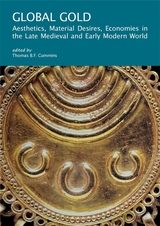
In tracing the history of gold through the ages, this beautiful book showcases the multifarious uses to which the precious metal has been put. Drawing on her own long experience investigating the art and science of metallurgy, Susan La Niece guides readers through the rich history of gold. In detailed images and descriptive text, her book shows us gold over the millennia as coinage, jewelry and ornamentation, high-status vessels, and grave goods; as gifts of distinction, and as radiant symbols in rituals of magic and worship.
Following a glimmering trail through distant times and places, Gold takes us to cultures as disparate as the Mughals of India, the Anglo-Saxons of Britain, and the pre-Hispanic civilizations of the New World. It considers the work of alchemists and goldsmiths, the myths and the legends, the fakes and fine art. And, in the end, it offers a fittingly lavish and deeply informed picture of gold in all its practical, figurative, commercial, artistic, and historical facets.
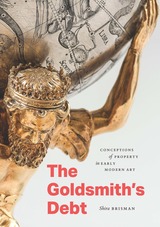
In the sixteenth century, German goldsmiths played a unique role in articulating property claims and social values. These artisans shaped precious metals into visible expressions of domination, subordination, and obligation. The objects they crafted played a major role in the practices of exchange and inheritance that were reconfiguring a tumultuous economic landscape. Cities commissioned goldsmiths to transform revenue into goblets that could be given as diplomatic gifts or reconverted into currency in times of war, and courts used serving implements as promises of credit.
With The Goldsmith’s Debt, art historian Shira Brisman offers the first book-length study of the Nuremberg goldsmith Christoph Jamnitzer (1563–1618), who created elaborate gilded silver drinking cups that he crafted into unexpected forms, with designs ranging from racialized heads to mining scenes. Considering how works of art can shape a social order, Brisman explores what Jamnitzer’s etchings and goblets reveal about how goldsmiths shared ideas and how their patrons used commissioned works to legitimize their claims over land and the rights of others. Drawing on a range of textual and material evidence—including commentaries on Roman and customary laws, wills and civic statutes, printed designs, and firsthand study of lidded cups in dozens of major European institutions—this unprecedented study places the goldsmith at the heart of the era’s arguments about how people and lands should be subjugated. Brisman reveals the insidious side of these objects that were often used to advance socially conservative agendas, and she presents radical proposals for addressing inequity in the world of ornament prints.
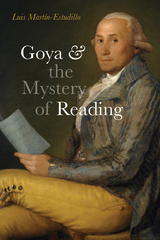
Goya and the Mystery of Reading explores the critical impact this transition had on the work of an artist who aimed not to copy the world around him, but to see it anew—to read it. Goya's creations offer a sustained reflection on the implications of reading, which he depicted as an ambiguous, often mysterious activity: one which could lead to knowledge or ecstasy, to self-fulfillment or self-destruction, to piety or perdition. At the same time, he used reading to elicit new possibilities of interpretation. This book reveals for the first time the historical, intellectual, and artistic underpinnings of reading as one of the pillars of his art.
This book is the recipient of the 2023 Norman L. and Roselea J. Goldberg Prize from Vanderbilt University Press for the best book in the area of art or medicine.
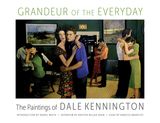
Grandeur of the Everyday is the first full-length volume dedicated to the life and work of Dale Kennington—an accomplished master of contemporary American realism. Kennington’s works often hold a strange familiarity, even for those coming to her work for the first time. Her paintings are at once familiar and yet defy specificity of place, clear and lucid while also dense in content. These effects derive from her unique ability to capture the essence of everyday living, the ordinary “in between” moments we often overlook in our day-to-day habits and transactions.
Kennington referred to her paintings as “merged memories.” Combining elements of photography, memory, and imagination, Kennington’s art is an entrancing blend of contemporary and magical realism, with themes ranging from loneliness to community and culture, from class and race relations to the juxtaposition of private and public life. Rather than study the spectacular, she concentrated on commonplace moments of human interaction, inviting observers of her paintings to ponder their significance and to complete their implicit narratives. Often relying on local subjects for her paintings—barbershops, bars, restaurants, gospel concerts, motel rooms, nursing homes—she presented a diversity of local experience.
Grandeur of the Everyday is a treasure trove of her most accomplished creations and includes more than eighty-five examples of both Kennington’s easel paintings on canvas and her freestanding wooden folding screens. The volume also offers an original interview with the artist conducted by Kristen Miller Zohn, an introduction by art historian Daniel White, and a critical essay by the director of the Wiregrass Museum of Art, Rebecca Brantley.
Published by University of Delaware Press. Distributed worldwide by Rutgers University Press.
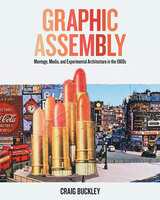
An innovative look at the contribution of montage to twentieth-century architecture
Graphic Assembly unearths the role played by montage and collage in the development of architectural culture over the past century, revealing their unexamined yet crucial significance. Craig Buckley brings together experimental architectural practices based in London, Paris, Vienna, and Florence, showing how breakthroughs in optical media and printing technologies enabled avant-garde architects to reimagine their field.
Graphic Assembly considers a range of architects and movements from the 1950s through the early ’70s, including Theo Crosby, Hans Hollein, and John McHale; the magazine Clip-Kit; and the groups Archigram, Superstudio, and Utopie. It gives a thorough account of how montage concepts informed the design of buildings, prototypes, models, exhibitions, and multimedia environments, accompanied by Buckley’s insightful interpretations of the iconic images, exhibitions, and buildings of the 1960s that mark how the decade is remembered.
Richly illustrated with never-before-published material from more than a dozen archives and private collections, Graphic Assembly offers a comparative overview of the network of experimental architectural practice in Europe. It provides a deep historical account of the cut-and-paste techniques now prevalent with architecture’s digital turn, demonstrating the great importance of montage to architecture past, present, and future.


America’s historic sites, homes, and public buildings are a living record of the diverse ethnicities that, over four centuries, helped to build a growing nation. Since 1891, the National Society of the Colonial Dames of America (NSCDA) has actively promoted our national heritage through historic preservation, restoration, and the interpretation of historic sites throughout the United States. In conjunction with NSCDA, in 2025 The Artist Book Foundation (TABF) will publish Great American Treasures, a comprehensive survey of the architecture, furnishings, and gardens that epitomize the nation’s diverse material culture over more than 400 years.
The publication will feature the NSCDA’s collection of historic places, which span the sixteenth to the twentieth centuries, and will highlight the residences of those who established themselves in America during this time. It will feature an array of buildings that speak to the diversity of traditions, people, and architecture in a growing nation—from English Georgian houses on the eastern seaboard to a French Colonial dwelling in Missouri and mission houses in Hawai’i. This survey will illuminate the stories and material traditions of the wide range of individuals who contributed to the founding of the United States and to the development of America as a dynamic multicultural nation.
Many of the sites tell the stories of familiar historic figures like George and Martha Washington, John Adams, James and Dolley Madison, John Quincy Adams, Benjamin Franklin, and George Mason. Other sites offer the narratives of figures who contributed to America’s artistic heritage, such as John James Audubon and John Smibert, or those who helped to shape the country’s mercantile system, like Frederick Van Cortlandt and James Logan. Some places were designed by well-known architects such as Robert Mills or McKim, Mead & White, while most were the work of unknown or little-known architects, builders, joiners, and slave laborers. The classic architecture of these sites, their exquisite furnishings and lush gardens, and even the headstones in historic cemeteries all provide a window into the rich diversity of men, women, and children—free, indentured, and enslaved—who came together to make America.
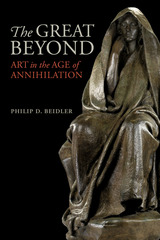
While much about modernism remains up for debate, there can be no dispute about the connection between modernist art and death. The long modern moment was and is an age of war, genocide, and annihilation. Two world wars killed perhaps as many as 100 million people, through combat, famine, holocaust, and ghastly attacks on civilians. The ongoing COVID-19 pandemic is the fifth global pandemic since 1918, with more than a half-million American deaths and counting.
It can hardly come as a surprise, then, that many of the touchstones of modernism reflect on death and devastation. In Philip D. Beidler’s exploration of the modernist canon, he illuminates how these singular voices looked extinction in the eye and tried to reckon with our finitude—and their own. The Great Beyond:Art in the Age of Annihilation catalogs through lively prose an eclectic selection of artists, writers, and thinkers. In 16 essays, Beidler takes nuanced and surprising approaches to well-studied figures—the haunting sculpture by Saint-Gaudens commissioned by Henry Adams for his late wife; Luchino Visconti’s adaptation of Mann’s Death in Venice; and the author’s own long fascination with Beckett’s Waiting for Godot.
The threads and recurring motifs that emerge through Beidler’s analysis bridge the different media, genres, and timeframes of the works under consideration. Protomodernists Crane and Twain connect with near-contemporary voices like Sebald and Morrison. Robert MacFarlane’s 21st-century nonfiction about what lies underneath the earth echoes the Furerbunker and the poetry of Gertrud Kolmar. Learned but lively, somber but not grim, The Great Beyond is not a comfortable read, but it is in a way comforting. In tracing how his subjects confronted nothingness, be it personal or global, Beidler draws a brilliant map of how we see the end of the road.
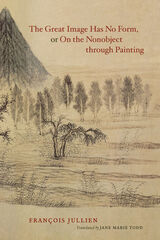
In premodern China, elite painters used imagery not to mirror the world around them, but to evoke unfathomable experience. Considering their art alongside the philosophical traditions that inform it, The Great Image Has No Form explores the “nonobject”—a notion exemplified by paintings that do not seek to represent observable surroundings.
François Jullien argues that this nonobjectifying approach stems from the painters’ deeply held belief in a continuum of existence, in which art is not distinct from reality. Contrasting this perspective with the Western notion of art as separate from the world it represents, Jullien investigates the theoretical conditions that allow us to apprehend, isolate, and abstract objects. His comparative method lays bare the assumptions of Chinese and European thought, revitalizing the questions of what painting is, where it comes from, and what it does. Provocative and intellectually vigorous, this sweeping inquiry introduces new ways of thinking about the relationship of art to the ideas in which it is rooted.

From Athens and Arcadia on one side of the Aegean Sea and from Ionia, Lycia, and Karia on the other, this book brings together some of the great monuments of classical antiquity --among them two of the seven wonders of the ancient world, the later temple of Artemis at Ephesos and the Mausoleum at Halikarnassos.
Drawing on the Greek and Lycian architecture and sculpture in the British Museum--a collection second to none in quality, quantity, and geographical and chronological range--this lavishly illustrated volume tells a remarkable story reaching from the archaic temple of Artemis, the Parthenon, and other temples of the Athenian Acropolis to the temple of Apollo at Bassai, the sculptured tombs of Lycia, the Mausoleum, and the temple of Athena Polias at Priene. Ian Jenkins explains each as a work of art and as a historical phenomenon, revealing how the complex personality of these buildings is bound up with the people who funded, designed, built, used, destroyed, discovered, and studied them. With 250 photographs and specially commissioned line drawings, the book comprises a monumental narrative of the art and architecture that gave form, direction, and meaning to much of Western culture.
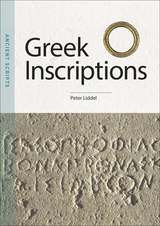
Ancient Greek inscriptions are crucially important in understanding the cultures of Greece and the Mediterranean in antiquity. They provide glimpses of the behavior of the people of the time, including clues about their mindsets and aspirations. These public records combine word and image in a multitude of ways and are rich in the insights they offer.
The inscriptions examined in this volume come from a range of objects on metal or stone that include laws, decrees, accounts and inventories, honorific texts, dedications to deities, and funerary epitaphs. They give a broad view of interstate relations, historical narratives, and the political administration of various city-states while also providing new perspectives on concepts such as democracy, citizenship, gender, ethnicity, religion, and the supernatural. Peter Liddel emphasizes the physical form of the texts alongside their importance in understanding ancient Greek culture. Accessible and insightful, Greek Inscriptions both highlights the significance and history of these artifacts and examines their reception in the modern world.
Greek Prostitutes in the Ancient Mediterranean, 800 BCE–200 CE challenges the often-romanticized view of the prostitute as an urbane and liberated courtesan by examining the social and economic realities of the sex industry in Greco-Roman culture. Departing from the conventional focus on elite society, these essays consider the Greek prostitute as displaced foreigner, slave, and member of an urban underclass.
The contributors draw on a wide range of material and textual evidence to discuss portrayals of prostitutes on painted vases and in the literary tradition, their roles at symposia (Greek drinking parties), and their place in the everyday life of the polis. Reassessing many assumptions about the people who provided and purchased sexual services, this volume yields a new look at gender, sexuality, urbanism, and economy in the ancient Mediterranean world.
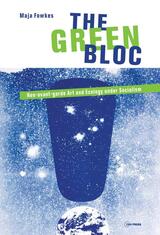
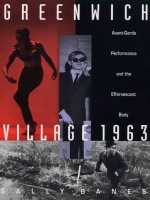
A leading writer on cultural history, Banes draws a vibrant portrait of the artists and performers who gave the 1963 Village its exhilarating force, the avant-garde whose interweaving of public and private life, work and play, art and ordinary experience, began a wholesale reworking of the social and cultural fabric of America. Among these young artists were many who went on to become acknowledged masters in their fields, including Andy Warhol, John Cage, Yoko Ono, Yvonne Rainer, Lanford Wilson, Sam Shepard, Brian de Palma, Harvey Keitel, Kate Millet, and Claes Oldenburg. In live performance--Off-Off Broadway theater, Happenings, Fluxus, and dance--as well as in Pop Art and underground film, we see this generation of artists laying the groundwork for the explosion of the counterculture in the late 1960s and the emergence of postmodernism in the 1970s. Exploring themes of community, freedom, equality, the body, and the absolute, Banes shows us how the Sixties artists, though shaped by a culture of hope and optimism, helped to galvanize a culture of criticism and change. As 1963 came to define the Sixties, so this vivid account of the year will redefine a crucial generation in recent American history.

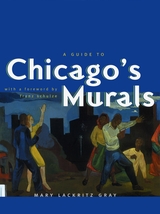
With full-color illustrations of nearly two hundred Chicago murals and accompanying entries that describe their history—who commissioned them and why, how artists collaborated with architects, the subjects of the murals and their contexts—A Guide to Chicago's Murals serves both a general and a specific audience. Divided into easy-to-read geographical sections with useful maps for walking tours, it is the perfect companion for tourists or Chicagoans interested in coming to know better this aspect of the city's history. Gray also provides crucial information on lesser-known artists and on murals that have been destroyed over the years, filling a gap in the visual record of the city's development.
Gray also includes biographies of more than 150 artists and a glossary of key terms, making A Guide to Chicago's Murals essential reading for mural viewing. From post offices to libraries, fieldhouses to banks, and private clubs to street corners, Mary Gray chronicles the amazing works of artists who have sought to make public declarations in this most social of art forms.
"A major lacuna in the history of art in Chicago has been filled, with the thoroughness of the research proportionate to the richness of the material revealed."—From the Foreword by Franz Schulze
"Gray's book . . . can function as a guidebook, as the murals are conveniently arranged according to the quadrants of the city. But the book is also beautiful to look at and indespensable as art history and Chicago history as well. . . . This book is a wonderful guide to Chicago's rich and unique mural tradition."—Elizabeth Alexander, Chicago Tribune Books
"If you love art and history, this is a book you'll truly enjoy."—Al Paulson, Utne Reader
The book was originally published in Spanish in 1958 and revised in 1961. This English translation, from the second edition has been brought up to date by the author and translator.
READERS
Browse our collection.
PUBLISHERS
See BiblioVault's publisher services.
STUDENT SERVICES
Files for college accessibility offices.
RECENTLY PUBLISHED


UChicago Accessibility Resources
home | accessibility | search | about | contact us
BiblioVault ® 2001 - 2026
The University of Chicago Press