
 A SCHOLARLY BOOK REPOSITORY
17 start with G start with G
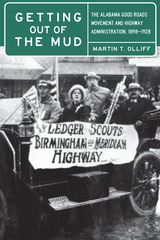
Recounts the history of the Good Roads Movement that arose in progressive-era Alabama, how it used the power of the state to achieve its objectives of improving market roads for farmers and highways for automobiles
Getting Out of the Mud: The Alabama Good Roads Movement and Highway Administration, 1898–1928 explores the history of the Good Roads Movement and investigates the nature of early twentieth-century progressivism in the state. Martin T. Olliff reveals how middle-class reformers secured political, economic, and social power not only by fighting against corporate domination and labor recalcitrance but also by proposing alternative projects like road improvement and identifying the interests of the rising middle class as being the most important to public interest.
With the development of national markets in the late nineteenth and early twentieth centuries, Americans began to regard the nation as a whole, rather than their state or region, as the most important political entity. Many Alabamians wished to travel beyond their local communities in all seasons without getting stuck in the mud of rudimentary rutted dirt roads. The onset of the automobile age bolstered the need for roadmaking, alerting both automobilists and good roads advocates to the possibility of a new transportation infrastructure. The Good Roads Movement began promoting farm-to-market roads, then highways that linked cities, then those that connected states. Federal matching funds for road construction after 1916 led state and federal governments to supplant the Good Roads Movement, building and administering the highway system that emerged by the late 1920s.
Olliff’s study of how Alabamians dealt with strained resources and overcame serious political obstacles in order to construct a road system that would accommodate economic growth in the twentieth century may offer clues to the resurrection of a similar strategy in our modern era. Many problems are unchanged over the hundred years between crises: Alabamians demand good roads and a government that has the capacity to build and maintain such an infrastructure while, at the same time, citizens are voting into office men and women who promise lower taxes and smaller government.
"This is a riveting story: of mighty railroads hamstrung almost overnight by government bureaucrats; of road interests led by General Motors Corp. conspiring in city after city to destroy efficient trolley systems . . . and of freeways that are far from free."—Bill Laitner, Detroit Free Press
"The combination of forces and fates that turned America into a giant parking lot from sea to shining sea is the subject of Stephen B. Goddard's lively pop history. . . . As Mr. Goddard ably points out, road-building and the creation of car-dependent suburbs have become ends in themselves."—James Howard Kunstler, Wall Street Journal
"The strength of Goddard's book is that he understands the complexities of manipulating public opinion to influence legislatures."—David Young, Chicago Tribune
"[Goddard's] book is a deft and easily read history of how transportation has shaped the nation and its economy, and ultimately, how a federation of truck and car interests drastically tilted national policies. . . . For many reasons this is an exceptionally important work."—Jim Dwyer, New York Newsday
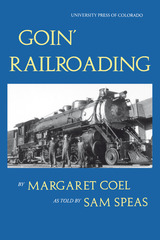
Goin' Railroading is the story of two generations of such men, four members of the Speas family who, from the open cabs of narrow-gauge steam engines, watched Colorado grow.
Sam Speas tells the story of his father, Sam Speas Sr., who left Missouri in 1883 to become an engineer in Colorado, and recounts his own experiences and those of his brothers and fellow railroaders on the Colorado and Southern Railway, from the golden era of the narrow-gauge lines in South Park to the final days of steam power on the Front Range and the coming of the diesel engine.
His stories are a profound document of a vanished way of life, a testament to the courage and tenacity of the early citizens of Colorado, and a tribute to the rough-hewn, often gallant men who took the trains through incredible, almost unbelievable, hazards. Funny, tragic, bittersweet, and poignant, Goin' Railroading is a remarkable book that brings a portion of the history and people of an earlier Colorado to vibrant life.

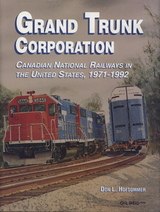
The Detroit, Michigan-based Grand Trunk Corporation was established more than two decades ago by Canadian National to oversee and maximize the potential of its railroad holdings in the United States. By making use of corporate records, oral histories, and archival material, Hofsommer uncovers the interesting and complex history of Grand Trunk from its inception in 1971 through 1992.
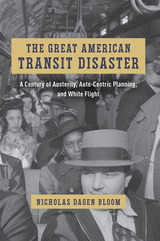
Many a scholar and policy analyst has lamented American dependence on cars and the corresponding lack of federal investment in public transportation throughout the latter decades of the twentieth century. But as Nicholas Dagen Bloom shows in The Great American Transit Disaster, our transit networks are so bad for a very simple reason: we wanted it this way.
Focusing on Baltimore, Atlanta, Chicago, Detroit, Boston, and San Francisco, Bloom provides overwhelming evidence that transit disinvestment was a choice rather than destiny. He pinpoints three major factors that led to the decline of public transit in the United States: municipal austerity policies that denied most transit agencies the funding to sustain high-quality service; the encouragement of auto-centric planning; and white flight from dense city centers to far-flung suburbs. As Bloom makes clear, these local public policy decisions were not the product of a nefarious auto industry or any other grand conspiracy—all were widely supported by voters, who effectively shut out options for transit-friendly futures. With this book, Bloom seeks not only to dispel our accepted transit myths but hopefully to lay new tracks for today’s conversations about public transportation funding.
A potent re-examination of America’s history of public disinvestment in mass transit.
Many a scholar and policy analyst has lamented American dependence on cars and the corresponding lack of federal investment in public transportation throughout the latter decades of the twentieth century. But as Nicholas Dagen Bloom shows in The Great American Transit Disaster, our transit networks are so bad for a very simple reason: we wanted it this way.
Focusing on Baltimore, Atlanta, Chicago, Detroit, Boston, and San Francisco, Bloom provides overwhelming evidence that transit disinvestment was a choice rather than destiny. He pinpoints three major factors that led to the decline of public transit in the United States: municipal austerity policies that denied most transit agencies the funding to sustain high-quality service; the encouragement of auto-centric planning; and white flight from dense city centers to far-flung suburbs. As Bloom makes clear, these local public policy decisions were not the product of a nefarious auto industry or any other grand conspiracy—all were widely supported by voters, who effectively shut out options for transit-friendly futures. With this book, Bloom seeks not only to dispel our accepted transit myths but hopefully to lay new tracks for today’s conversations about public transportation funding.
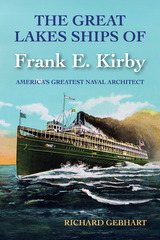
This study of the legendary Michigan shipbuilder Frank E. Kirby examines his life and the accomplishments that earned him national esteem and international fame. Kirby was involved in the design and build of nearly one hundred vessels, many of which sailed the Great Lakes region. He is best known for designing the paddle steamer Tashmoo and two boats that ferried visitors to Boblo Island in the Detroit River for decades, Columbia and Ste. Claire. Though only three of his vessels remain, none of them operational, hundreds of thousands of Michiganders who are still alive today have been carried by Kirby vessels. Told through stories found in the Detroit Free Press, historical archives, family documents, an interview conducted by his daughter-in-law Dorothy Clement Kirby in 1926, and keepsakes, Richard Gebhart brings to life the story of one of the most prolific Great Lakes shipbuilders of the time.
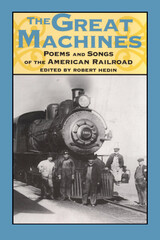
Here, for the first time, is a feast for anyone who has ever been beguiled by the trains that formerly thrummed through the landscapes of our lives. This entertaining and evocative anthology presents the amazing variety of poems and songs written about the American railroad in the last century and a half. Comprised of selections from both oral and written traditions, the volume celebrates the historical and cultural significance of this marvel of engineering skills. Hedin's anthology allows all readers, from the most avid railroad buff to anyone who has fond memories of train travel, to enjoy the romance of trains.
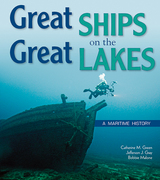
In this highly accessible history of ships and shipping on the Great Lakes, upper elementary readers are taken on a rip-roaring journey through the waterways of the upper Midwest.
Great Ships on the Great Lakes explores the history of the region’s rivers, lakes, and inland seas—and the people and ships who navigated them. Read along as the first peoples paddle tributaries in birch bark canoes. Follow as European voyageurs pilot rivers and lakes to get beaver pelts back to the eastern market. Watch as settlers build towns and eventually cities on the shores of the Great Lakes. Listen to the stories of sailors, lighthouse keepers, and shipping agents whose livelihoods depended on the dangerous waters of Lake Michigan, Superior, Huron, Erie, and Ontario. Give an ear to their stories of unexpected tragedy and miraculous rescue, and heed their tales of risk and reward on the low seas.
Great Ships also tells the story of sea battles and gunships, of the first vessels to travel beyond the Niagara, and of the treacherous storms and cold weather that caused thousands of ships to sink in the Great Lakes. Watch as underwater archaeologists solve the mysteries of Great Lakes shipwrecks today. And learn how the shift from sail to steam forever changed the history of shipping, as schooners made way for steamships and bulk freighters, and sailing became a recreation, not a hazardous way of life.
Designed for the upper elementary classroom with emphasis on Michigan and Wisconsin, Great Ships on the Great Lakes includes a timeline of events, on-page vocabulary, and a list of resources and places to visit. Over 20 maps highlight the region’s maritime history. The accompanying Teacher’s Guide includes 18 classroom activities, arranged by chapter, including lessons on exploring shipwrecks and learning how glaciers moved across the landscape.
Great Ships on the Great Lakes explores the history of the region’s rivers, lakes, and inland seas—and the people and ships who navigated them. Read along as the first peoples paddle tributaries in birch bark canoes. Follow as European voyageurs pilot rivers and lakes to get beaver pelts back to the eastern market. Watch as settlers build towns and eventually cities on the shores of the Great Lakes. Listen to the stories of sailors, lighthouse keepers, and shipping agents whose livelihoods depended on the dangerous waters of Lake Michigan, Superior, Huron, Erie, and Ontario. Give an ear to their stories of unexpected tragedy and miraculous rescue, and heed their tales of risk and reward on the low seas.
Great Ships also tells the story of sea battles and gunships, of the first vessels to travel beyond the Niagara, and of the treacherous storms and cold weather that caused thousands of ships to sink in the Great Lakes. Watch as underwater archaeologists solve the mysteries of Great Lakes shipwrecks today. And learn how the shift from sail to steam forever changed the history of shipping, as schooners made way for steamships and bulk freighters, and sailing became a recreation, not a hazardous way of life.
Designed for the upper elementary classroom with emphasis on Michigan and Wisconsin, Great Ships on the Great Lakes includes a timeline of events, on-page vocabulary, and a list of resources and places to visit. Over 20 maps highlight the region’s maritime history. The accompanying Teacher’s Guide includes 18 classroom activities, arranged by chapter, including lessons on exploring shipwrecks and learning how glaciers moved across the landscape.
A spectacular example of collective protest, the Great Strike of 1877--actually a sequence of related actions--was America's first national strike and the first major strike against the railroad industry. In some places, non-railroad workers also abandoned city businesses, creating one of the nation's first general strikes. Mobilizing hundreds of thousands of workers, the Great Strikes of 1877 transformed the nation's political landscape, shifting the primary political focus from Reconstruction to labor, capital, and the changing role of the state.
Probing essays by distinguished historians explore the social, political, regional, and ethnic landscape of the Great Strikes of 1877: long-term effects on state militias and national guard units; ethnic and class characterization of strikers; pictorial representations of poor laborers in the press; organizational strategies employed by railroad workers; participation by blacks; violence against Chinese immigrants; and the developing tension between capitalism and racial equality in the United States.
Contributors: Joshua Brown, Steven J. Hoffman, Michael Kazin, David Miller, Richard Schneirov, David O. Stowell, and Shelton Stromquist.

As commercial flight is changing dramatically and its future remains unclear, a look at how we got here
Grounded: Perpetual Flight . . . and Then the Pandemic considers the time leading up to the COVID-19 pandemic and the ensuing global plummet in commercial flight. Mobility studies scholar Christopher Schaberg tours the newly opened airport terminal outside of New Orleans (MSY) in late 2019, and goes on to survey the broad cultural landscape of empty airports and grounded planes in the early months of the novel coronavirus’s spread in 2020. The book culminates in a reflection on the future of air travel: what may unfold, and what parts of commercial flight are almost certainly relics of the past. Grounded blends journalistic reportage with cultural theory and philosophical inquiry in order to offer graspable insights as well as a stinging critique of contemporary air travel.
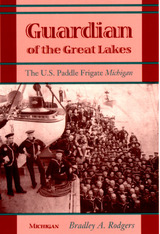
Guardian of the Great Lakes is the saga of the USS Michigan, an archetype iron-hulled war steamer launched in 1843. Its mission was to patrol the ofttimes volatile Great Lakes region, quelling port town civil disturbances, while at the same time rescuing both Canadian and American ships in distress.
The Michigan found itself unavoidably attracted to calamity, leaving in its wake a collection of eyewitness accounts to these momentous yet largely forgotten occurences. Incidents such as the timber rebellion of the 1850s, which occurred in Wisconsin, Illinois, and Michigan, are documented for the first time. Other episodes such as the assassination of "king" Strang on Beaver Island and the destruction of the community there are studied under the light of newly discovered sources. Still other chapters reveal the chaos created by the Civil War on the lakes, the destructive mining strikes of Michigan's Upper Peninsula, and the tragic, bloody, Fenian invasion of Canada.
Between major calamities lay the vagaries of maritime life on the Great Lakes detailed in the records of the Michigan's crew. From their social and community life in Erie, Pennsylvania to storms, shipwrecks, and sickness, the records kept by the men and officers of the USS Michigan have helped to produce in this book an accurate and detailed narrative of naval and maritime life on the Great Lakes during this important period.
Bradley A. Rodgers is Assistant Professor, Program in Maritime History and Nautical Archaeology, East Carolina University.


Gulf to Rockies is a chapter in the business and economic history of the American West and the story of two of the most colorful railroad builders of the nineteenth century.
Throughout the 1860s the mineral treasures of Colorado were virtually inaccessible for lack of railroads. Even after a hectic decade of building in the 1870s, the state faced a new sort of isolation: every railroad crossing her borders was controlled by the Union Pacific or the Santa Fe. As a result, the Rocky Mountain region could not hope to compete with the Midwest for the business of the Atlantic seaboard.
To remedy this situation, John Evans, former governor of Colorado, organized in 1881 a railroad to run southward from Denver as the first link in a cheap rail-water route via the Gulf of Mexico to the East. Meanwhile ambitious Fort Worth citizens had incorporated the Fort Worth and Denver City in 1873. Not a rail was laid on either road, however, until General Grenville M. Dodge, famed builder of the Union Pacific and the Texas Pacific, took up the Texas project and joined forces with Evans to create the Gulf-to-Rockies route.
It took seven years for these men and their associates to mobilize funds and complete the Fort Worth–Denver line, and another decade to establish the system’s independence and solve its financial problems in the face of drought, depression, and intense competition.
Gulf to Rockies was written under special agreements with Northwestern University and the Chicago, Burlington & Quincy Railroad, whereby the university relieved Mr. Overton of a part of his duties in order that he might have time for research and writing and the railroad undertook to bear the cost of the research. The Burlington also permitted him free access to all company records and granted him unrestricted freedom to publish his findings.
READERS
Browse our collection.
PUBLISHERS
See BiblioVault's publisher services.
STUDENT SERVICES
Files for college accessibility offices.
RECENTLY PUBLISHED







UChicago Accessibility Resources
home | accessibility | search | about | contact us
BiblioVault ® 2001 - 2026
The University of Chicago Press