
 A SCHOLARLY BOOK REPOSITORY
24 start with H start with H


Following the imposition of Habsburg rule on Ottoman Bosnia in 1878, a new garrison was constructed in the old citadel of Trebinje. By using a micro-historical approach, this innovative book tells the story of the garrison in times of peace and war, describing the way in which the Austro-Hungarian administration rapidly transformed Trebinje into a tree-lined city dominated by the army.
Yet, the Habsburg "civilizing mission," marked by the building of hospitals, schools, roads, and railways was accompanied by ruthless violence against those who resisted the new foreign occupiers, especially after 1914. The tragic violence is described in the book alongside accounts of daily life. By personalizing historical events, the narrative reveals the perspective of people who found themselves in Trebinje and its garrison complex: the ordinary soldier, the condemned “insurgent,” the career officer, the cook, the shepherdess, the hotelier, or the journalist—all willing or unwilling participants in an extra-European style colonial project in the heart of Europe.


A long essay entitled Three Historical Regions of Europe, appearing first in a samizdat volume in Budapest in 1980, instantly put its author into the forefront of the transnational debate on Central Europe, alongside such intellectual luminaries as Milan Kundera and Czesław Miłosz. The present volume offers English-language readers a rich selection of the depth and breadth of the legacy of Jenő Szűcs (1928–1988).
The selection documents Szűcs’s seminal contribution to many contemporary debates in historical anthropology, nationalism studies, and conceptual history. It contains his key texts on the history of national consciousness and patterns of collective identity, as well as medieval and early modern political thought. The works published here, most of them previously unavailable in English, provide a sophisticated analysis of a wide range of subjects from the myths of origins of Hungarians before Christianization to the political and religious ideology of the Dózsa peasant uprising in 1514, the medieval roots of civil society, or the revival of ethnic nationalism during the communist era. The volume, with an introduction by the editors locating Szűcs in a transnational context, offers a unique insight into the complex and sensitive debate on national identity in post-1945 East Central Europe.

A detailed interactional analysis and thick ethnographic description demonstrate how the temporal, moral and emotional distancing practices reenforce the lay moralities and political subjectivities of the white middle-class. This comes with (mostly unintended) consequences. Distanced approaches to the Holocaust in non-academic environments reduce empathy for victims and survivors, normalize violence, disconnect the meaning of the Holocaust from contemporary conflict, and re-activate stereotypes about groups who employ more ‘close’ approaches to the Holocaust.

There is a considerable difference between real history and discourse history - this book stems from this idea. The author points out that history is constantly reconstructed, adapted and sometimes mythified from the perspective of the present day, of present states of mind and ideologies. Boia closely examines the process of historical culture and conscience in nineteenth and twentieth century Romania, particularly concentrating on the impact of the national ideology on history. Based upon his findings, the author identifies several key mythical configurations and analyses the manner in which Romanians have reconstituted their own highly ideologized history over the last two centuries.
The strength of History and Myth in Romanian Consciousness lies in the author's ability to fully deconstruct the entire Romanian historiographic system and demonstrate the increasing acuteness of national problems in general, and in particular the exploitation of history to support national ideology.

Ivan T. Berend is Distinguished Professor at the University of California Los Angeles, Director of the European Studies Program. He was one of the masterminds of regime change in Hungary. He made a career in Hungary as a university professor, Rector of the University of Economics (1973–79), and President of the Hungarian Academy of Sciences (1985–90). He was President of the International Committee of Historical Sciences (1995–2000), and Vice-President of the International Economic History Association (1986–1994). His research interests are the complex economic, social, ideological, and cultural history of Central and Eastern Europe in the 19th–20th century; economic modernization; problems of European backwardness; transition from state socialism to capitalism. He published and 26 books and more than 120 studies.
Before he became a professor at UCLA, Ivan Berend had survived five regime changes and two revolutions in Hungary, had been in prison and German concentration camp in 1944–45.
His memoir offers an interesting case study, a subjective addition to the “objective” historical works on Central and Eastern European state socialism. It describes the hard choices of intellectuals in a dictatorial state: 1. remain in isolation, concentrate on scholarly works, and exclude politics in your personal life; 2. be in opposition, criticize and unveil the regime, accept discrimination and exclusion; 3. remain within the establishment and work for reforming the country using legal possibilities to criticize the regime and to achieve changes from within.
Berend’s book raises basic historical questions and debates, compares East European and American higher education systems, and presents an eyewitness’ insights on life in the United States.






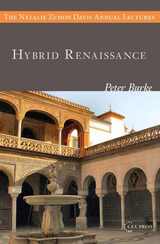
Hybrid Renaissance introduces the idea that the Renaissance in Italy, elsewhere in Europe, and in the world beyond Europe is an example of cultural hybridization.
The two key concepts used in this book are “hybridization” and “Renaissance”. Roughly speaking, hybridity refers to something new that emerges from the combination of diverse older elements. (The term “hybridization” is preferable to “hybridity” because it refers to a process rather than to a state, and also because it encourages the writer and the readers alike to think in terms of degree: where there is more or less, rather than presence versus absence.)
The book begins with a discussion of the concept of cultural hybridization and a cluster of other concepts related to it. Then comes a geography of cultural hybridization focusing on three locales: courts, major cities (whether ports or capitals) and frontiers. The following seven chapters describe the hybridity of the Renaissance in different fields: architecture, painting and sculpture, languages, literature, music, philosophy and law and finally religion. The essay concludes with a brief account of attempts to resist hybridization or to purify cultures or domains from what was already hybridized.
READERS
Browse our collection.
PUBLISHERS
See BiblioVault's publisher services.
STUDENT SERVICES
Files for college accessibility offices.
RECENTLY PUBLISHED






UChicago Accessibility Resources
home | accessibility | search | about | contact us
BiblioVault ® 2001 - 2026
The University of Chicago Press