
 A SCHOLARLY BOOK REPOSITORY
28 start with H start with H


Léger writes against a Haiti- and Haitians-less idea of the Revolution. She asks scholars and artists of the Revolution to know Haitians as Ginens (African Haitians) and Haiti as Ayiti Ginen (Africa Haiti). This form of knowing demands a decolonial understanding of the Haitian Revolution and a reevaluation of its stories as told by influential twentieth-century Caribbean writers. The story she tells showcases the immense political impact of the African Haitian revolutionist’s philosophies of freedom in Saint Domingue and Haiti thereafter; and she argues that the absence of these philosophies in Caribbean classics of the Revolution demands consideration of why these classics continue to shape how the Revolution and Haiti are discussed in Caribbean Studies, Black Studies, Postcolonial Studies and Haitian Studies. More pressingly, Léger calls on artists and scholars of the Revolution to be mindful of how Haiti and Haitians are figured in narratives of the Revolution. The immense space Haiti holds in Caribbean imaginings of freedom and revolution makes mediating it, its Revolution, and peoples through a prejudiced gaze that serves the West hugely problematic, since a denigrated Haiti yields stunted visions of the Caribbean’s future. These conditions require attention to the pervasive presence of colonial paradigms for being in classic literatures of the Revolution and the way they undermine the generative manner Caribbean writers have used Haiti to think through their past, present, and future.
• social networks, neighborhoods, and social capital
• disability
• dying and "the right to die"
• health disparities
• the growing influence of the pharmaceutical industry
• the Internet
• evidence-based medicine and quality of care
• health social movements
• genetics
• religion, spirituality, and health
The stores of Mildred Haun, collected here for the first time, are unique in the annals of American literature. Set in the Smoky Mountains of East Tennessee and covering a span of family history from the Civil War to 1940, these tales achieve the forceful, intractable simplicity of the traditional ballads. But one also finds in these twenty-three stories an overview of the forces of nature, the paradoxes inherent in the human condition, and a full acceptance of the real world and the supernatural.
Born to the milieu about which she wrote, Mildred Haun recorded a world which combined stark natural phenomena and passionate supernatural forces. And because the supernatural is woven into the dramatic fabric of the stories, it contributes, paradoxically, to the final credibility of events.
Few writers in the twentieth century have set down so rich and complex a rendering of folk tradition and such a comprehensive treatment of superstition in the southern Appalachians. In these tales we meet a talking apple tree, a boy with the “hant bleach” of doom upon his brow, a bleeding ghost, a child’s winding sheet wet with tears, and God’s revelation in a blue bird.
No other dialect collection from the South has been as close to the oral tradition or has achieved the same distinctive flavor and natural tonal qualities. The speech strikes the ear directly from the printed page. The language is simple and strong. A sparse, direct economy prevails. The total impact is explosive.
Although Miss Haun dramatized themes of cruelty, revenge, and the loss of personal dignity in a harsh world, the comic tales in this volume call to mind the Native American humor of the Old Southwest and demonstrate that a female humorist, without coyness or bawdry, can hold her own alongside Davy Crockett, Sut Lovingood, and the nameless spinners of tall tales.
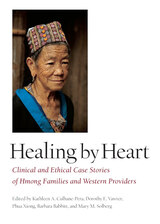
Ranging in age from young infants to older adults, the patients in the stories present a wide range of health problems. The clinicians are from family practice, internal medicine, pediatrics, emergency medicine, surgery, obstetrics-gynecology, psychiatry/psychology, and hospice.
Each of the fourteen case stories is accompanied by discussion questions as well as two or three commentaries. The commentaries--written by patients, family members, shaman, Western clinicians (including Hmong physicians, nurses, and social workers), medical anthropologists, health care ethicists, social workers, psychologists, and clergy--are rich in personal reflections on cross-cultural health care experiences. Readers are rewarded with a combination of perspectives, including those of Hmong authors who have not previously published in English and scholars with years of professional experience working with the Hmong in Laos, Thailand, and the United States.
The editors offer a model for delivering culturally responsive health care with special attention to matters of cross-cultural health care ethics. The model identifies questions health care providers can focus on as they seek to understand the health-related moral commitments and practices prevalent in the cultural groups they serve, ethical questions that arise frequently and with great poignancy in cross-cultural health care relationships, and points to consider when a patient's treatment wish challenges the provider's professional integrity.
By sharing stories of suffering, confusion, and success, Healing by Heart couples an accessible method of learning about others with concrete recommendations about how to enhance cross-cultural health care relationships.

Here is how Neil Boothby, Director of the Program on Forced Migration and Health at the Mailman School of Public Health, Columbia University, describes the book:
"Mollica provides a wealth of ethnographic and clinical evidence that suggests the human capacity to heal is innate--that the 'survival instinct' extends beyond the physical to include the psychological as well. He enables us to see how recovery from 'traumatic life events' needs to be viewed primarily as a 'mystery' to be listened to and explored, rather than solely as a 'problem' to be identified and solved. Healing involves a quest for meaning--with all of its emotional, cultural, religious, spiritual and existential attendants--even when bio-chemical reactions are also operative."
Healing Invisible Wounds reveals how trauma survivors, through the telling of their stories, teach all of us how to deal with the tragic events of everyday life. Mollica's important discovery that humiliation--an instrument of violence that also leads to anger and despair--can be transformed through his therapeutic project into solace and redemption is a remarkable new contribution to survivors and clinicians.
This book reveals how in every society we have to move away from viewing trauma survivors as "broken people" and "outcasts" to seeing them as courageous people actively contributing to larger social goals. When violence occurs, there is damage not only to individuals but to entire societies, and to the world. Through the journey of self-healing that survivors make, they enable the rest of us not only as individuals but as entire communities to recover from injury in a violent world.

Her Oxford looks at the people and the political and social forces that produced this dramatic transformation. Drawing on a vast array of biographies, histories, obituaries, and archives, Batson traces not only the institutional struggles over privileges and disciplinary rules for women, but also the rich texture of everyday life-women's amateur theatricals, debating societies, sports, and college escapades (Dorothy Sayers is the subject of quite a few). She tells the stories of women's active roles in two war efforts and in the suffrage movement.
An unusual feature of the book is the set of 120 biographical profiles of women who attended Oxford between 1879 and 1960. They constitute a Who's Who of women scientists, anthropologists, psychotherapists, educators, novelists, and social reformers in the English-speaking world.

During his time in the Pacific, Melville served on three whaling ships, as well as on a U.S. Navy man-of-war. As a deserter from one whaleship, he spent four weeks among the cannibals of Nukahiva in the Marquesas, seeing those islands in a relatively untouched state before they were irrevocably changed by French annexation in 1842. Rebelling against duty on another ship, he was held as a prisoner in a native calaboose in Tahiti. He prowled South American ports while on liberty, hunted giant tortoises in the Galapagos Islands, and explored the islands of Eimeo (Moorea) and Maui. He also saw the Society and Sandwich (Hawaiian) Islands when the Western missionary presence was at its height.
Heflin combed the logbooks of any ship at sea at the time of Melville's voyages and examined nineteenth-century newspaper items, especially the marine intelligence columns, for mention of Melville's vessels. He also studied British consular records pertaining to the mutiny aboard the Australian whaler Lucy Ann, an insurrection in which Melville participated and which inspired his second novel, Omoo.
Distilling the life's work of a leading Melville expert into book form for the first time, this scrupulously edited volume is the most in-depth account ever published of Melville's years on whaleships and how those singular experiences influenced his writing.

More than ten thousand known caves lie beneath the state of Tennessee according to the Tennessee Cave Survey, a nonprofit organization that catalogs and maps them. Thousands more riddle surrounding states. In Hidden Nature, Michael Ray Taylor tells the story of this vast underground wilderness. In addition to describing the sheer physical majesty of the region’s wild caverns and the concurrent joys and dangers of exploring them, he examines their rich natural history and scientific import, their relationship to clean water and a healthy surface environment, and their uncertain future.
As a longtime caver and the author of three popular books related to caving—Cave Passages, Dark Life, and Caves—Taylor enjoys (for a journalist) unusual access to this secretive world. He is personally acquainted with many of the region’s most accomplished cave explorers and scientists, and they in turn are familiar with his popular writing on caves in books; in magazines such as Audubon, Outside, and Sports Illustrated; and on websites such as those of the Discovery Channel and the PBS science series Nova.
Hidden Nature is structured as a comprehensive work of well-researched fact that reads like a personal narrative of the author’s long attraction to these caves and the people who dare enter their hidden chambers.

More than ten thousand known caves lie beneath the state of Tennessee according to the Tennessee Cave Survey, a nonprofit organization that catalogs and maps them. Thousands more riddle surrounding states. In Hidden Nature, Michael Ray Taylor tells the story of this vast underground wilderness. In addition to describing the sheer physical majesty of the region’s wild caverns and the concurrent joys and dangers of exploring them, he examines their rich natural history and scientific import, their relationship to clean water and a healthy surface environment, and their uncertain future.
As a longtime caver and the author of three popular books related to caving—Cave Passages, Dark Life, and Caves—Taylor enjoys (for a journalist) unusual access to this secretive world. He is personally acquainted with many of the region’s most accomplished cave explorers and scientists, and they in turn are familiar with his popular writing on caves in books; in magazines such as Audubon, Outside, and Sports Illustrated; and on websites such as those of the Discovery Channel and the PBS science series Nova.
Hidden Nature is structured as a comprehensive work of well-researched fact that reads like a personal narrative of the author’s long attraction to these caves and the people who dare enter their hidden chambers.


In Higglers in Kingston, Winnifred Brown-Glaude puts the reader on the ground in frenetic urban Kingston, the capital and largest city in Jamaica. She explores the lives of informal market laborers, called "higglers," across the city as they navigate a corrupt and inaccessible "official" Jamaican economy. But rather than focus merely on the present-day situation, she contextualizes how Jamaica arrived at this point, delving deep into the island's history as a former colony, a home to slaves and masters alike, and an eventual nation of competing and conflicted racial sectors.
Higglers in Kingston weaves together contemporary ethnography, economic history, and sociology of race to address a broad audience of readers on a crucial economic and cultural center.
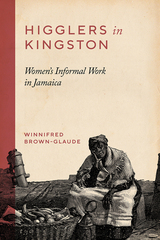
In Higglers in Kingston, Winnifred Brown-Glaude puts the reader on the ground in frenetic urban Kingston, the capital and largest city in Jamaica. She explores the lives of informal market laborers, called "higglers," across the city as they navigate a corrupt and inaccessible "official" Jamaican economy. But rather than focus merely on the present-day situation, she contextualizes how Jamaica arrived at this point, delving deep into the island's history as a former colony, a home to slaves and masters alike, and an eventual nation of competing and conflicted racial sectors.
Higglers in Kingston weaves together contemporary ethnography, economic history, and sociology of race to address a broad audience of readers on a crucial economic and cultural center.


First, Cohn proposes that Faulkner's appeal derives from Spanish American authors' perception of similarities between the South's history and the experiences of their own respective nations. She delineates historical experiences common to the South and Spanish America, including civil wars, defeat and dispossession, regional marginalization, and socio-economic hardship. She also suggests that Spanish American authors found in Faulkner a set of concerns with which they could identify and that, as a result, they were inspired to take up the stylistic innovations characteristic of his writing. The resulting assimilation and adaptation of Euro-American modernism through Faulkner has been an indispensable part of what is known as la nueva narrativa, "the new narrative," as well as of successive movements in Spanish American literature.
From another perspective, Cohn's book shows points of contact between works by other southern and Spanish American novelists without positing relations of influence. Specifically, after identifying common, recurrent themes in modern southern and Spanish American literature in general, Cohn reveals levels of a shared understanding of regional history in Faulkner and Mario Vargas Llosa, in Ralph Ellison and Isabel Allende, as well as in Katherine Anne Porter and Juan Rulfo. Her analyses compare and contrast these authors' shared attempts to provide correctives to official, mainstream historical discourse through alternate, parallel strategies for reconstructing, recording, and reclaiming the past.
In yoking together the South and Spanish America as neighboring spaces with similar personalities, Cohn advances a daring and controversial thesis that both narrows and enhances the frame of comparison between the literatures of the South and Spanish America.

The book interweaves an autobiographical narrative with concrete research. Mraz describes the resistance he encountered in US academia to this new way of showing and describing the past in films and photographs, as well as some illuminating experiences as a visiting professor at several US universities. More importantly, he reflects on what it has meant to move to Mexico and become a Mexican. Mexico is home to a thriving school of photohistorians perhaps unequaled in the world. Some were trained in art history, and a few continue to pursue that discipline. However, the great majority work from the discipline known as "photohistory" which focuses on vernacular photographs made outside of artistic intentions.
A central premise of the book is that knowing the cultures of the past and of the other is crucial in societies dominated by short-term and parochial thinking, and that today's hyper-audiovisuality requires historians to use modern media to offer their knowledge as alternatives to the "perpetual present" in which we live.
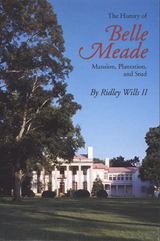
During the latter half of the nineteenth century, Belle Meade became probably the most important nursery for Thoroughbred race horses in America. Since that time, virtually every Kentucky Derby winner can trace its lineage back to Belle Meade. Belle Meade also holds a place in American history as a stage for the comings and goings of great people and events. Weaving together family and regional history, Wills provides his reader with a fascinating account of the land, people, buildings, and horses that for a century made Belle Meade a significant focal point for Tennessee and the South.
The book consists of five parts: introduction; history of the Holocaust; representations of the Holocaust in literature, film, and the arts; other genocides; and ethics. The curriculum, shaped with feedback from those who teach Holocaust studies, consists mainly of primary documents and their analysis. Each section includes a general introduction to a body of knowledge that reflects current research and detailed introductions to particular documents. Throughout the book, there are provocative discussion questions and suggestions for further reading and other resources. Each section features "links" to other parts to encourage interdisciplinary reflection. The final section on ethics addresses the difficult questions raised by genocide.
The Holocaust and Other Genocides is designed as a model for flexible, innovative teaching about this complex subject. It is also a sophisticated, interdisciplinary effort to create the conditions for discussing and understanding the genocides of the twentieth century.

But for almost seventy years, hot chicken was made and sold primarily in Nashville’s Black neighborhoods—and the story of hot chicken says something powerful about race relations in Nashville, especially as the city tries to figure out what it will be in the future.
Hot, Hot Chicken recounts the history of Nashville’s Black communities through the story of its hot chicken scene from the Civil War, when Nashville became a segregated city, through the tornado that ripped through North Nashville in March 2020.
But for almost seventy years, hot chicken was made and sold primarily in Nashville’s Black neighborhoods—and the story of hot chicken says something powerful about race relations in Nashville, especially as the city tries to figure out what it will be in the future.
Hot, Hot Chicken recounts the history of Nashville’s Black communities through the story of its hot chicken scene from the Civil War, when Nashville became a segregated city, through the tornado that ripped through North Nashville in March 2020.

What followed was a year of unprecedented challenge and scrutiny. Jahangir, who immigrated to the US from Iran at age six, grew up in Nashville. He thought he knew the city well. But the pandemic laid bare ethnic, racial, and cultural tensions that daily threatened to derail what should have been a collective effort to keep residents healthy and safe.
Hot Spot is Jahangir's narrative of the first year of COVID, derived from his op notes (the journal-like entries surgeons often keep following operations) and expanded to include his personal reflections and a glimpse into the inner sanctums of city and state governance in crisis.
What followed was a year of unprecedented challenge and scrutiny. Jahangir, who immigrated to the US from Iran at age six, grew up in Nashville. He thought he knew the city well. But the pandemic laid bare ethnic, racial, and cultural tensions that daily threatened to derail what should have been a collective effort to keep residents healthy and safe.
Hot Spot is Jahangir's narrative of the first year of COVID, derived from his op notes (the journal-like entries surgeons often keep following operations) and expanded to include his personal reflections and a glimpse into the inner sanctums of city and state governance in crisis.

This book is a demonstration of how social reformers and politicians have used the amendment process to achieve favorable political results even as their proposed amendments have failed to be adopted. For example, the ERA "failed" in the sense that it was never ratified, but the mobilization to ratify the ERA helped build the feminist movement (and also sparked a countermobilization). Similarly, the Supreme Court's ban on compulsory school prayer led to a barrage of proposed amendments to reverse the Court. They failed to achieve the requisite two-thirds support from Congress, but nevertheless had an impact on the political landscape. The definition of the relationship between Congress and the President in the conduct of foreign policy can also be traced directly to failed efforts to amend the Constitution during the Cold War.
Roger Hartley examines familiar examples like the ERA, balanced budget amendment proposals, and pro-life attempts to overturn Roe v. Wade, but also takes the reader on a three-century tour of lesser-known amendments. He explains how often the mere threat of calling a constitutional convention (at which anything could happen) effected political change.

The only way to transform Haiti's dismal human rights legacy is through a bottom-up social movement, supported by local and international challenges to the status quo. That recipe for reform mirrors the strategy followed by Mario Joseph, Brian Concannon, and their clients and colleagues profiled in this book. Together, Joseph, Concannon, and their allies represent Haiti's best hope to escape the cycle of disaster, corruption, and violence that has characterized the country's two-hundred-year history. At the same time, their efforts are creating a template for a new and more effective human rights-focused strategy to turn around failed states and end global poverty.

Deeply touched by the tragedies of botched abortions that they witnessed as medical students and young physicians in Chile in the 1940s and later around the world, the authors have attempted in their professional lives and now in this book to establish a framework for dialogue to replace the polarization that exists today.
Doctors Faundes and Barzelatto use their decades of international work to document the personal experiences of different classes of women in different countries and those countries' policies and practices. No other book provides such a comprehensive and reasoned examination of the entire topic of abortion, from the medical to the religious and ethical and from the psychological to the legal, in plain language understandable by non-specialists.
The central thesis is that there are too many induced abortions in the world today, that most are preventable and should be prevented--a middle ground that both pro-life and pro-choice advocates can accept. The first part of the book reviews why women have abortions, as well as the magnitude and consequences. The second part examines values. The third part discusses effective interventions. The final part states conclusions about what can be done to reach a necessary social consensus.
The Portuguese edition of this book was issued at the very end of 2004. The Spanish edition, launched in mid-2005, is already in a second printing. The authors are making presentations at special events sponsored by universities, professional associations, and feminist networks in Argentina, Chile, Mexico, Peru, Uruguay, Colombia, the Dominican Republic, and the United States.

This book argues, however, that the fear of sexual abandon--though real--veiled an even more insidious fear: that women might be capable of intellectual equality with men and thus pose a threat to the most basic structures of French patriarchal society. In demonstrating the pervasiveness of this anxiety through analysis of nineteenth-century medical texts, literary criticism, and fiction, The Hysteric's Revenge brings into relief a critical relationship between the female mind and body that is essential to understanding the discursive position of the turn-of-the-century woman writer.
The novels presented here confront this mind/body problem through a wide variety of styles and genres that challenge conventional fin-de-siecle notions of femininity. From the compelling autobiography of Liane de Pougy--one of Paris's most renowned courtesans--to Colette's frank discussions of female pleasure in one of her early novels, to the violent creativity of Rachilde's androgynous heroine, Mesch demonstrates how both canonical and non-canonical writers promoted women's intellectual authority through the development of a sexual counter-discourse. In engaging the relationship between women's minds and bodies, these novels challenge the conclusions of a century of doctors who sought to prove a physiological basis for female intellectual inferiority. At the same time, they point the way towards later French feminists who sought to subvert patriarchal structures through literary explorations of sexuality.
READERS
Browse our collection.
PUBLISHERS
See BiblioVault's publisher services.
STUDENT SERVICES
Files for college accessibility offices.
RECENTLY PUBLISHED




UChicago Accessibility Resources
home | accessibility | search | about | contact us
BiblioVault ® 2001 - 2026
The University of Chicago Press