
 A SCHOLARLY BOOK REPOSITORY
8 start with H start with H
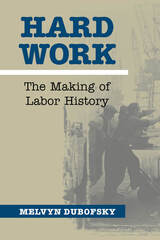
A career-spanning collection of writings by the legendary labor historian
One of American labor history's most prominent scholars, Melvyn Dubofsky curated an accessible style and historical reach that have long marked his work as required reading for students and scholars.
This collection juxtaposes Dubofsky's early writings with scholarship from the 1990s. Selections include work on western working-class radicalism, U.S. labor history in transnational and comparative settings, and the impact of technological change on American worker’s movements. Throughout, the writings provide an invaluable eyewitness perspective on the academic and political climate of the 1960s and 1970s while tracing the development of labor history as a discipline.
An exploration of important themes in labor history, Hard Work combines essential scholarship with the story of how past and present interact in the work of historians.
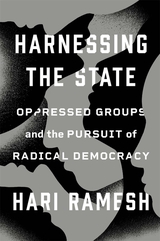
Building on the work of key twentieth-century US and Indian thinkers, a bold argument that oppressed groups can—and should—make use of state power to create truly democratic societies.
Group-based social oppression, along lines such as caste in India and race in the United States, is a persistent problem in nominally democratic countries. Unsurprisingly, many citizens are skeptical that the state can effectively address the problem. Pro-democracy scholars and activists often argue that the state is just a tool of society’s most powerful interests, who will stifle any attempted reform.
Yet some of the twentieth century’s most significant political thinkers offer a more hopeful and fruitful perspective. Foregrounding previously neglected connections between Indian and American sources, Hari Ramesh draws on insights from John Dewey, B. R. Ambedkar, W. E. B. Du Bois, and a key brief from Brown v. Board of Education to argue that oppressed groups can in fact wield the tools of the state to claim agency and dismantle the sources of their oppression. In this alternative account, state action fosters a radical vision of democracy, with citizens coming together as equals to formulate and pursue their political aims.
Group-based social oppression is not only unjust: by selectively preventing citizens from participating fully and equally in the project of self-government, oppression undermines the possibility of democracy itself. Harnessing the State shows a way forward.
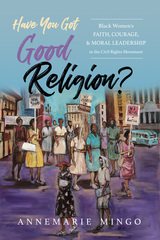
A depiction of moral imagination that resonates today, Have You Got Good Religion? reveals how Black Churchwomen’s understanding of God became action and transformed a nation.

Whether you cover the environment, healthcare, economics, politics, sports, or any other beat, the fact is, you need to understand climate change to do your job. Because climate affects every human (and animal, and plant) on Earth, that means it affects all our reporting.
You may know the basics when it comes to the science of human-driven climate change. But how about the major policies that determine global climate action or the growing number of legal climate-related cases? Have you considered what it means to practice journalism focused on solutions—rather than offering up a puff piece? What about how to cover the vast inequities generated from human-caused climate change, or how race and socioeconomics interact with climate? Are you prepared to detect and debunk misinformation and to remove bias from your stories?
Climate change is dramatically shifting so many aspects of our world, journalism included. So, whether you’re still a student or a fifty-year veteran, chances are, you could use some up-to-date guidance on how to report on this critical and endlessly complex issue. You have come to the right place. No resource has all the answers, but Hot Takes engages the big questions that will determine how climate change is covered, and the stories we tell our audiences and ourselves.

A young girl reckons with the demolition of a Black Saint Paul neighborhood to make way for the Interstate in the early 1960s
When thirteen-year-old Zenobia has to leave her friends and spend the summer at Grandma’s while Mama recovers from a stroke, life seems so unfair. But then the eviction letters start arriving throughout her grandparents’ neighborhood, and white men chalk arrows to mark the gas and water lines, and a new world of unfairness unfolds before her. It’s 1963, and Zenobia’s grandparents’ house on Rondo Avenue in Saint Paul—like all the homes in this thriving Black community—is targeted for demolition to make way for the new Interstate Highway 94.
As Zenobia gradually learns about what’s planned for the Rondo neighborhood and what this means for everyone who lives there, she discovers how her story is intertwined with the history of her family, all the way back to Great Grandma Zenobia and the secrets Grandma Essie held close about the reason for her light skin. With the destruction of the neighborhood looming, Zenobia takes a stand on behalf of her community, joining her no-nonsense neighbor, onetime cowgirl Mrs. Ruby Pearl, in a protest and ultimately getting arrested. Though Zenobia is grounded for a month, her punishment seems of little consequence in comparison to what is happening all around her. Even though the demolition continues, she is proud to discover the power and connection in protesting injustice.
The House on Rondo captures the heartbreak, resistance, and resilience that marks a community sacrificed in the name of progress—a “progress” that never seems to favor Black families and neighborhoods and that haunts cities like Saint Paul to this day. As Zenobia learns what can be destroyed and what cannot, her story teaches us that joy, community, and love persist, even amid violence and loss.

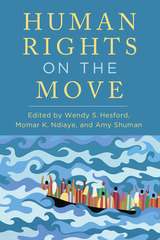
Contributing artists, activists, and scholars expose the fundamental paradox of human rights (namely that nation-states are violators and guarantors of rights) while also showing how people facing violence and persecution move with the hope of more livable and equitable futures. The assembled scholarly essays, interviews, and creative pieces demonstrate the importance of a more relational and contextual understanding of human rights—one that can destabilize current definitions and open space for new formulations.
READERS
Browse our collection.
PUBLISHERS
See BiblioVault's publisher services.
STUDENT SERVICES
Files for college accessibility offices.
RECENTLY PUBLISHED


UChicago Accessibility Resources
home | accessibility | search | about | contact us
BiblioVault ® 2001 - 2025
The University of Chicago Press