
 A SCHOLARLY BOOK REPOSITORY
3 start with H start with H
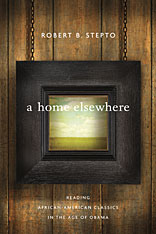
In this series of interlocking essays, which had their start as lectures inspired by the presidency of Barack Obama, Robert Burns Stepto sets canonical works of African American literature in conversation with Obama’s Dreams from My Father. The elegant readings that result shed surprising light on unexamined angles of works ranging from Frederick Douglass’s Narrative to W. E. B. Du Bois’s Souls of Black Folk to Toni Morrison’s Song of Solomon.
Stepto draws our attention to the concerns that recur in the books he takes up: how protagonists raise themselves, often without one or both parents; how black boys invent black manhood, often with no models before them; how protagonists seek and find a home elsewhere; and how they create personalities that can deal with the pain of abandonment. These are age-old themes in African American literature that, Stepto shows, gain a special poignancy and importance because our president has lived through these situations and circumstances and has written about them in a way that refreshes our understanding of the whole of African American literature.
Stepto amplifies these themes in four additional essays, which investigate Douglass’s correspondence with Harriet Beecher Stowe; Willard Savoy’s novel Alien Land and its interracial protagonist; the writer’s understanding of the reader in African American literature; and Stepto’s account of his own schoolhouse lessons, with their echoes of Douglass’ and Obama’s experiences.
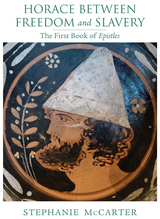
She argues that, although Horace commences the Epistles with an uncompromising insistence on freedom, he ultimately adopts a middle course. She shows how Horace explores in the poems the application of moderate freedom first to philosophy, then to friendship, poetry, and place. Rather than rejecting philosophical masters, Horace draws freely on them without swearing permanent allegiance to any—a model for compromise that allows him to enjoy poetic
renown and friendships with the city's elite while maintaining a private sphere of freedom. This moderation and adaptability, McCarter contends, become the chief ethical lessons that Horace learns for himself and teaches to others. She reads Horace's reconfiguration of freedom as a political response to the transformations of the new imperial age.

During the era of the Atlantic slave trade, more than twelve million enslaved Africans were forcibly transported to the Americas in cramped, inhumane conditions. Many of them died on the way, and those who survived had to endure further suffering in the violent conditions that met them onshore. Covering more than three hundred years, Humans in Shackles grapples with this history by foregrounding the lived experience of enslaved people in tracing the long, complex history of slavery in the Americas.
Based on twenty years of research, this book not only serves as a comprehensive history; it also expands that history by providing a truly transnational account that emphasizes the central role of Brazil in the Atlantic slave trade. Additionally, it is deeply informed by African history and shows how African practices and traditions survived and persisted in the Americas among communities of enslaved people. Drawing on primary sources including travel accounts, pamphlets, newspaper articles, slave narratives, and visual sources such as artworks and artifacts, Araujo illuminates the social, cultural, and religious lives of enslaved people working in plantations and urban areas, building families and cultivating affective ties, congregating and re-creating their cultures, and organizing rebellions.
Humans in Shackles puts the lived experiences of enslaved peoples at the center of the story and investigates the heavy impact these atrocities have had on the current wealth disparity of the Americas and rampant anti-Black racism.
READERS
Browse our collection.
PUBLISHERS
See BiblioVault's publisher services.
STUDENT SERVICES
Files for college accessibility offices.
RECENTLY PUBLISHED


UChicago Accessibility Resources
home | accessibility | search | about | contact us
BiblioVault ® 2001 - 2026
The University of Chicago Press