
 A SCHOLARLY BOOK REPOSITORY
12 start with H start with H

Taking the “tidal wave” of memory in the late twentieth and early twenty-first century as its starting point, this monograph explores the collective memory of World War II in East Asia (1937–1945) through film. Weiss argues that Chinese, Japanese, and American remembrance of World War II is intertwined in what she terms a “memory loop,” the transnational mediation and remediation of war narratives. Gender is central to this process, as the changing representation of male soldiers, political leaders, and patriarchal father figures within these narratives reveals Japanese and Chinese challenges to each other and to the perceived “foundational” American narrative of the war. This process continues to intensify due to the globally visible nature of the memory loop, which drives this cycle of transmission, translation, and reassessment.
This volume is the first to bring together a collection of Chinese and Japanese war films that have received little attention in English-language literature. It also produces new readings of popular war memory in East Asia by revealing the gendered dimensions of collective remembrance in these films.
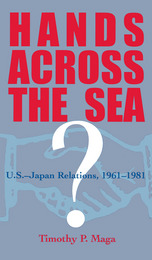
In 1961, the U.S. economy and military remained unassailable in the eyes of the world. Within twenty years, America faced defeat in Vietnam and its economy had been shaken. Japan was now considered the great economic superpower, while the U.S. and Japan reversed roles as surplus and debtor nations. Hands across the Sea? examines this reversal of roles, determining how and why America and Japan became the post-World War II era’s most argumentative allies.
Through extensive research in a number of presidential libraries and author interviews with both American and Japanese policy-makers, Professor Maga finds a U.S.-Japan relationship forever troubled by cultural misunderstanding, America’s Cold War obsession, Japanese pride, and strangely conflicting goals in both trade and defense. Given the intensity of the arguments over some of these issues, it is remarkable that Washington and Tokyo continued a working dialogue during this critical time.
Hands across the Sea? represents the first in-depth study of the modern U.S.-Japan relationship. It especially discovers how serious the U.S.-Japan disagreements over trade, defense, the direction of the Cold War, nuclear policy, and the environment had become.
Whereas American observers of U.S.-Japan relations are quick to point out their fellow countrymen’s ignorance of other cultures and Japan’s brilliance in analyzing American policy and life, the evidence suggests otherwise. Steering far away from anyone’s political correctness, this book’s bottom line involves hard-hitting investigation and analysis.
Recent data show wide disparity between Japan and the United States in the effectiveness of their health care systems. Japan spends close to the lowest percentage of its gross domestic product on health care among OECD countries, the United States spends the highest, yet life expectancies in Japan are among the world’s longest. Clearly, a great deal can be learned from a comprehensive comparative analysis of health care issues in these two countries.
In Health Care Issues in the United States and Japan, contributors explore the structural characteristics of the health care systems in both nations, the economic incentives underlying the systems, and how they operate in practice. Japan’s system, they show, is characterized by generous insurance schemes, a lack of gatekeepers, and fee-for-service mechanisms. The United States’ structure, on the other hand, is distinguished by for-profit hospitals, privatized health insurance, and managed care. But despite its relative success, an aging population and a general shift from infectious diseases to more chronic maladies are forcing the Japanese to consider a model more closely resembling that of the United States.
In an age when rising health care costs and aging populations are motivating reforms throughout the world, this timely study will prove invaluable.
Bjork asks a variety of important questions related to testing and reform: Does testing overburden students? Does it impede innovation and encourage conformity? Can a system anchored by examination be reshaped to nurture creativity and curiosity? How should any reforms be implemented by teachers? Each chapter explores questions like these with careful attention to the actual effects policies have had on schools in Japan and other Asian settings, and each draws direct parallels to issues that US schools currently face. Offering a wake-up call for American education, Bjork ultimately cautions that the accountability-driven practice of standardized testing might very well exacerbate the precise problems it is trying to solve.
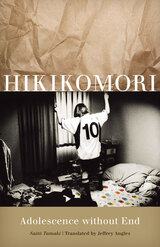
This is the first English translation of a controversial Japanese best seller that made the public aware of the social problem of hikikomori, or “withdrawal”—a phenomenon estimated by the author to involve as many as one million Japanese adolescents and young adults who have withdrawn from society, retreating to their rooms for months or years and severing almost all ties to the outside world. Saitō Tamaki’s work of popular psychology provoked a national debate about the causes and extent of the condition.
Since Hikikomori was published in Japan in 1998, the problem of social withdrawal has increasingly been recognized as an international one, and this translation promises to bring much-needed attention to the issue in the English-speaking world. According to the New York Times, “As a hikikomori ages, the odds that he’ll re-enter the world decline. Indeed, some experts predict that most hikikomori who are withdrawn for a year or more may never fully recover. That means that even if they emerge from their rooms, they either won’t get a full-time job or won’t be involved in a long-term relationship. And some will never leave home. In many cases, their parents are now approaching retirement, and once they die, the fate of the shut-ins—whose social and work skills, if they ever existed, will have atrophied—is an open question.”
Drawing on his own clinical experience with hikikomori patients, Saitō creates a working definition of social withdrawal and explains its development. He argues that hikikomori sufferers manifest a specific, interconnected series of symptoms that do not fit neatly with any single, easily identifiable mental condition, such as depression.
Rejecting the tendency to moralize or pathologize, Saitō sensitively describes how families and caregivers can support individuals in withdrawal and help them take steps toward recovery. At the same time, his perspective sparked contention over the contributions of cultural characteristics—including family structure, the education system, and gender relations—to the problem of social withdrawal in Japan and abroad.
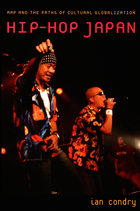
Condry attended more than 120 hip-hop performances in clubs in and around Tokyo, sat in on dozens of studio recording sessions, and interviewed rappers, music company executives, music store owners, and journalists. Situating the voices of Japanese artists in the specific nightclubs where hip-hop is performed—what musicians and fans call the genba (actual site) of the scene—he draws attention to the collaborative, improvisatory character of cultural globalization. He contends that it was the pull of grassroots connections and individual performers rather than the push of big media corporations that initially energized and popularized hip-hop in Japan. Zeebra, DJ Krush, Crazy-A, Rhymester, and a host of other artists created Japanese rap, one performance at a time.
The authors recount the development of the academic program, the recruitment of students, and the support from Temple that enabled curricular and pedagogical improvement.
They also address the university’s relationships with three Japanese partners, and the financial threats and crises TUJ faced over the decades.
The History of Temple University Japan is not only an important documentation of TUJ, but also a history of U.S.-Japanese relations. What emerges is the significant impact TUJ has had on the thousands of students, faculty, and staff who have been a part of this international academic institution.

Kurotani interviewed and spent time with more than 120 women in three U.S. locations with sizable expatriate Japanese communities: Centerville, a pseudonymous Midwestern town; the New York metropolitan area; and North Carolina’s Research Triangle area. She highlights the contradictory situations faced by the transient wives. Their husbands’ assignments in the United States typically last from three to five years, and they frequently emphasize the temporariness of their situation, referring to it as a “long vacation.” Yet they are responsible for creating comfortable homes for their families, which necessitates producing a familiar and permanent environment. Kurotani looks at the dynamic friendships that develop among the wives and describes their feelings about returning to Japan. She conveys how their sense of themselves as Japanese women, of home, and of their relationships with family members are altered by their personal experiences of transnational homemaking.

In this volume, ten essays discuss the evolution of housing prices, housing markets and personal savings, housing finance, commuting, and the impact of public policy on housing markets. The studies reveal surprising differences in housing investment in the two countries. For example, because down payments in Japan are much higher than in the United States, Japanese tend to delay home purchases relative to their American counterparts. In the United States, the advent of home equity credit may have reduced private saving overall.
This book is the first comparison of housing markets in Japan and the United States, and its findings illuminate the effects of housing markets on productivity growth, business investment, and trade.
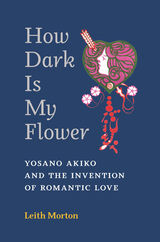
How Dark Is My Flower emphasizes the astonishing innovations in diction and style, not to mention content, in Akiko’s work that transformed the tanka genre from a hidebound and conservative mode of verse to something much more daring and modern. This book pays particular attention to poetry, particularly the tanka genre, in the evolution of modernism in Japanese literature and breaks new ground in the study of modern Japanese literature by examining the invention and evolution of the concept of romantic love.
READERS
Browse our collection.
PUBLISHERS
See BiblioVault's publisher services.
STUDENT SERVICES
Files for college accessibility offices.
RECENTLY PUBLISHED



UChicago Accessibility Resources
home | accessibility | search | about | contact us
BiblioVault ® 2001 - 2026
The University of Chicago Press