
 A SCHOLARLY BOOK REPOSITORY
12 start with H start with H
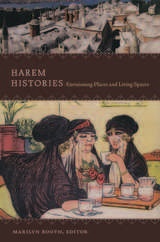
Contributors. Asma Afsaruddin, Orit Bashkin, Marilyn Booth, Nadia Maria El Cheikh, Julia Clancy-Smith, Joan DelPlato, Jateen Lad, Nancy Micklewright, Yaseen Noorani, Leslie Peirce, Irvin Cemil Schick, A. Holly Schissler, Heghnar Zeitlian Watenpaugh
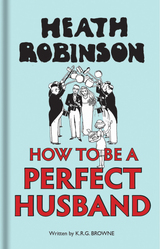
The cartoons in Heath Robinson: How to be a Perfect Husband provide sage advice for how to succeed in almost all aspects of married life—and, of course, it often features a complicated Robinsonian gadget. The perfect husband, for example, will take advantage of two simple attachments to the garden roller to tend the lawn and entertain the baby simultaneously. Likewise, he can peel onions with no fear of tears using a mirror and construct a cost-effective vacuum cleaner using items found around the house. Most importantly, he will devise a device to help him climb the stairs silently after a late night out with the boys.
A gently satirical collection, this book make a perfect gift for anyone looking to have a laugh at our complicated and increasingly mechanical modern life.
Based on intensive interviews of 29 couples who experienced the death of a child, this book offers perspectives and advice on common marital problems experienced by bereaved parents. Each couple's problems are unique, but often the problems are connected to couple communication, sexuality, parenting of other children, the use of alcohol and drugs, blaming, and differences in such areas as whether to have another child, how to grieve, how to talk about the child who died, whether to go outside the marriage for support, and what to do with things and spaces that were the child's.
Although the book deals with pain and marital distress, it offers a message of hope. Grieving parents can and do get through the hard times, based on respect for differences, mutual understanding, and shared history.
A deeply felt and humorous collection examining a year in the wake of extraordinary loss
In November 2010, on the morning after election day, Mirsky lost her three-year-old son, Lev. In the year that followed, she produced a profound and provocatively humorous body of work—tackling extreme loss as well as divorce, friendship, dating, sex, comedy, and art making, all while continuing her day job as a family liaison at the same children’s hospital where Lev died. Every November, the anniversary of Lev’s loss aligns with the churn of the election cycle.
A decade later, we find Mirsky in the heart of a different crisis: supervising COVID vaccine distribution in the polarized political climate of Austin, Texas. In “An Addendum,” she turns again to themes of grief and healing, this time on a societal scale, as she reckons with the tenth anniversary of Lev’s passing. Through her un-extraordinary story of extraordinary loss, Mirsky offers proof that there is an afterward to grief.
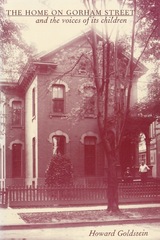
Giving voice to childhood, memory, and resilience within a shared home.
The Home on Gorham Street looks back to an earlier era of care for orphaned and dependent children of Eastern European Jewish immigrants. Within this social history and ethnography, the voices of elders once wards of the home in the 1930s and 1940s tell us in sometimes poetic, often comic, usually ironic, and always poignant words what it was really like to grow up in an orphanage. Emerging from this penetrating adventure are principles for the future of effective group care in meeting the needs of the rapidly growing number of abused, forsaken, and orphaned children.
Goldstein's ethnography demonstrates amply that children who spend years in an institution can go on to lead productive lives under certain conditions. Such conditions may never have been met in any other children's institution. That they did exist one time, however, is cause not only to rejoice but also to understand that recreating these conditions is difficult and possibly impossible.
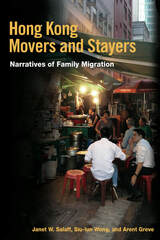
Half a million Hong Kong residents fled their homeland during the thirteen years before Hong Kong's reversion to China in 1997. Nearly half of those returned within the next several years. Filled with detailed, first-hand stories of nine Hong Kong families over nearly two decades, Hong Kong Movers and Stayers is a multifaceted yet intimate look at the forces behind Hong Kong families' successful, and failed, efforts at migration and settlement.
Defining migration as a process, not a single act of leaving, Hong Kong Movers and Stayers provides an antidote to ethnocentric and simplistic theories by uncovering migration stories as they relate to social structures and social capital. The authors meld survey analysis, personal biography, and sociology and compare multiple families in order to give voice to the interplay of gender, age, and diverse family roles as motivating factors in migration.
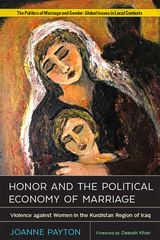
Honor and the Political Economy of Marriage provides a description of ‘honor’-based violence that focuses upon the structure of the family rather than the perpetrator’s culture. The author, Joanne Payton, argues that within societies primarily organized by familial and marital connections, women’s ‘honor’ is a form of symbolic capital within a ‘political economy’ in which marriage organizes intergroup connections.
Drawing on statistical analysis of original data contextualized with historical and anthropological readings, Payton explores forms of marriage and their relationship to ‘honor’, sketching changing norms around the familial control of women from agrarian/pastoral roots to the contemporary era.
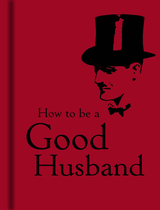
Don’t forget that very true remark that while face powder may catch a man, baking powder is the stuff to hold him.
Marriage can be a series of humorous miscommunications, a power struggle, or a diplomatic nightmare. Men and women have long struggled to figure each other out—and the misunderstandings can continue well after they’ve been joined in matrimony. But long before Men Are From Mars, Women Are From Venus, couples turned to self-help booklets such as How to Be a GoodHusband and How to Be a Good Wife, two historic advice books that are now delightfully reproduced by the Bodleian Library.
The books, originally published in the 1930s for middle-class British couples, are filled with witty and charming aphorisms on how wives and husbands should treat each other. Some advice is unquestionably outdated—“It is a wife’s duty to look her best. If you don’t tidy yourself up, don’t be surprised if your husband begins to compare you unfavorably with the typist at the office”—but many other pieces of advice are wholly applicable today. They include such insightful sayings as: “Don’t tell your wife terminological inexactitudes, which are, in plain English, lies. A woman has wonderful intuition for spotting even minor departures from the truth”; “After all is said and done, husbands are not terribly difficult to manage”; or “Don’t squeeze the tube of toothpaste from the top instead of from the bottom. This is one of the small things of life that always irritates a careful wife.”
Entertaining and charmingly illustrated, How to Be a Good Husband and How to Be a Good Wife offer enduringly useful advice for all couples, from the newly engaged to those celebrating their golden anniversary.
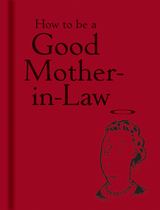
Originally published in the 1930s, How to be a Good Mother-in-Law offers advice that ranges from the amusingly old-fashioned to the surprisingly still relevant today. Among the topics discussed are how not to behave on your son or daughter’s wedding day, how to visit the couple in their new home, how to interact with the grandchildren, and what degree of independence should be granted to married sons. For mothers-in-law considering living with the married couple, a chapter presents suggestions for how to negotiate this famously fraught situation. In another chapter called “Are They as Bad as They are Painted?,” the book reproduces a selection of tabloid tragedies, including the story of a mother-in-law that surprised a hapless couple by accompanying them on their honeymoon.
Whether you’re a new mother-in-law, a veteran to this much-maligned role, or a long-suffering spouse whose partner’s parent seems impossible to please—the pithy advice on-hand in How to be a Good Mother-in-Law will be warmly welcomed.
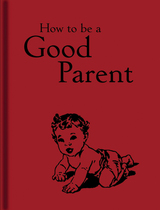
The mere provision of the vegetable is not sufficient; it must be actually eaten.
If there is room enough for somersaults, the child can be satisfied.
These are just a few of the words of wisdom on offer in How to be a Good Parent, the latest in a series of delightful advice books from the Bodleian Library that also includes How to be a Good Husband and How to be a Good Wife. As developmental psychology began to show promise, beleaguered parents were drawn to the nascent discipline with the sorts of questions that will be familiar to any parent: How does one tell a toddler “no” without triggering a tantrum? Are there circumstances in which it’s acceptable to extract good behavior with bribery?
How to be a Good Parent brings together bits from the best of advice books of the 1920s and ’30s, taking readers through all the challenges involved in raising a child. Among the topics discussed are good—and bad—behavior, how to dress one’s dear son or darling daughter, mealtime, and the dreaded morning and bedtime routines. A section on taking medicine offers sage advice: “Gargling is a useful accomplishment” (while perhaps not appropriate for the dinner table). In a section on playtime, parents tasked with planning their child’s birthday will warmly welcome the book’s advice to “let the children give their own parties!”
By turns humorously old-fashioned and timeless, How to be a Good Parent is a charmingly illustrated guide to what any parent can tell you is the world's most difficult job.
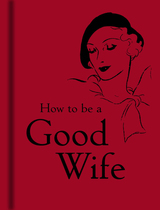
Don’t forget that very true remark that while face powder may catch a man, baking powder is the stuff to hold him.
Marriage can be a series of humorous miscommunications, a power struggle, or a diplomatic nightmare. Men and women have long struggled to figure each other out—and the misunderstandings can continue well after they’ve been joined in matrimony. But long before Men Are From Mars, Women Are From Venus, couples turned to self-help booklets such as How to Be a GoodHusband and How to Be a Good Wife, two historic advice books that are now delightfully reproduced by the Bodleian Library.
The books, originally published in the 1930s for middle-class British couples, are filled with witty and charming aphorisms on how wives and husbands should treat each other. Some advice is unquestionably outdated—“It is a wife’s duty to look her best. If you don’t tidy yourself up, don’t be surprised if your husband begins to compare you unfavorably with the typist at the office”—but many other pieces of advice are wholly applicable today. They include such insightful sayings as: “Don’t tell your wife terminological inexactitudes, which are, in plain English, lies. A woman has wonderful intuition for spotting even minor departures from the truth”; “After all is said and done, husbands are not terribly difficult to manage”; or “Don’t squeeze the tube of toothpaste from the top instead of from the bottom. This is one of the small things of life that always irritates a careful wife.”
Entertaining and charmingly illustrated, How to Be a Good Husband and How to Be a Good Wife offer enduringly useful advice for all couples, from the newly engaged to those celebrating their golden anniversary.
READERS
Browse our collection.
PUBLISHERS
See BiblioVault's publisher services.
STUDENT SERVICES
Files for college accessibility offices.
RECENTLY PUBLISHED



UChicago Accessibility Resources
home | accessibility | search | about | contact us
BiblioVault ® 2001 - 2026
The University of Chicago Press