
 A SCHOLARLY BOOK REPOSITORY
15 start with H start with H
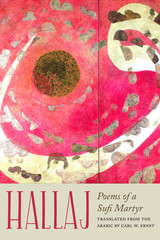
Winner of the Global Humanities Translation Prize
Hallaj is the first authoritative translation of the Arabic poetry of Husayn ibn Mansur al-Hallaj, an early Sufi mystic. Despite his execution in Baghdad in 922 and the subsequent suppression of his work, Hallaj left an enduring literary and spiritual legacy that continues to inspire readers around the world. In Hallaj, Carl W. Ernst offers a definitive collection of 117 of Hallaj’s poems expertly translated for contemporary readers interested in Middle Eastern and Sufi poetry and spirituality.
Ernst’s fresh and direct translations reveal Hallaj’s wide range of themes and genres, from courtly love poems to metaphysical reflections on union with God. In a fascinating introduction, Ernst traces Hallaj’s dramatic story within classical Islamic civilization and early Arabic Sufi poetry. Setting himself apart by revealing Sufi secrets to the world, Hallaj was both celebrated and condemned for declaring: “I am the Truth.”
Expressing lyrics and ideas still heard in popular songs, the works of Hallaj remain vital and fresh even a thousand years after their composition. They reveal him as a master of spiritual poetry centuries before Rumi, who regarded Hallaj as a model. This unique collection makes it possible to appreciate the poems on their own, as part of the tragic legend of Hallaj, and as a formidable legacy of Middle Eastern culture.
The Global Humanities Translation Prize is awarded annually to a previously unpublished translation that strikes the delicate balance between scholarly rigor, aesthetic grace, and general readability, as judged by a rotating committee of Northwestern faculty, distinguished international scholars, writers, and public intellectuals. The Prize is organized by the Global Humanities Initiative, which is jointly supported by Northwestern University’s Buffett Institute for Global Studies and Kaplan Institute for the Humanities.
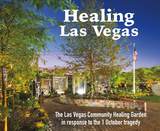
The story of the garden unfolds through photographs and the words of survivors, first responders, family members, medical professionals, counselors, and members of the community. In only a matter of days, volunteers and local businesses transformed a vacant downtown lot into a serene urban oasis. Families and friends of those lost in the tragedy soon adopted each of the fifty-eight trees planted in honor of their loved ones, and visitors left behind colorful mementos, including painted rocks, photographs, and ornaments, as well as words of encouragement, love, loss, and strength.
In the aftermath of 1 October, an often misunderstood city revealed its soul under the most heartbreaking of circumstances. The inspirational voices and stories from a community touched by tragedy provide comfort and encouragement. And the organic response to the unthinkable is a testament to how one community came together at its darkest hour, chose hope over despair, unity over hate.
What happens to us when we die? Are heaven and hell real? If so, what are they like? Heaven and Hell contains the answers to these questions as seen by Emanuel Swedenborg (1688-1772).
This new translation of Swedenborg’s most popular work paints a detailed picture of life in the spiritual realms. A Swedish Enlightenment scientist of extraordinary accomplishment, Swedenborg underwent a spiritual crisis that led to an unparalleled series of paranormal experiences. He spent his last twenty-seven years in almost daily experience of heaven and hell, recording his observations and conversations, many of which are reported in Heaven and Hell. This sustained and detailed description of the nonphysical realms has left its impression on the minds of many great thinkers, including Goethe, Blake, Coleridge, Emerson, Borges, and Milosz.
This deluxe edition contains an introduction by religious historian Bernhard Lang setting the volume in the context of its time.
The New Century Edition of the Works of Emanuel Swedenborg is a modern-language, scholarly translation of Swedenborg’s theological works. The series’ easy-to-read style retains the dignity, variety, clarity, and gender-inclusive language of Swedenborg’s original Latin, bringing his thought to life. Introductions and annotations by eminent, international scholars place Swedenborg’s writings in their historical context and illuminate obscure references within the text, enabling readers to understand and trace Swedenborg’s influence as never before.
What happens to us when we die? Are heaven and hell real? If so, what are they like? Heaven and Hell contains the answers to these questions as seen by Emanuel Swedenborg (1688-1772).
This new translation of Swedenborg’s most popular work paints a detailed picture of life in the spiritual realms. A Swedish Enlightenment scientist of extraordinary accomplishment, Swedenborg underwent a spiritual crisis that led to an unparalleled series of paranormal experiences. He spent his last twenty-seven years in almost daily experience of heaven and hell, recording his observations and conversations, many of which are reported in Heaven and Hell. This sustained and detailed description of the nonphysical realms has left its impression on the minds of many great thinkers, including Goethe, Blake, Coleridge, Emerson, Borges, and Milosz.
The New Century Edition of the Works of Emanuel Swedenborg is a modern-language, scholarly translation of Swedenborg’s theological works. The series’ easy-to-read style retains the dignity, variety, clarity, and gender-inclusive language of Swedenborg’s original Latin, bringing his thought to life.
This portable edition contains the text of the translation, but not the introduction, annotations, or other supplemental materials found in the deluxe edition.
What happens to us when we die? Are heaven and hell real? If so, what are they like? Heaven and Hell contains the answers to these questions as seen by Emanuel Swedenborg (1688-1772).
This new translation of Swedenborg’s most popular work paints a detailed picture of life in the spiritual realms. A Swedish Enlightenment scientist of extraordinary accomplishment, Swedenborg underwent a spiritual crisis that led to an unparalleled series of paranormal experiences. He spent his last twenty-seven years in almost daily experience of heaven and hell, recording his observations and conversations, many of which are reported in Heaven and Hell. This sustained and detailed description of the nonphysical realms has left its impression on the minds of many great thinkers, including Goethe, Blake, Coleridge, Emerson, Borges, and Milosz.
The New Century Edition of the Works of Emanuel Swedenborg is a modern-language, scholarly translation of Swedenborg’s theological works. The series’ easy-to-read style retains the dignity, variety, clarity, and gender-inclusive language of Swedenborg’s original Latin, bringing his thought to life.
This portable edition contains the text of the translation, but not the introduction, annotations, or other supplemental materials found in the deluxe edition.
What happens to us when we die? Are heaven and hell real? If so, what are they like? Heaven and Hell contains the answers to these questions as seen by Emanuel Swedenborg (1688-1772).
This new translation of Swedenborg’s most popular work paints a detailed picture of life in the spiritual realms. A Swedish Enlightenment scientist of extraordinary accomplishment, Swedenborg underwent a spiritual crisis that led to an unparalleled series of paranormal experiences. He spent his last twenty-seven years in almost daily experience of heaven and hell, recording his observations and conversations, many of which are reported in Heaven and Hell. This sustained and detailed description of the nonphysical realms has left its impression on the minds of many great thinkers, including Goethe, Blake, Coleridge, Emerson, Borges, and Milosz.
The New Century Edition of the Works of Emanuel Swedenborg is a modern-language, scholarly translation of Swedenborg’s theological works. The series’ easy-to-read style retains the dignity, variety, clarity, and gender-inclusive language of Swedenborg’s original Latin, bringing his thought to life.
This portable edition contains the text of the translation, but not the introduction, annotations, or other supplemental materials found in the deluxe edition.
What happens to us when we die? Are heaven and hell real? If so, what are they like? Heaven and Hell contains the answers to these questions as seen by Emanuel Swedenborg (1688-1772).
This new translation of Swedenborg’s most popular work paints a detailed picture of life in the spiritual realms. A Swedish Enlightenment scientist of extraordinary accomplishment, Swedenborg underwent a spiritual crisis that led to an unparalleled series of paranormal experiences. He spent his last twenty-seven years in almost daily experience of heaven and hell, recording his observations and conversations, many of which are reported in Heaven and Hell. This sustained and detailed description of the nonphysical realms has left its impression on the minds of many great thinkers, including Goethe, Blake, Coleridge, Emerson, Borges, and Milosz.
The New Century Edition of the Works of Emanuel Swedenborg is a modern-language, scholarly translation of Swedenborg’s theological works. The series’ easy-to-read style retains the dignity, variety, clarity, and gender-inclusive language of Swedenborg’s original Latin, bringing his thought to life.
This portable edition contains the text of the translation, but not the introduction, annotations, or other supplemental materials found in the deluxe edition.
This new translation of De Novo Hierosolyma Et Ejus Doctrina Coelesti (alternatively translated The New Jerusalem and Its Heavenly Doctrine) by Emanuel Swedenborg presents the ideas of this Swedish visionary in simple, modern English. In the short work, Swedenborg discusses our motivations and inner natures, love and selfishness, and ways in which we can develop ourselves as spiritual people. He also covers different aspects of religion, such as the Bible, observances like baptism and the Holy Supper (Eucharist), the nature of heaven and hell, and how we can apply all these ideas to our daily lives.
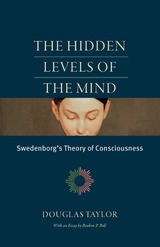
At the core of Swedenborg’s thought is the understanding that our purpose in this life is to progress spiritually—to learn, to grow, to do good works, and, ultimately, to allow as much of God’s love as possible to enter into us and manifest through us.
Scattered throughout his works are descriptions of our mind and how it relates to both the physical and spiritual worlds. In this book, Taylor pulls these loose threads together and weaves them into a simple, coherent whole, presenting Swedenborg’s teachings as a system that anyone can follow. Taylor describes the external or natural mind as primarily concerned with material things, and the inner mind, in its essence, as love. As we elevate our thoughts toward higher and higher types of love and wisdom, we draw closer to God and begin the process of regeneration, or rebirth as spiritual beings.
This is the first time in many decades that a book has been published on Swedenborg’s philosophy of the mind. Taylor’s straightforward commentary gives readers a rare insight into this crucial aspect of Swedenborg’s theology.
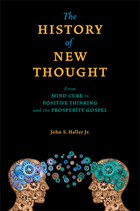
Long before The Secret, writers and healers in the New Thought movement argued that the mind shapes reality. In this clear, wide‑ranging history, John S. Haller Jr. traces New Thought from its nineteenth‑century roots—Phineas P. Quimby, Emma Curtis Hopkins, and others—through William Walker Atkinson, an early popularizer of the “law of attraction,” to its imprint on modern self‑help and popular psychology.
Rather than centering on denominations, Haller follows people, practices, and ideas: mental healing, affirmations, prosperity teachings, and the movement’s dialogue with science and religion (including the influence of the Swedish scientist, mystic and theologian Emanuel Swedenborg). He shows how New Thought migrated from lectures and magazines into boardrooms, pulpits, and bestsellers, shaping a durable American optimism: the conviction that thought can transform life.
The History of New Thought is essential reading for anyone interested in American religious history, psychology, or the roots of contemporary self‑help.

As the one hundred essays and poems gathered here demonstrate, hope comes in many forms: a dad dance, a birth plan, an unblemished banana, a visit from a neighborhood dog, the revival of an old tradition, empathy. The contributors are racially, geographically, and culturally diverse, representing a rough cross section of Wisconsin voices, from truck driver to poet laureate, from middle school student to octogenarian, from small business owner to seasoned writer. The result is a book-length exploration of the depth and range of hope experienced in times of crisis, as well as an important record of what Wisconsinites were facing and feeling through these historic times.

More than a memoir of remembered landscapes, House Hold is also an expansive contemplation of America, a meditation on place and property, and an exploration of how literature shapes our thinking about the places we live. A gifted prose stylist, Peters seamlessly combines her love of buildings with her love of books. She wanders through the rooms of her past but also through what Henry James called “the house of fiction,” interweaving personal narrative with musings on James, Willa Cather, William Dean Howells, Paule Marshall, William Maxwell, and others. Peters reflects on the romance of pastoral retreat, the hazards of nostalgia, America’s history of expansion and land ownership, and the conflicted desires to put down roots and to hit the road. Throughout House Hold, she asks how places make us who we are.
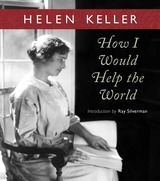
Swedenborg’s books are an inexhaustible well-spring of satisfaction to those who live the life of the mind. I plunge my hands into my large Braille volumes containing his teachings, and withdraw them full of the secrets of the spiritual world.
— Helen Keller, How I Would Help the World
This essay by Helen Keller expresses her deep gratitude to Emanuel Swedenborg, the Swedish seer, who had a profound influence on her spiritual life. In it she talks about the importance of love and truth in a world filled with materialism and selfishness, and the joy that comes from true understanding.
Her great advice on how she would help the world is to have people read Swedenborg’s writings and thereby overcome the many problems of the human condition. She states, “It would be such a joy to me if I might be the instrument of bringing Swedenborg to a world that is spiritually deaf and blind.” She further states that reading Swedenborg and understanding his words “has been my strongest incitement to overcome limitations.”
Her words are interwoven with photographs of her life and quotes from Swedenborg on spiritual topics. This book will be a treasure for readers who already know and respect Helen Keller and an inspiration for those who do not.
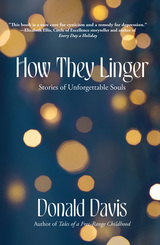
Although everyone has a story, not everybody has a remarkable storyteller like Donald Davis to tell theirs.
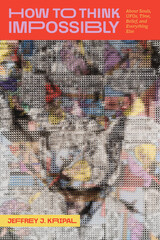
From precognitive dreams and telepathic visions to near-death experiences, UFO encounters, and beyond, so-called impossible phenomena are not supposed to happen. But they do happen—all the time. Jeffrey J. Kripal asserts that the impossible is a function not of reality but of our everchanging assumptions about what is real. How to Think Impossibly invites us to think about these fantastic (yet commonplace) experiences as an essential part of being human, expressive of a deeply shared reality that is neither mental nor material but gives rise to both. Thinking with specific individuals and their extraordinary experiences in vulnerable, open, and often humorous ways, Kripal interweaves humanistic and scientific inquiry to foster an awareness that the fantastic is real, the supernatural is super natural, and the impossible is possible.
READERS
Browse our collection.
PUBLISHERS
See BiblioVault's publisher services.
STUDENT SERVICES
Files for college accessibility offices.
RECENTLY PUBLISHED




UChicago Accessibility Resources
home | accessibility | search | about | contact us
BiblioVault ® 2001 - 2026
The University of Chicago Press