
 A SCHOLARLY BOOK REPOSITORY
104 books about Social Work and 4
start with H
104 books about Social Work and 4
104 books about Social Work
4 start with H start with H
4 start with H start with H

Home Safe Home
Housing Solutions for Survivors of Intimate Partner Violence
Botein, Hilary
Rutgers University Press, 2016
Housing matters for everyone, as it provides shelter, security, privacy, and stability. For survivors of intimate partner violence (IPV), housing takes on an additional meaning; it is the key to establishing a new life, free from abuse. IPV survivors often face such inadequate housing options, however, that they must make excruciating choices between cycling through temporary shelters, becoming homeless, or returning to their abusers.
Home Safe Home offers a multifaceted analysis that accounts for both IPV survivors’ needs and the practical challenges involved in providing them with adequate permanent housing. Incorporating the varied perspectives of the numerous housing providers, activists, policymakers, and researchers who have a stake in these issues, the book also lets IPV survivors have their say, expressing their views on what housing and services can best meet their short and long-term goals. Researchers Hilary Botein and Andrea Hetling not only examine the federal and state policies and funding programs determining housing for IPV survivors, but also provide detailed case studies that put a human face on these policy issues.
As it traces how housing options and support mechanisms for IPV survivors have evolved over time, Home Safe Home also offers innovative suggestions for how policymakers and advocates might work together to better meet the needs of this vulnerable population.
[more]
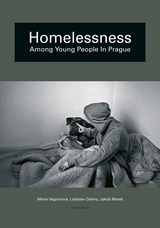
Homelessness among Young People in Prague
Marie Vágnerová, Ladislav Csémy, and Jakub Marek
Karolinum Press, 2014
The chronically homeless face a stark reality: lack of access to support systems, adequate shelter, and sustenance, with little hope for something better. For young people, however, life on the street may be merely a temporary stage in their lives. This book tells of homelessness among young people—the causes and their attitudes to the various problems they face.
Young homeless people describe a life in which they lose their privacy, the possibility to satisfy their basic needs, and, often, their self-respect in order to survive. The latter half of the book considers what happens when these young people return to society and how they navigate difficulties as they attempt to leave their past behind. Often, the struggle is not solely one of coping with the stigma of their experience; rather, they must face the legacies that linger long after their lives have turned a corner: drug addiction, criminal records, and accumulated debt.
Based on interviews with homeless people in Prague, Homelessness as an Alternative Existence of Young People paints an authentic picture of this social group and documents the often unseen social consequences of the transformation to capitalism from communism.
Young homeless people describe a life in which they lose their privacy, the possibility to satisfy their basic needs, and, often, their self-respect in order to survive. The latter half of the book considers what happens when these young people return to society and how they navigate difficulties as they attempt to leave their past behind. Often, the struggle is not solely one of coping with the stigma of their experience; rather, they must face the legacies that linger long after their lives have turned a corner: drug addiction, criminal records, and accumulated debt.
Based on interviews with homeless people in Prague, Homelessness as an Alternative Existence of Young People paints an authentic picture of this social group and documents the often unseen social consequences of the transformation to capitalism from communism.
[more]
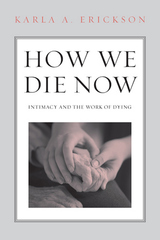
How We Die Now
Intimacy and the Work of Dying
Karla Erickson
Temple University Press, 2013
As we live longer and die slower and differently than our ancestors, we have come to rely more and more on end-of-life caregivers. These workers navigate a changing landscape of old age and death that many of us have little preparation to encounter. How We Die Now is an absorbing and sensitive investigation of end-of-life issues from the perspectives of patients, relatives, medical professionals, and support staff.
Karla Erickson immersed herself in the daily life of workers and elders in a Midwestern community for over two years to explore important questions around the theme of “how we die now.” She moves readers through and beyond the many fears that attend the social condition of old age and reveals the pleasures of living longer and the costs of slower, sometimes senseless ways of dying.
For all of us who are grappling with the “elder boom,” How We Die Now offers new ways of thinking about our longer lives.
[more]

Human Nature Debate
Social Theory, Social Policy and the Caring Professions
Harry Cowen
Pluto Press, 1994
The idea of human nature is centuries old. Yet epithets like 'human greed', 'natural inequalities' and 'you can’t change the world' still underpin discussion in everyday life as well as in the academic arena.
Human Nature Debate challenges the fixity of such notions and argues that the manifestations of the human nature idea are socially and politically - rather than philosophically - grounded. The book’s scope is wide, spanning the social science disciplines and, unlike other texts in the field, incorporates everyday social and political examples into the academic.
Cowen demonstrates how theories of human nature must be related to their intellectual, historical and social roots by analysing biological, psychological and social models, assessing the impacts of Freudianism, behaviourism, existentialism and Marxism upon social theory, policy and caring professions, and evaluating the political significance of racist and sexist accounts. The book covers the issues of women and human nature and feminist critiques and acquaints the reader with a variety of social thinkers.
Human Nature Debate challenges the fixity of such notions and argues that the manifestations of the human nature idea are socially and politically - rather than philosophically - grounded. The book’s scope is wide, spanning the social science disciplines and, unlike other texts in the field, incorporates everyday social and political examples into the academic.
Cowen demonstrates how theories of human nature must be related to their intellectual, historical and social roots by analysing biological, psychological and social models, assessing the impacts of Freudianism, behaviourism, existentialism and Marxism upon social theory, policy and caring professions, and evaluating the political significance of racist and sexist accounts. The book covers the issues of women and human nature and feminist critiques and acquaints the reader with a variety of social thinkers.
[more]
READERS
Browse our collection.
PUBLISHERS
See BiblioVault's publisher services.
STUDENT SERVICES
Files for college accessibility offices.
RECENTLY PUBLISHED




UChicago Accessibility Resources
home | accessibility | search | about | contact us
BiblioVault ® 2001 - 2026
The University of Chicago Press