
 A SCHOLARLY BOOK REPOSITORY
25 start with I start with I

Since its publication in 1981, this book has established itself as the major new interpretation of the historical concept of Ibn Khaldûn, the great figure of Arab-Islamic letters and of historical thought overall--a figure generally thought to be on a par with Thucydides, Vico, Herder and others of similar stature.
The author has eschewed the ahistorical interpretations to which Ibn Khaldûn has normally been subjected, both by authors who have sought unduly to modernise his thought, and by those who sought to freeze it in stereotypical models of Islamic philosophy.
Ibn Khaldûn is not only a true historical source of his time; he is also taken as the unchallenged sociological and cultural interpreter of medieval North Africa and much of medieval and modern Arab-Islamic culture as well. The validity of his discourse is considered to be so universal as to confer upon his ideas the status of progenitor--or, at least, anticipator--of a great variety of modern ideas.
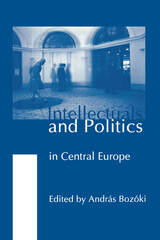
This volume gathers authors who wrote important works in the fields of the history of ideologies, the comparative study of dictatorships, and intellectual history. The book is a state of the art reassessment and analysis of the ideological commitments of intellectuals and their relationships with dictatorships during the twentieth century. The contributions focus on turning points or moments of breakage as well as on the continuities. Though its focus is on an East–West comparison in Europe, there are texts also dealing with Latin America, China, and the Middle East giving the book a global outlook.
The first part of the book deals with intellectuals' involvement with communist regimes or parties; the second looks at the persistence of utopianism in the trajectory of intellectuals who had been associated earlier in their lives with either communism or fascism; the third tackles intellectuals' role in national imaginations from either the left or the right; and, the fourth ties late twentieth century phenomena to current phenomena such as the persistence of anti-Semitism in the West, the slow erosion of the values upon which the EU is built, the quagmire in Iraq, and China's rise in the post-Cold War era. The collection provides a comprehensive big-picture of intellectual genealogies and dictatorial developments.

The Illuminated Chronicle was composed in 1358 in the international artistic style at the royal court of Louis I of Hungary. Its text, presented here in a new edition and translation, is the most complete record of Hungary's medieval historical tradition, going back to the eleventh century and including the mythical past of its people. The pictures in this manuscript—formerly known as the Vienna Chronicle—are not merely occasional illustrations added to some exemplars, but text and image are closely connected and mutually related to each other, to qualify it as a proper “illuminated chronicle”. The artistic value of the miniatures is quite high, and the characters are drawn with detail and with a knowledge of anatomy. Forty-two of the miniatures are included in the present volume. A full color facsimile will be accessible online.
The 147 pictures are an invaluable source of information on late medieval cultural history, costume, and court life. In a historiographical context, The Illuminated Chronicle is an attempt at the popularization of the national history and a systematic appeal to circles beyond the old monastic-clerical audience.
The Illuminated Chronicle (Chronica de gestis Hungarorum e codice picto saec. xiv.) is the ninth volume in the Central European Medieval Texts, a Latin–English bilingual series.

The Balkans offer classic examples of how empires imagine they can transform themselves into national states (Ottomanism) and how nation-states project themselves into future empires (as with the Greek “Great Idea” and the Serbian “Načertaniye”). By examining the interaction between these two aspirations this volume sheds light on the ideological prerequisites for the emergence of Balkan nationalisms.
With a balance between historical and literary contributions, the focus is on the ideological hybridity of the new national identities and on the effects of “imperial nationalisms” on the emerging Balkan nationalisms. The authors of the twelve essays reveal the relation between empire and nation-state, proceeding from the observation that many of the new nation-states acquired some imperial features and behaved as empires. This original and stimulating approach reveals the imperialistic nature of so-called ethnic or cultural nationalism.


Anchored in the Russian Empire, but not limited to it, the eight studies in this volume explore the nineteenth-century imperial responses to the challenge of modernity, the dramatic disruptions of World War I, the radical scenarios of the interwar period and post-communist endgames at the different edges of Eurasia. The book continues and amplifies the historiographic momentum created by Alfred J. Rieber’s long and fruitful scholarly career.
First, the volume addresses the attempts of Russian imperial rulers and elites to overcome the economic backwardness of the empire with respect to the West. The ensuing rivalry of several interest groups (entrepreneurs, engineers, economists) created new social forms in the subsequent rounds of modernization. The studies explore the dynamics of the metamorphoses of what Rieber famously conceptualized as a “sedimentary society” in the pre-revolutionary and early Soviet settings.
Second, the volume also expands and dwells on the concept of frontier zones as dynamic, mutable, shifting areas, characterized by multi-ethnicity, religious diversity, unstable loyalties, overlapping and contradictory models of governance, and an uneasy balance between peaceful co-existence and bloody military clashes. In this connection, studies pay special attention to forced and spontaneous migrations, and population politics in modern Eurasia.


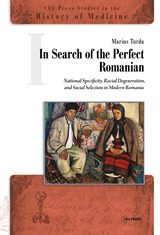
The book centers on debates about the Romanian national character and race between 1880s and 1950s. It also argues that during the early 1940s anti-Semitism and anti-Roma racism contributed directly to the programme of ethnic purification pursued by the Antonescu regime. Racism and eugenics explain not just the deportation and murder of the Jews but also the deportation and murder of the Roma. The Holocaust in Romania should therefore be understood as the result not just of anti-Semitism but also of biopolitical nationalism. Finally, the book suggests that the eugenic ideal of the ‘perfect’ Romanian did not disappear in 1945 but was embedded in the socialist definitions of the ‘new man’ and ‘perfect’ society emerging under communism.
In this book Joan Wallach Scott discusses the role history has played as an arbiter of right and wrong and of those who claim to act in its name—"in the name of history." Scott investigates three different instances in which repudiation of the past was conceived as a way to a better future: the International Military Tribunal at Nuremberg in 1946, the South African Truth and Reconciliation Commission in 1996, and the ongoing movement for reparations for slavery in the United States.
Scott shows how in these cases history was not only used to explain the past but to produce a particular future. Yet both past and future were subject to the political realities of their time and defined in terms of moral absolutes, often leading to deep contradictions. These three instances demonstrate that history is not an impartial truth, rather its very meaning is constructed by those who act in its name.

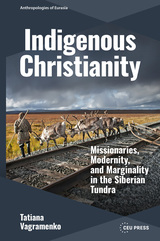
Nenets nomads, long shaped by Russian colonialism and Soviet modernization, experienced sweeping conversions in the mid-1990s, culminating in the creation of a tundra church tied to a radical evangelical movement. Amid Putin’s tightening control—when indigenous peoples and minority faiths faced renewed surveillance and harassment—the book follows Nenets and missionaries whose encounters across the tundra sparked tensions between converts and non-converts, faith and state. Through stories of hope, loss, and resilience, it reveals how global evangelical Christianity intersects with local traditions, reshaping kinship, belonging, and modernity in the Siberian tundra.


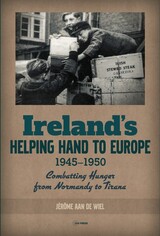
Post-war Marshall Plan aid to Europe and indeed Ireland is well documented, but practically nothing is known about simultaneous Irish aid to Europe. This book provides a full record of the aid – mainly food but also clothes, blankets, medicines, etc. – that Ireland donated to continental Europe, including France, the Netherlands, Hungary, the Balkans, Italy, and zones of occupied Germany.
Starting with Ireland’s neutral wartime record, often wrongly presented as pro-German when Ireland in fact unofficially favoured the western Allies, Jerome aan de Wiel explains why Éamon de Valera’s government sent humanitarian aid to the devastated continent. His book analyses the logistics of collection and distribution of supplies sent abroad as far as the Greek islands.
Despite some alleged Cold-War hijacking of Irish relief – and this humanitarianism was not above the politics of that East-West confrontation – it became mostly a story of hope, generosity and European Christian solidarity. Rich archival records from Ireland and the European beneficiary countries, as well as contemporary local and national newspapers across Europe, allow the author to measure and describe not only the official but also the popular response to Irish relief schemes. This work is illustrated with contemporary photographs and some key graphs and tables that show the extent of the aid programme.


The volume contains selected papers from an international workshop in 2005, at the Hungarian Academy in Rome. They aim at investigating the registers of fifteenth-century supplications to the Apostolic Penitentiary of the Holy See and to analyze the multiplicity of issues in which a context of the local needs of Western Christians and the central power of the Pope had been occurring.
The contributions make clear that local and individual factors and practice of Christian faith and religion must not be seen as separated from the global power of the Roman curia. The latter’s influence could become directly important for any individual in any local space, also … et usque ad ultimum terrae (Acts 1:8), in the utmost peripheries of the Christian world. The assistance by the Apostolic Penitentiary was indispensable in a large variety of cases. The occupation with such cases happened in the local and regional space as well as in the globalized centre of the Holy See.
READERS
Browse our collection.
PUBLISHERS
See BiblioVault's publisher services.
STUDENT SERVICES
Files for college accessibility offices.
RECENTLY PUBLISHED






UChicago Accessibility Resources
home | accessibility | search | about | contact us
BiblioVault ® 2001 - 2026
The University of Chicago Press