
 A SCHOLARLY BOOK REPOSITORY
12 start with I start with I
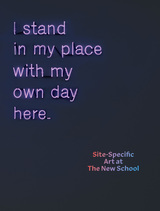
Providing a kaleidoscopic view into these works, this richly illustrated volume explores each installation through three to four essays written by critics, poets, and scholars from diverse fields including anthropology, mathematics, art history, media studies, and design. Their texts are complemented by three additional essays reflecting on each piece's art historical significance; the architectural contexts in which the works reside on the university's campus; and The New School's relationship to adventurous art practice. Also included is a roundtable discussion among leading arts educators and artists who reflect on the pedagogical potential of a campus-based contemporary art collection. The book's final section presents a history of each commissioned work, highlighted by archival images never before published.
Published by The New School. Distributed by Duke University Press.
Contributors. Saul Anton, Daniel A. Barber, Stefano Basilico, Carol Becker, Naomi Beckwith, Omar Berrada, Gregg Bordowitz, Tisa Bryant, Holland Cotter, Mónica de la Torre, Aruna D'Souza, Elizabeth Ellsworth, Julia L. Foulkes, Andrea Geyer, Kathleen Goncharov, Jennifer A. González, Michele Greet, Randall Griffey, Victoria Hattam, Pablo Helguera, Jamer Hunt, Anna Indych-López, Luis Jaramillo, Jeffrey Kastner, Robert Kirkbride, Lynda Klich, Carin Kuoni, Sarah E. Lawrence, Tan Lin, Lucy R. Lippard, Laura Y. Liu, Reinhold Martin, Shannon Mattern, Lydia Matthews, Maggie Nelson, Olu Oguibe, G. E. Patterson, Hugh Raffles, Claudia Rankine, Jasmine Rault, Heather Reyes, Frances Richard, Silvia Rocciolo, Carl Hancock Rux, Luc Sante, Mira Schor, Eric Stark, Radhika Subramaniam, Edward J. Sullivan, Roberto Tejada, Otto von Busch, Wendy S. Walters, Jennifer Wilson, Mabel O. Wilson

"The Korshak Collection is a portrait and biography of a man and his family, who once looked upon the dark skies and saw Immortals, gods hunting in the storm clouds. Stephen Korshak decided to dedicate his life to tell us all how the thunder sounded and preserve the outlines of the cosmos for the awe of us all. Enjoy, believe—be amazed." —Guillermo del Toro, from the Foreword
Icons of the Fantastic: Illustrations of Imaginative Literature from the Korshak Collection features artwork by pioneering artists from over 160 years of published works of science fiction and fantasy. The illustrations in the collection appeared on the covers of timeless novels such as the Tarzan series by Edgar Rice Burroughs and classic pulp magazines from the 1930s through 1960s, such as Amazing Stories and Weird Tales. They accompany images of mischievous satyrs, ethereal mermaids, and spell-casting witches for texts ranging from The Tempest, Don Quixote, and Alice's Adventures in Wonderland to works by Edgar Allan Poe and H. G. Wells. Alongside essays about famous illustrators such as Arthur Rackham and Aubrey Beardsley, contributors engage in a critical reassessment of understudied artists such as José Segrelles, Wladyslaw Benda, Margaret Brundage, and Hannes Bok. The book includes a foreword by Guillermo del Toro, a preface by Kevin J. Anderson, an introduction by Michael Dirda, and an interview with renowned contemporary illustration artist Michael Whelan.

Levine has woven together an account of the development of photographic equipment and processes, with the artists and entrepreneurs who actually took the pictures, and places the emergence of photography firmly in the historical context of Latin American societies.
Treating the photographs themselves—some 225 in all—Levine develops criteria for questions we can ask of the photographs in an attempt to extract emotional, psychological, and personal information, as well as the more obvious material evidence. This is an often subjective process, one that can lead to differing results, and observers may well come to conclusions departing radically from those of the author. But this may well be one of the most important functions of an innovative work, the creation of controversy that stimulates forward motion in a discipline.
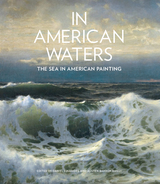
In American Waters is the catalog of an exhibition co-organized by Crystal Bridges Museum of American Art in Bentonville, Arkansas, and Peabody Essex Museum in Salem, Massachusetts.
The exhibition and this associated catalog invite visitors to discover the sea as an expansive way to reflect on American culture and environment, learn how coastal and maritime symbols moved inland across the United States, and question what it means to be “in American waters.” Work by Georgia O’Keeffe, Amy Sherald, Kay WalkingStick, Norman Rockwell, Hale Woodruff, Paul Cadmus, Thomas Hart Benton, Jacob Lawrence, Valerie Hegarty, Stuart Davis, and many others is included, along with essays from scholars, critics, and the curators.
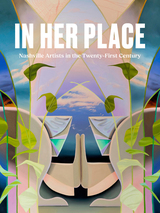
But isn’t that what it is to be Southern? Hasn’t life in the American South been a quagmire of contradictions from the very start?
The South has always been defined as much by what it isn’t as what it is, in much the same way that women have been defined by how they are not like men. The standard for an American artist—and perhaps for a person in general—seems to be a white, straight, cisgender man of vaguely Northern residence. Anything that deviates from that criteria needs to be justified, pointed out, turned into something exceptional in order to simply be visible. It is refreshing, then, that this exhibition does not wallow in the stagnant waters of Southern stereotypes. The artists of In Her Place are legion. They include a Tehran-born sculptor making vessels out of Tennessee red clay, an artist from Arkansas working with cardboard and references to unsettling histories, and a Nashville-born painter whose images of civil rights–era sit-ins read just as poignantly in 2026 as they would have in 1960.
If anything ties these artists together, it is not their gender or their location. It is their shared ingenuity and the comfort with which they subvert.
So wrote James Agee in 1939. He shared this fascination with children’s street drawings and messages with his friend Helen Levitt. Here now are over one hundred of her photographs, made in the years between 1938 and 1948. Most of these pictures have never before been published. They have been selected and arranged by the photographer and carefully reproduced.
Robert Coles has written especially for this book an essay on the imaginative live of children and of a time when “. . . children still had some visual independence, some keen-eyed interest in laying pictorial claim to the world around them. . . . I have not seen scenes such as Helen Levitt offers in my wanderings through America’s city streets twenty and thirty and forty years after these were taken. They offer, then, a look backward—though they are also timeless in certain aspects. For children will never really stop being tempted by their imaginative faculties to show and tell—to let others see what they find themselves conceiving in thought and fantasy and dream.”

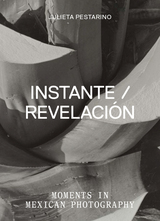
Presenting nearly 150 pictures made between 1920 and 2017, Instante/revelación highlights the work of thirteen renowned photographers who feature prominently in the history of the medium in Mexico, including Lola and Manuel Álvarez Bravo, Graciela Iturbide, and Pablo Ortiz Monasterio.
Through a dynamic selection of images, the publication explores some of the intertwined sociocultural forces that shape life and art in Mexico. Among the photographs are stunning presentations of landscapes, architecture, and flora and fauna from across the country; depictions of daily life; and portraits of esteemed Mexican artists and writers such as Diego Rivera, Frida Kahlo, and Octavio Paz. An illustrated essay examines the significant role photobooks and periodicals played in disseminating these images.
The photographers featured in this volume are linked by friendship, influence, and collaboration. Their works, when viewed together as a collective narrative, reveal the spirit of fruitful exchange that characterizes this exciting chapter in Mexico's photographic history.
This volume is published to accompany an exhibition on view at the J. Paul Getty Museum at the Getty Center from September 1, 2026, to January 3, 2027.
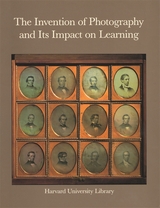
The invention of photography 150 years ago changed profoundly the way we learn about the world. Photographs can make the distant and exotic familiar, and the familiar strange; they can rewrite history, challenge aesthetic notions, and arrest time.
In this volume eight scholars share their insights concerning the impact of photography on their fields, illustrating their essays with a rich and varied selection of photographs from the resources of Harvard, Radcliffe, and the collection of Harrison D. Horblit. The fields range from art history to anthropology to medicine; among the 96 photographs are nineteenth-century views of Florence and Beirut, impressionist landscapes, Civil War battlefield scenes, family portraits, haunting studies of inmates of the mental hospital of Sainte-Anne. As Eugenia Parry Janis says in her introductory essay, photographs of “science, reportage, physiognomy of illness and health, visions of modern cities in war time or of ancient ruins, even a shred of cloth isolated under the camera eye, all increase our learning by utterly removing things from the grasp of actuality…we begin to ponder on all that is known, and how we know it, and what to believe because of it.”
Released in conjunction with Nakhova’s first museum retrospective exhibition in the United States, this book includes many full-color illustrations of her work, spanning the entirety of her forty-year career and demonstrating her facility with a variety of media. It also includes essays by a variety of world-renowned curators and art historians, each cataloging Nakhova’s artistic innovations and exploring how she deals with themes of everyday life, memory, viewer engagement, and moral responsibility. It concludes with a new interview with Nakhova herself, giving new insight into her creative process and artistic goals. Irina Nakhova: Museum on the Edge provides a vivid look at the work of a visionary artist. Published in partnership with the Zimmerli Museum.
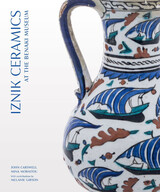
The Benaki Museum of Islamic Art in Athens has a substantial collection of Iznik ceramics, intricate works created in the city of Iznik in Asia Minor that are decorated with vibrant colors and designs. Although well known to many who visit the museum, this collection—which includes tableware, tiles, and sherds—has never before been published in its entirety.
Archaeologist, scholar, and curator John Carswell first began studying and cataloging these objects in the 1980s. This project has since been revived and guided to fruition by the curator of the Benaki Museum of Islamic Art, Mina Moraitou, who has also contributed a chapter on the Museum’s founder Antonis Benakis and the formation of its Iznik collection. The catalog brings together these admired and sought-after ceramics, featuring over three hundred illustrations of pieces from the Museum’s collection.
READERS
Browse our collection.
PUBLISHERS
See BiblioVault's publisher services.
STUDENT SERVICES
Files for college accessibility offices.
RECENTLY PUBLISHED






UChicago Accessibility Resources
home | accessibility | search | about | contact us
BiblioVault ® 2001 - 2026
The University of Chicago Press