
 A SCHOLARLY BOOK REPOSITORY
8 start with I start with I
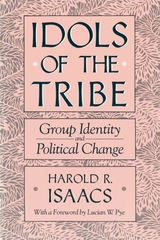
“A pacesetter, at the forefront in recognizing the persisting importance of ‘ethnicity as a force both in building nations and in tearing them apart,’ it is also a work of literary merit, crafted by a master wordsmith.” So comments Lucian Pye in reflecting on this classic work in political science and sociology about group identities bending and shaping themselves under the pressure of political change. These transformations seem to have basic similarities, whether they take place in Little Rock or Kenya, Vietnam or Pakistan, Belgium or Biafra.
Isaacs sorts out some fundamentals in forming group identity: the body, names, language, history of origins, religion, and nationality. These are dynamic elements that are melded together but have the possibility of creating new pluralisms.
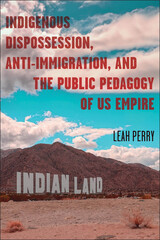
From the founding of the United States, enduringly consequential debates over Indigeneity and immigration have occurred on the battlefield and in Congress, in courtrooms, at territorial borders, and in mainstream culture. In Indigenous Dispossession, Anti-Immigration, and the Public Pedagogy of US Empire, Leah Perry traces the ways that the US created its empire through public pedagogies—which she defines as policy and media discourses—surrounding Indigenous dispossession, gendered state violence, and racialized immigration. These pedagogies have propelled the expansion of US empire, including the redrawing of the US as a neoliberal democracy. Perry argues that by changing the discourse around gender, race, immigration, and Indigeneity, the United States has continued its imperial project through different eras, always predicated on Indigenous dispossession.
In exploring crucial components of empire, such as welfare, eugenics, disability, sexual violence, foodways, queerness, and policing, Perry interrogates violence against Indigenous peoples and against immigrants, examining these not independently—as is so often the case—but as co-constitutive. Indigenous Dispossession, Anti-Immigration, and the Public Pedagogy of US Empire thus intervenes in and fills a gap in immigration studies, Indigenous studies, race and ethnic studies, gender and sexuality studies, and US history.
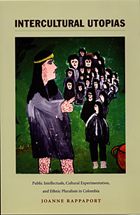
Intercultural Utopias centers on southwestern Colombia’s Cauca region, a culturally and linguistically heterogeneous area well known for its history of indigenous mobilization and its pluralist approach to ethnic politics. Rappaport interweaves the stories of individuals with an analysis of the history of the Regional Indigenous Council of Cauca and other indigenous organizations. She presents insights into the movement and the intercultural relationships that characterize it from the varying perspectives of regional indigenous activists, nonindigenous urban intellectuals dedicated to the fight for indigenous rights, anthropologists, local teachers, shamans, and native politicians.
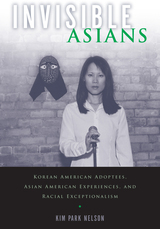
Invisible Asians offers an engaging account that makes an important contribution to our understanding of race in America, and illuminates issues of power and identity in a globalized world.
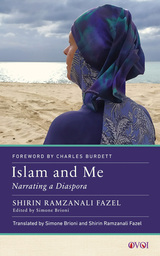
In Islam and Me, Fazel tells her story and shares the experiences of other Muslim women living in Italy, revealing the wide variety of Muslim identities and the common prejudices they encounter. Looking at Italian school textbooks, newspapers, and TV programs, she invites us to change the way Muslim immigrants, and especially women, are depicted in both news reports and scholarly research. Islam and Me is a meditation on our multireligious, multiethnic, and multilingual reality, as well as an exploration of how we might reimagine national culture and identity so that they become more diverse, inclusive, and anti-racist.
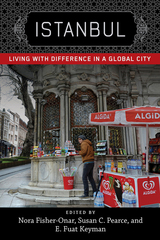
Rather than exploring Istanbul as one place at one time, the contributors to this volume focus on the city’s experience of migration and globalization over the last two centuries. Asking what Istanbul teaches us about living with people whose hopes jostle with one’s own, contributors explore the rise, collapse, and fragile rebirth of cosmopolitan conviviality in a once and future world city. The result is a cogent, interdisciplinary exchange about an urban space that is microcosmic of dilemmas of diversity across time and space.
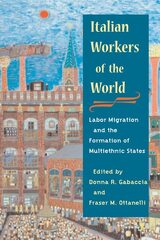
In Italian Workers of the World, a distinguished roster of contributors examines how the reception of immigrants in their new countries shaped their sense of national identity and shaped the multiethnic states where they settled. Argentina and Brazil welcomed Italian migrants as a civilizing influence, and these immigrant workers played an instrumental part in establishing and leading movements committed to labor internationalism. In the United States, by contrast, the American Federation of Labor's hostility to socialism, internationalism, and unskilled laborers fueled distrust and xenophobia that steered Italian immigrants into ethnically mixed unions like radical Industrial Workers of the World. Essays also focus on specific topics ranging from the work of republican Garibaldians in South America to antifascist currents among Italian migrants in France and the United States, and from a 1912 textile strike in Lawrence, Massachusetts, to Mussolini's invasion of Ethiopia.
Contributors: Antonio Bechelloni, Fernando J. Devoto, Pietro Rinaldo Fanesi, Donna R. Gabaccia, Mirta Zaida Lobato, Fraser M. Ottanelli, Carina Frid de Silberstein, Michael Miller Topp, Angelo Trento, Nadia Venturini, and Elisabetta Vezzosi
READERS
Browse our collection.
PUBLISHERS
See BiblioVault's publisher services.
STUDENT SERVICES
Files for college accessibility offices.
RECENTLY PUBLISHED




UChicago Accessibility Resources
home | accessibility | search | about | contact us
BiblioVault ® 2001 - 2025
The University of Chicago Press