
 A SCHOLARLY BOOK REPOSITORY
12 start with I start with I

Winner of the 2026 PIA MidAmerica GraphEx Award for Best of Category, Hardcover Book Binding
Finalist for the 2026 Locus Awards in the Illustrated and Art Books category
"The Korshak Collection is a portrait and biography of a man and his family, who once looked upon the dark skies and saw Immortals, gods hunting in the storm clouds. Stephen Korshak decided to dedicate his life to tell us all how the thunder sounded and preserve the outlines of the cosmos for the awe of us all. Enjoy, believe—be amazed." —Guillermo del Toro, from the Foreword
Icons of the Fantastic: Illustrations of Imaginative Literature from the Korshak Collection features artwork by pioneering artists from over 160 years of published works of science fiction and fantasy. The illustrations in the collection appeared on the covers of timeless novels such as the Tarzan series by Edgar Rice Burroughs and classic pulp magazines from the 1930s through 1960s, such as Amazing Stories and Weird Tales. They accompany images of mischievous satyrs, ethereal mermaids, and spell-casting witches for texts ranging from The Tempest, Don Quixote, and Alice's Adventures in Wonderland to works by Edgar Allan Poe and H. G. Wells. Alongside essays about famous illustrators such as Arthur Rackham and Aubrey Beardsley, contributors engage in a critical reassessment of understudied artists such as José Segrelles, Wladyslaw Benda, Margaret Brundage, and Hannes Bok. The book includes a foreword by Guillermo del Toro, a preface by Kevin J. Anderson, an introduction by Michael Dirda, and an interview with renowned contemporary illustration artist Michael Whelan.
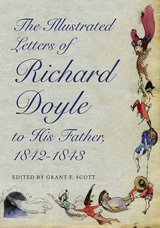
Before he joined the staff of Punch and designed its iconic front cover, illustrator Richard “Dicky” Doyle was a young man whose father (political caricaturist John Doyle) charged him with sending a weekly letter, even though they lived under the same roof. This volume collects the fifty-three illustrated missives in their entirety for the first time and provides an uncommon peek into the intimate but expansive observations of a precocious social commentator and artist.
In a series of vivid manuscript canvases, Doyle observes Victorian customs and society. He visits operas, plays, and parades. He watches the queen visiting the House of Commons and witnesses the state funeral of the Duke of Sussex. He is caught up in the Chartist riots of August 1842 and is robbed during one of the melees. And he provides countless illustrations of ordinary people strolling in the streets and swarming the parks and picture galleries of the metropolis. The sketches offer a fresh perspective on major social and cultural events of London during the early 1840s by a keen observer not yet twenty years old.
Doyle’s epistles anticipate the modern comic strip and the graphic novel, especially in their experimentation with sequential narrative and their ingenious use of space. The letters are accompanied by a full biographical and critical introduction with new material about Doyle’s life.

A detailed study of Victorian supernaturalism in book and magazine illustrations and cartoons
Illustrating the Victorian Supernatural explores written and visual texts through which the original Victorian readership encountered and navigated their experience of supernaturalism. Looking across the nineteenth century, Simon Cooke investigates illustrative responses to well-known texts by writers such as Charles Dickens and Henry James while also examining responses to less familiar ghost stories by female authors such as M. E. Braddon and Amelia Edwards. The mix of familiar and unfamiliar carries forward into the selection of artists, both those in the mainstream—John Leech, George Cruikshank, Dante Gabriel Rossetti, John Everett Millais—and others whose names are lost to modern readers and whose work deserves to be better known.
The study addresses two main questions: how illustration responded to key literary texts and how graphic designs related to contemporary contexts of race, gender, and class and to the workings of the supernatural itself. The first chapter focuses on satirical writings about ghosts and ghostliness and the various ways illustrators depicted that mockery. Chapter 2 traces artistic responses to Dickens’s writing of the supernatural as a mode of psychological investigation. Chapter 3 looks at class and gender and the problematic practice of male artists illustrating female-authored ghost stories. The fourth chapter examines satirical cartoons’ deployment of supernatural imagery to anatomize issues of imperialism and race. Finally, chapter 5 examines how neo-Victorian artists have revisited the classic texts and taken up the themes established by their forebears.

2024 On The Brinck Book Award and Lecture Series, University of New Mexico
2024 PROSE Award, Architecture–Urban Planning, Association of American Publishers
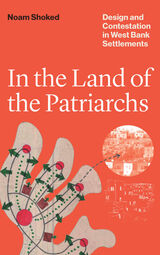
An on-the-ground account of the design and evolution of West Bank settlements, showing how one of the world’s most contested landscapes was produced by unexpected conflicts and collaborations among widely divergent actors.
Since capturing the West Bank in 1967, Israel has overseen the construction of scores of settlements across the territory’s rocky hilltops. The settlements are part of a fierce political conflict. But they are not just hotly contested political ventures. They are also something more everyday: residential architectural projects.
In the Land of the Patriarchs is an on-the-ground account of the design and evolution of West Bank settlements. Noam Shoked shows how settlements have been shaped not only by the decisions of military generals, high-profile politicians, and prominent architects but also by a wide range of actors, including real estate developers, environmental consultants, amateur archeologists, and Israelis who feel unserved by the country’s housing system. The patterns of design and construction they have inspired reflect competing worldviews and aesthetic visions, as well as everyday practices not typically associated with the politics of the Israeli occupation. Revealing the pragmatic choices and contingent circumstances that drive what appears to be a deliberately ideological landscape, Shoked demonstrates how unpredictable the transformation of political passion into brick and mortar can be.
2026 PROSE Award for Art History And Criticism, Association of American Publishers
Illuminating the abstract art of the Inka, what it conveys about Inka values, and its relationship to those who view it.
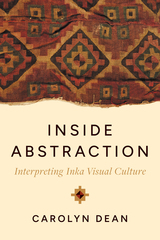
Inka visual culture is unusual in its tendency toward abstraction. Public stonework, vessels used at state feasts, garments worn by the imperial elite—these objects announcing status and power are adorned with geometric designs that refuse figuration. After searching in vain for hidden referents, many scholars have largely given up the search for meaning.
Inside Abstraction develops a novel interpretation. Eminent art historian Carolyn Dean proposes that Inka geometries are neither ornamental nor coded depictions of other objects. Rather, Dean shows that in the Andean world, the designs were functionally self-aware, possessing perspectives of their own, quite literally looking back at and addressing viewers directly. Further, Dean contends that these agent-abstractions were teachers, conveying particular messages concerning social hierarchy: the relations among geometries and colors instructed viewers as to their own proper social relations. Inka designs thereby served imperial aims by wordlessly communicating the state’s values and demands for submission. Extensively illustrated and rigorously argued, Inside Abstraction is a dramatic step forward in our understanding of Inka art and political order.

When art and design students are asked for statements to accompany their work, reflective journals, or critiques, reviews and essays, they often freeze up because they have to put their thoughts in writing. Although these students are comfortable expressing themselves visually, they lack confidence working with words. Inspiring Writing in Art and Design is a practical aid for those students who are disheartened or overwhelmed by having to write. Pat Francis provides short writing exercises and creative writing techniques for tutors to use and which will help art and design students develop their ability to verbally articulate the concepts and aesthetics behind their art. Using Francis’s examples, students will build confidence and skills that can help them succeed in presenting their work and themselves in, and beyond, the studio world.
Recent years have seen the study of men’s fashion grow from an emerging topic into a vibrant and expanding field, engaging with critical conversations on gender, race, sexuality, disability, colonialism, and globalization. Reflecting this shift, this volume moves beyond traditional narratives by highlighting three key approaches: decentralizing and decolonizing men’s fashion studies, embracing global perspectives, and focusing on multiple, overlapping social identities. Comprising thirty-four chapters by insightful scholars in fashion and dress studies, the collection offers a fresh and forward-looking examination of the field’s development.
Primarily designed for academic audiences, this handbook serves as an ideal textbook or core reading for undergraduate and graduate courses on gender and fashion. At the same time, it appeals to fashion practitioners, curators, cultural critics, and general readers interested in the history, culture, and meaning of men’s fashion and dress.
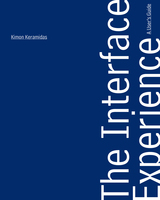
The Interface Experience surveys some of the landmark devices in the history of personal computing—including the Commodore 64, Apple Macintosh Plus, Palm Pilot Professional, and Microsoft Kinect—and helps us to better understand the historical shifts that have occurred with the design and material experience of each machine. With its spiral-bound design reminiscent of early computer user manuals and thorough consideration of the cultural moment represented by each device, The Interface Experience is a one-of-a-kind tour of modern computing technology.

In February 1956 the president of IBM, Thomas Watson Jr., hired the industrial designer and architect Eliot F. Noyes, charging him with reinventing IBM’s corporate image, from stationery and curtains to products such as typewriters and computers and to laboratory and administration buildings. What followed—a story told in full for the first time in John Harwood’s The Interface—remade IBM in a way that would also transform the relationships between design, computer science, and corporate culture.
IBM’s program assembled a cast of leading figures in American design: Noyes, Charles Eames, Paul Rand, George Nelson, and Edgar Kaufmann Jr. The Interface offers a detailed account of the key role these designers played in shaping both the computer and the multinational corporation. Harwood describes a surprising inverse effect: the influence of computer and corporation on the theory and practice of design. Here we see how, in the period stretching from the “invention” of the computer during World War II to the appearance of the personal computer in the mid-1970s, disciplines once well outside the realm of architectural design—information and management theory, cybernetics, ergonomics, computer science—became integral aspects of design.
As the first critical history of the industrial design of the computer, of Eliot Noyes’s career, and of some of the most important work of the Office of Charles and Ray Eames, The Interface supplies a crucial chapter in the story of architecture and design in postwar America—and an invaluable perspective on the computer and corporate cultures of today.
READERS
Browse our collection.
PUBLISHERS
See BiblioVault's publisher services.
STUDENT SERVICES
Files for college accessibility offices.
RECENTLY PUBLISHED



UChicago Accessibility Resources
home | accessibility | search | about | contact us
BiblioVault ® 2001 - 2026
The University of Chicago Press