
 A SCHOLARLY BOOK REPOSITORY
8 start with I start with I
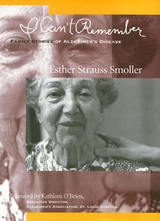
Photographs and personal narratives are woven together to show both the unpleasant and the beautiful sides of the struggle for connection between spouses and across generations. Smoller has a gift for capturing people as they interact, whether it's arguing around the kitchen table or dancing cheek to cheek.
Each family's story is different, but all four families share common pain and frustration. A highway patrolman who has early onset Alzheimer's describes what it is like to have Alzheimer's. His wife tells a parallel story of life together after hearing the diagnosis. A daughter gives the following account of her mother: "I though that it would be helpful if mother spent time in my home in Colorado. Before this visit, I was in denial, convinced that she suffered from depression and not Alzheimer's disease. ... On the plane trip to Colorado, I was brought into the stark, cold reality that Mom had Alzheimer's. She did not know where she was or where she was going. Upon arrival, she did not recognize my home, although she had visited me numerous times in the past. She tried sleeping in the bathtub the first night."
Another daughter relates that she was unaware of the onset of Alzheimer's in her mother, because her mother was such a "wonderful actress." Eventually the memory problems were no longer confined to where things belonged in the kitchen, but extended into driving off at random, driving in circles in a parking lot in the middle of the night or as much as 75 miles away from home.
I Can't Remember gives an intimate glimpse into the hearts and minds of caregivers and patients. Supportive social networks are essential for healthy life. This book provides the impetus caregivers need to develop contacts that can provide support. Smoller offers a glimpse of the frustration and losses faced by those who deal with Alzheimer's, as well as the potential to transcend those losses -- even is only for a time -- through love and hope.
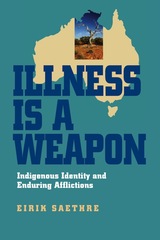
Rarely is disease and suffering understood as a form of protest, and in Illness Is a Weapon, Saethre confronts the stark reality of the current contest between all parties in this struggle. As Saethre explains, "Cursing at nurses, refusing to take medication, and accepting acute illness as unremarkable is simultaneously an act of defiance and a rejection of vulnerability."

The distinguished contributors to this volume discuss the ways HIV/AIDS has changed collective and individual identities, as well as lives, of gay men and lesbians, and how these alterations have changed our perceptions of the epidemic. They cover such topics as the impact of the epidemic on small towns, cultural barriers to AIDS prevention, gay youth and intergenerational relations, and the roles of lesbians in AIDS organizations. This collection provides compelling insights into the new communities among gay men and lesbians and the new kinds of identities and relationships that are emerging from the social and cultural ferment engendered by HIV/AIDS.
Contributors include Barry D. Adam, Lourdes Arguelles, Rafael Miguel Diaz, John H. Gagnon, Gilbert Herdt, Gregory M. Herek, Nan D. Hunter, Peter M. Nardi, John L. Peterson, Anne Rivero, Gayle S. Rubin, Beth E. Schneider, and Nancy E. Stoller.

An examination of early American literature that highlights how racial divides exacerbated—and were exacerbated by—the spread of infection
In April of 1721, the HMS Seahorse arrived in Boston from the West Indies, causing a smallpox epidemic that would plague the city for the next year. Of its 12,000 inhabitants, nearly fifty percent were infected, and 900 people died. Like the coronavirus pandemic that began in 2020, the outbreak also brought to the surface deep divides in the social fabric of colonial New England and laid the groundwork for racialized political inequities that we continue to grapple with today.
In Contagion’s Wake examines a range of American outbreak narratives, both historical and fictional, written between the early 1700s and the early 1900s—from the rise of inoculation through the advent of germ theory. Author Kelly L. Bezio argues that during this period, literature about communicable disease was dominated by white authors, such as Cotton Mather and Edgar Allen Poe, who tended to privilege white suffering and survival while obscuring Black suffering and vulnerability. Black authors, however, such as Olaudah Equiano and Frances E.W. Harper, developed variations on plot structures, metaphors, and imagery that drew upon contagion to represent racial injustice and further the cause of Black liberation.
The diverse texts Bezio analyzes vary extensively in genre and geographical location, and in the illnesses that feature in their pages. Significant disorders from the era, including yellow fever, smallpox, consumption, and cholera, make frequent appearances, as do less culturally dominant diseases such as St. Anthony’s Fire. In Contagion’s Wake contends that representations of communicable disease should not be understood only as within their own historical moment; rather, they function more like a DNA code for our present time.

The medical system delivers cures, answers, and relief from pain to those who seek its help, but it can also offer misinformation, shattered expectations, horrible options, and inhumane consideration of the people it is supposed to serve. As Gilsdorf takes us on a journey across the terrifying landscape of cancer, she discovers that there are oases of unfathomable beauty to be found.
Inside/Outside is compelling, sometimes scary, reading as it puts us inside Gilsdorf’s skin. It ponders a vast array of profound choices most of us will be confronted with in our lives: thinking versus feeling, knowing versus not knowing, hanging on versus letting go, loving versus hating, and the immeasurable territories of life between the poles. Even as it touches on these universal human themes, ultimately Inside/Outside is a story of one person’s courage, hope, and survival in the face of terrifying odds.
READERS
Browse our collection.
PUBLISHERS
See BiblioVault's publisher services.
STUDENT SERVICES
Files for college accessibility offices.
RECENTLY PUBLISHED





UChicago Accessibility Resources
home | accessibility | search | about | contact us
BiblioVault ® 2001 - 2026
The University of Chicago Press