
 A SCHOLARLY BOOK REPOSITORY
8 start with I start with I
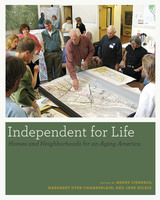
Do you want to age independently in your own home and neighborhood? Staying home, aging in place, is most people's preference, but most American housing and communities are not adapted to the needs of older people. And with the fastest population growth among people over 65, finding solutions for successful aging is important not only for individual families, but for our whole society. In Independent for Life, former HUD Secretary Henry Cisneros and a team of experts on aging, architecture, construction, health, finance, and politics assess the current state of housing and present new possibilities that realistically address the interrelated issues of housing, communities, services, and financial concerns.
Independent for Life covers a wide range of smart solutions, including remodeling current housing and building new homes for accessibility and safety, retrofitting existing neighborhoods to connect needed services and amenities, and planning new communities that work well for people of all ages. Case studies show how the proposals can be implemented. The authors offer action plans for working with policy makers at local, state, and national levels to address the larger issues of aging in place, including family financial security, real estate markets, and the limitations of public support. Lists of essential resources, including a detailed "to do" list of aging in place priorities and an individual home assessment, complete the volume.
Four in-depth studies of human-service sectors—child care, education, medical care, and long-term care for the elderly—are followed by six cross-sector studies that stimulate new ways of thinking about human services through the application of economic theory, institutional analysis, and the history of social policy.
The contributors include Kenneth J. Arrow, Martin Feldstein, Victor Fuchs, Alan M. Garber, Eric A. Hanushek, Christopher Jencks, Seymour Martin Lipset, Glenn Loury, Roger G. Noll, Paul M. Romer, Amartya Sen, and Theda Skocpol.
This timely study sheds important light on the tension between individual and social responsibility, and will appeal to economists and other social scientists and policymakers concerned with social policy issues.
Within the next twenty years, an unprecedented proportion of Americans will be over sixty-five. New research in the economics of aging is an essential element of understanding what the future holds for this aging population. Inquiries in the Economics of Aging presents both empirical papers that consider questions that are fundamental to public policy and more theoretical contributions that lay new groundwork for future research in the economics of aging.
Inquiries in the Economics of Aging provides a timely overview of some of the most important questions facing researchers on aging and outlines new techniques and models that may help to answer these questions. This important volume will be of great interest to specialists and policy makers as it paves the way for future analysis.
The contributions to Insights in the Economics of Aging uncover how financial, physical, and emotional well-being are integrally related. The authors consider the interactions between financial circumstances in later life, such as household savings and home ownership, physical circumstances such as health and disability, and emotional well-being, including happiness and mental health.
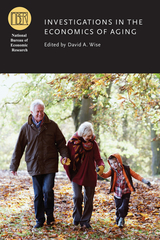
One of the most well-established relationships in the economics of aging is that between health and wealth. Yet this relationship is also changing in conjunction with a rapidly aging population as well as a broad evolution in how people live later in life.
Building on findings from earlier editions in this National Bureau of Economic Research series, Investigations in the Economics of Aging focuses on the changing financial circumstances of the elderly and the relationship of these circumstances to health and health care. Among the topics addressed are the significance of out-of-pocket health care costs, the effects of inflation on social security, and the impact of the recent financial crisis on Americans’ well-being. Encompassing new data and advances in research methodology, the developments presented in this volume will have important implications for economies worldwide.

Part memoir, part practical guide, part prescription for change, It Shouldn't Be This Way is a unique look at the problems of long-term care. Robert L. Kane, a highly experienced physician and gerontologist, and his sister, Joan C. West, tell the painful story of what happened to their mother after she suffered a debilitating stroke and spent the last years of her life in rehabilitation, assisted-living facilities, and finally a nursing home. Along the way, her adult children encountered some professionals who were kind and considerate but also many frustrations—inadequate care and the need to hire private duty aides, as well as poor communication and lack of coordination throughout the system. The situation, they found, proved far more difficult than it needed to be.
As the authors recount their mother's story, they impart various lessons they learned from each phase of the experience. They alert those who are confronting such situations for the first time about what they will likely face and how to approach the problems. Closing with a broader look at why long-term care is the way it is, they propose steps to make necessary reforms, including the development of national organizations to work for change. Their message to families, care professionals, and policy-makers could not be more urgent.
READERS
Browse our collection.
PUBLISHERS
See BiblioVault's publisher services.
STUDENT SERVICES
Files for college accessibility offices.
RECENTLY PUBLISHED



UChicago Accessibility Resources
home | accessibility | search | about | contact us
BiblioVault ® 2001 - 2025
The University of Chicago Press