
 A SCHOLARLY BOOK REPOSITORY
39 start with I start with I

Aimed at alumni and prospective students interested in the university's ongoing mission, as well as current faculty and students wishing to stay up to date on the work being done around them, An Illinois Sampler showcases the best, the most ambitious, and the most effective teaching practices developed and nurtured at one of the world's premier research universities.
Contributors are Nancy Abelmann, Flavia C. D. Andrade, Jayadev Athreya, Betty Jo Barrett, Thomas J. Bassett, Hugh Bishop, Antoinette Burton, Lauren A. Denofrio-Corrales, Lizanne DeStefano, Karen Flynn, Bruce W. Fouke, Rebecca Ginsburg, Julie Jordan Gunn, Geoffrey Herman, Laurie Johnson, Kyle T. Mays, Rebecca Nettl-Fiol, Audrey Petty, Anke Pinkert, Raymond Price, Luisa-Maria Rosu, D. Fairchild Ruggles, Carol Spindel, Mark D. Steinberg, William Sullivan, Richard I. Tapping, Bradley Tober, Agniezska Tuszynska, Bryan Wilcox, Kate Williams, Mary-Ann Winkelmes, and Yi Lu.
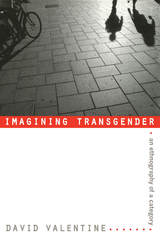
Valentine argues that “transgender” has been adopted so rapidly in the contemporary United States because it clarifies a model of gender and sexuality that has been gaining traction within feminism, psychiatry, and mainstream gay and lesbian politics since the 1970s: a paradigm in which gender and sexuality are distinct arenas of human experience. This distinction and the identity categories based on it erase the experiences of some gender-variant people—particularly poor persons of color—who conceive of gender and sexuality in other terms. While recognizing the important advances transgender has facilitated, Valentine argues that a broad vision of social justice must include, simultaneously, an attentiveness to the politics of language and a recognition of how social theoretical models and broader political economies are embedded in the day-to-day politics of identity.

Asian Americans and Latinos currently constitute 13 percent of evangelicals, and their churches are among the largest, fastest growing organizations in their communities. While evangelical identity is associated with conservative politics, Wong draws from national surveys and interviews to show that non-white evangelicals express political attitudes that are significantly less conservative than those of their white counterparts. Black, Asian American, and Latino evangelicals are much more likely to support policies such as expanded immigration rights, increased taxation of the wealthy, and government interventions to slow climate change. As Wong argues, non-white evangelicals’ experiences as members of racial or ethnic minority groups often lead them to adopt more progressive political views compared to their white counterparts.
However, despite their growth in numbers, non-white evangelicals—particularly Asian Americans and Latinos—are concentrated outside of swing states, have lower levels of political participation than white evangelicals, and are less likely to be targeted by political campaigns. As a result, white evangelicals dominate the evangelical policy agenda and are overrepresented at the polls. Also, many white evangelicals have adopted even more conservative political views in response to rapid demographic change, perceiving, for example, that discrimination against Christians now rivals discrimination against racial and ethnic minorities.
Wong demonstrates that immigrant evangelicals are neither “natural” Republicans nor “natural” Democrats. By examining the changing demographics of the evangelical movement, Immigrants, Evangelicals, and Politics in an Era of Demographic Change sheds light on an understudied constituency that has yet to find its political home.

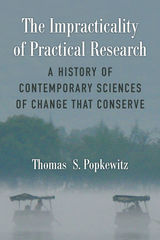
There is an alluring desire that research should lead us to find the practical knowledge that enables people to live a good life in a just and equitable society. This desire haunted the 19th century emergence of the social sciences as a discipline, then became more pronounced in the postwar mobilizations of research. Today that desire lives on in the international assessments of national schools and in the structure of professional education, both of which influence government modernization of schools and also provide for people’s well-being. American policy thus reflects research in which reforms are verified by “scientific, empirical evidences” about “what works” in experiments, and “will work” therefore in society.
The book explores the idea that practical and useful knowledge changes over time, and shows how this knowledge has been (re)visioned in contemporary research on educational reform, instructional improvement, and professionalization. The study of science draws on a range of social and cultural theories and historical studies to understand the politics of science, as well as scientific knowledge that is concerned with social and educational change. Research hopes to change social conditions to create a better life, and to shape people whose conduct embodies these valued characteristics—the good citizen, parent, or worker. Yet this hope continually articulates the dangers that threaten this future. Thomas Popkewitz explores how the research to correct social wrongs is paradoxically entangled with the inscription of differences that ultimately hamper the efforts to include.

Policymakers and public managers around the world have become preoccupied with the question of how their goals can be achieved in a way that rebuilds public confidence in government. Yet because public policies and programs increasingly are being administered through a complicated web of jurisdictions, agencies, and public-private partnerships, evaluating their effectiveness is more difficult than in the past. Though social scientists possess insightful theories and powerful methods for conducting empirical research on governance and public management, their work is too often fragmented and irrelevant to the specific tasks faced by legislators, administrators, and managers.
Proposing a framework for research based on the premise that any particular governance arrangement is embedded in a wider social, fiscal, and political context, Laurence E. Lynn Jr., Carolyn J. Heinrich, and Carolyn J. Hill argue that theory-based empirical research, when well conceived and executed, can be a primary source of fundamental, durable knowledge about governance and policy management. Focusing on complex human services such as public assistance, child protection, and public education, they construct an integrative, multilevel "logic of governance," that can help researchers increase the sophistication, power, and relevance of their work.
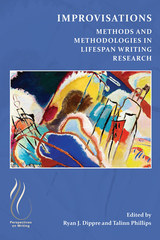
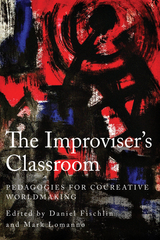
Demonstrating how improvisation can inform scenes of teaching and learning, this volume also outlines how improvisatory techniques offer powerful, if not vital, tools for producing connection, creativity, accompaniment, reciprocity, meaningful revelation, and lifelong curiosity.
The Improviser's Classroom champions activist pedagogies and the public work essential for creating communities bound together by reciprocal care and equity.
Contributors: Sibongile Bhebhe, Judit Csobod, Michael Dessen, jashen edwards, Kate Galloway, Tomie Hahn, Petro Janse van Vuuren, Lauren Michelle Levesque, George Lipsitz, Rich Marsella, Tracy McMullen, Hafez Modirzadeh, Ed Sarath, Joe Sorbara, Jesse Stewart, Ellen Waterman, Carey West, and the editors
How are the worlds of university biology and commerce blurring? Many university leaders see the amalgamation of academic and commercial cultures as crucial to the future vitality of higher education in the United States. In Impure Cultures, Daniel Lee Kleinman questions the effect of this blending on the character of academic science.
Using data he gathered as an ethnographic observer in a plant pathology lab at the University of Wisconsin–Madison, Kleinman examines the infinite and inescapable influence of the commercial world on biology in academia today. Contrary to much of the existing literature and common policy practices, he argues that the direct and explicit relations between university scientists and industrial concerns are not the gravest threat to academic research. Rather, Kleinman points to the less direct, but more deeply-rooted effects of commercial factors on the practice of university biology. He shows that to truly understand research done at universities today, it is first necessary to explore the systematic, pervasive, and indirect effects of the commercial world on contemporary academic practice.


The entanglements between science and art have always been multiple, even if they are not always readily noticeable. In this volume, historian and philosopher of science Hans-Jörg Rheinberger reflects on the work of seven different artists, apprehending artworks not as art-historical exegeses, but rather ongoing research processes with their own character and specificities, more akin to scientific experimentation.
With Inclusion, Steven Epstein argues that strategies to achieve diversity in medical research mask deeper problems, ones that might require a different approach and different solutions.
Formal concern with this issue, Epstein shows, is a fairly recent phenomenon. Until the mid-1980s, scientists often studied groups of white, middle-aged men—and assumed that conclusions drawn from studying them would apply to the rest of the population. But struggles involving advocacy groups, experts, and Congress led to reforms that forced researchers to diversify the population from which they drew for clinical research. While the prominence of these inclusive practices has offered hope to traditionally underserved groups, Epstein argues that it has drawn attention away from the tremendous inequalities in health that are rooted not in biology but in society.
“Epstein’s use of theory to demonstrate how public policies in the health profession are shaped makes this book relevant for many academic disciplines. . . . Highly recommended.”—Choice
“A masterful comprehensive overview of a wide terrain.”—Troy Duster, Biosocieties

In this age of searchable text, the need for an index made with human input is sometimes questioned. But a good index can do what a plain search cannot: It gathers all the substantive terms and subjects of the work, sorts them alphabetically, provides cross-references to and from related terms, and includes specific page numbers or other locators or, for electronic formats, direct links to the text. This painstaking intellectual labor serves readers of any longer work, whether it is searchable or not. For searchable texts, an index provides insurance against fruitless queries and unintended results. In a word, a good index makes the text more accessible.
Most book indexes must be assembled swiftly between the time page proofs are issued and the time they are returned to the typesetter—usually about four weeks. An author preparing their own index will have to proofread as well as index the work in that short time span.
This insightful chapter-length booklet will guide both professionals and first-time indexers in assembling an index that will do justice to both the book and the reader.
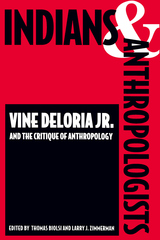
CONTENTS
Introduction: What's Changed, What Hasn't, Thomas Biolsi & Larry J. Zimmerman
Part One--Deloria Writes Back
Vine Deloria, Jr., in American Historiography, Herbert T. Hoover
Growing Up on Deloria: The Impact of His Work on a New Generation of Anthropologists, Elizabeth S. Grobsmith
Educating an Anthro: The Influence of Vine Deloria, Jr., Murray L. Wax
Part Two--Archaeology and American Indians
Why Have Archaeologists Thought That the Real Indians Were Dead and What Can We Do about It?, Randall H. McGuire
Anthropology and Responses to the Reburial Issue, Larry J. Zimmerman
Part Three-Ethnography and Colonialism
Here Come the Anthros, Cecil King
Beyond Ethics: Science, Friendship and Privacy, Marilyn Bentz
The Anthropological Construction of Indians: Haviland Scudder Mekeel and the Search for the Primitive in Lakota Country, Thomas Biolsi
Informant as Critic: Conducting Research on a Dispute between Iroquoianist Scholars and Traditional Iroquois, Gail Landsman
The End of Anthropology (at Hopi)?, Peter Whiteley
Conclusion: Anthros, Indians and Planetary Reality, Vine Deloria, Jr.

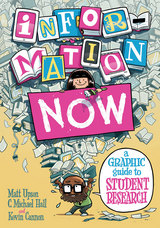
Information Now is an innovative approach to information literacy that will reinvent the way college students think about research. Instead of the typical textbook format, it uses illustrations, humor, and reflective exercises to teach students how to become savvy researchers. Students will learn how to evaluate information, to incorporate it into their existing knowledge base, to wield it effectively, and to understand the ethical issues surrounding its use. Written by two library professionals, it incorporates concepts and skills drawn from the Association of College and Research Libraries’ Information Literacy Competency Standards for Higher Education and their Framework for Information Literacy for Higher Education. Thoroughly researched and highly engaging, Information Now offers the tools that students need to become powerful consumers and creators of information.
Whether used by a high school student tackling a big paper, an undergrad facing the newness of a university library, or a writer wanting to go beyond Google, Information Now is a powerful tool for any researcher’s arsenal.
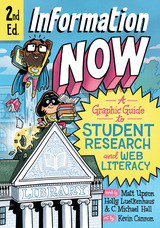
This second edition of the popular guide incorporates critical analysis of information systems, asking students to think about the biases and problems in how databases and search engines are designed and used. It also addresses how different populations of people are disproportionately affected by the algorithmic biases built into information systems. And it includes revised critical thinking exercises in every chapter.
Written and revised by library professionals, Information Now is a fun and insightful tool for high school and college students, writers, and anyone wanting to improve their research skills.

From the stone quarries of Sing Sing that supplied marble for early New York City landmarks, to twenty-first-century construction projects staffed by formerly incarcerated workers, Inside Jobs traces the relationship between prison work and the labor market over the past two hundred years. Sociologist Adam Reich demonstrates how prison labor has repeatedly been used to solve economic problems—disciplining workers, lowering labor costs, managing unemployment—revealing unexpected connections that challenge our assumptions about freedom, coercion, and labor itself.
Reich examines the history of work in prisons to understand how it has related to the free labor market. He finds that the organization of prison work, and debates over it, have changed dramatically over time. In the mid to late nineteenth century, prisons helped shape the emerging factory system as the apprentice-based labor market gave way to industrial production. Labor unions opposed prison labor as immoral, and in the early to mid-twentieth century, the moral character of the workforce became central to economic life within the prison and without. Therapeutic professionals worked in prisons to rehabilitate the incarcerated and determine what motivated them to work. Following prison uprisings in the late twentieth century, prison work became a tool of population control. Yet, paradoxically, work programs were remodeled to mirror the free labor market, requiring applications and hiring processes.
Blending archival research, political economy, and sociological theory, Inside Jobs offers a powerful new framework for understanding mass incarceration and reentry today. Reich examines how the dynamics of mass incarceration have begun to shift. He explores how the "mark of a criminal record"—the stigma traditionally associated with felony convictions—has given way to a "market" for criminal records, as employers discover advantages in hiring disadvantaged, dependent, and disciplined workers recently released from prison. Looking toward the future, Reich focuses on promising efforts to transform this system.
Inside Jobs is an illuminating examination of prison work's history, its relationship to work outside prison walls, and how the criminal justice system disempowers workers both behind bars and beyond.
An incisive critique of the corporatized university, tracing the entanglement of academic missions with economic, political, and cultural systems.
Advocates of higher education have long contended that universities should operate above the crude material negotiations of economics and politics. Such arguments, ignore the historical reality that the American university system emerged through, and in service to, a capitalist political economy that unevenly combines corporate, state, and civil interests.
As the corporatization of U.S. universities becomes nearly impossible to deny, the common response from many academics has been a superior stand against the contamination of the professional ideal by tainted corporate interests. Inside the Teaching Machine proposes a correction to this view through the lens of historical materialism.
Chaput argues that the U.S. public research university has always been a vital component of the capitalist political economy. While conventional narratives of public higher education emphasize civic preparation and upward mobility, Chaput demonstrates that supposedly egalitarian policies like the Morrill Land-Grant Act and the G.I. Bill served the changing interests of capitalism much as education, creating a professional class that supports the capitalist political economy. Chaput also focuses on the relationship between American universities and globalization, showing how the trend toward professionalization contributes to the production of surplus value, and the ways that the American university model circulates outside the United States. Chaput concludes by advocating rhetorical strategies for the professional who opposes the capitalist logic of the global university system, proposing concrete options for engaging and redirecting globalization within the university system.
In this book, Michelle LaFrance introduces the theories, rhetorical frames, and methods that ground and animate institutional ethnography. Three case studies illustrate key aspects of the methodology in action, tracing the work of writing assignment design in a linked gateway course, the ways annual reviews coordinate the work of faculty and writing center administrators and staff, and how the key term “information literacy” socially organizes teaching in a first-year English program. Through these explorations of the practice of ethnography within sites of writing and writing instruction, LaFrance shows that IE is a methodology keenly attuned to the material relations and conditions of work in twenty-first-century writing studies contexts, ideal for both practiced and novice ethnographers who seek to understand the actualities of social organization and lived experience in the sites they study.
Institutional Ethnography expands the field’s repertoire of research methodologies and offers the grounding necessary for work with the IE framework. It will be invaluable to writing researchers and students and scholars of writing studies across the spectrum—composition and rhetoric, literacy studies, and education—as well as those working in fields such as sociology and cultural studies.
Scholars have studied international organizations (IOs) in many disciplines, thus generating important theoretical developments. Yet a proper assessment and a broad discussion of the methods used to research these organizations are lacking. Which methods are being used to study IOs and in what ways? Do we need a specific methodology applied to the case of IOs? What are the concrete methodological challenges when doing research on IOs? International Organizations and Research Methods: An Introduction compiles an inventory of the methods developed in the study of IOs under the five headings of Observing, Interviewing, Documenting, Measuring, and Combining. It does not reconcile diverging views on the purpose and meaning of IO scholarship, but creates a space for scholars and students embedded in different academic traditions to reflect on methodological choices and the way they impact knowledge production on IOs.
Gagnon may be best known as the coauthor of Sexual Conduct—a book that introduced the seminal concept of sexual scripting—and as one of the coauthors of The Social Organization of Sexuality, a foundational work that is widely considered to be the most important study of human sexual behavior since the Kinsey report. The essays collected here first trace the influence of scripting theory on Gagnon, outlining the radical departure he took from the dominant biological and psychiatric models of sex research. The volume then turns to more recent essays that consider such vexed issues as homosexuality, the theories of Sigmund Freud, HIV, hazardous sex, and the social aspects of sexually transmitted diseases.
In Interpretive Quantification, ten highly regarded scholars in the field of International Relations apply quantitative methods and formal models to specific constructivist and critical research questions. In this way, each chapter serves not only as evidence that methods can productively be applied across paradigms, but also as a guide as to how this may be done. In sum, the contributors make a compelling case that when researchers cordon off particular methods for merely ideological reasons, they circumscribe their own paradigms and hinder their own research agenda.
Ragin and Fiss begin by taking up the controversy regarding the relative importance of test scores versus socioeconomic background on life chances, a debate that has raged since the 1994 publication of Richard Herrnstein and Charles Murray’s TheBell Curve. In contrast to prior work, Ragin and Fiss bring an intersectional approach to the evidence, analyzing the different ways that advantages and disadvantages combine in their impact on life chances. Moving beyond controversy and fixed policy positions, the authors propose sophisticated new methods of analysis to underscore the importance of attending to configurations of race, gender, family background, educational achievement, and related conditions when addressing social inequality in America today.

As in the works of George Schaller and Cynthia Moss, Packer transports us to life in the field. He is addicted to this land—to the beauty of a male lion striding across the Serengeti plains, to the calls of a baboon troop through the rain forests of Gombe—and to understanding the animals that inhabit it. Through his vivid narration, we feel the dust and the bumps of the Arusha Road, smell the rosemary in the air at lunchtime on a Serengeti verandah, and hear the lyrics of the Grateful Dead playing off bootlegged tapes.
Into Africa also explores the social lives of the animals and the threats to their survival. Packer grapples with questions he has passionately tried to answer for more than two decades. Why do female lions raise their young in crèches? Why do male baboons move from troop to troop while male chimps band together? How can humans and animals continue to coexist in a world of diminishing resources? Immediate demands—logistical nightmares, political upheavals, physical exhaustion—yield to the larger inescapable issues of the interdependence of the land, the animals, and the people who inhabit it.
Blue jeans, MTV, Coca-Cola, and… ecology? We don't often think of conservation sciences as a U.S. export, but in the second half of the twentieth century an astounding array of scientists and ideas flowed out from the United States into the world, preaching the gospel of conservation-oriented ecology.
Inventing Global Ecology grapples with how we should understand the development of global ecology in the twentieth century—a science that is held responsible for, literally, saving the world. Is the spread of ecology throughout the globe a subtle form of cultural imperialism, as some claim? Or is it a manifestation of an increasingly globalized world, where ideas, people, and things move about with greater freedom than ever before?
Using India as the case study, Professor Michael Lewis considers the development of conservation policies and conservation sciences since the end of World War II and the role of United States scientists, ideas, and institutions in this process. Was India subject to a subtle form of Americanization, or did Indian ecologists develop their own agenda, their own science, and their own way of understanding (and saving) the natural world? Does nationality even matter when doing ecology?
This readable narrative will carry you through the first fifty years of independent India, from the meadows of the Himalayan Mountains to the rainforests of southern India, from Gandhi and Nehru to Project Tiger. Of equal interest to the general reader, to scientists, and to scholars of history and globalization, Inventing Global Ecology combines ethnographic fieldwork and oral history conducted in India and the United States, as well as traditional archival research.

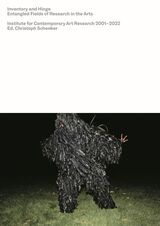
Artistic work connects multiple competencies, areas of knowledge, and ways of life. The Institute for Contemporary Art Research (IFCAR) has made this principle its guiding ethos through organizing research projects in correspondence with this transgressive gesture, manifesting as interdisciplinary, networked knowledge production.
Inventory and Hinge offers an overview of the research projects performed over the last two decades at IFCAR through project descriptions, plentiful illustrations, and, most importantly, links and QR codes that grant access to nearly all publications and websites that were created by the individual projects he discusses.
Although art as research has a long tradition outside of institutions, Inventory and Hinge chronicles IFCAR’s drive to introduce this new discipline and establish a new artistic genre.
Chapter 10 is available Open Access here (https://www.ncbi.nlm.nih.gov/books/NBK395883)

Today’s huge array of environmental problems can best be solved by people who have learned about nature within nature at a place with a long history of research and observation, people who thoroughly understand and appreciate nature’s cogs and wheels. Lakeside Lab and biological research stations like it have never been more relevant to science and to society at large than they are today. Michael Lannoo convinces us that while Lakeside’s past is commendable, its future, grounded in ecological principles, will help shape a more sustainable society.
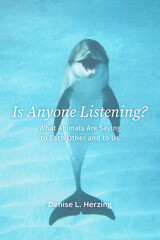
If you could pose one question to a dolphin, what would it be? And what might a dolphin ask you? For forty years, researcher and author Denise L. Herzing has investigated these and related questions of marine mammal communication. With the assistance of a friendly community of Atlantic spotted dolphins in the Bahamas, Herzing studies two-way communication between different dolphin species and between humans and dolphins using a variety of cutting-edge experiments. But the dolphins are not the only ones talking, and in this wide-ranging and accessible book, Herzing explores the astonishing realities of interspecies communication, a skill that humans currently lack.
Is Anyone Listening? connects research on dolphin communication to findings from Jane Goodall on chimpanzees, Dian Fossey on mountain gorillas, Cynthia Moss on African elephants, and others driving today’s exploration of possible animal languages. Although humans have long attempted to crack animal communication codes, only now do we have the advanced machine-learning tools to help. As Herzing reveals, researchers are finding fascinating hints of language in nonhuman species, including linguistic structures, vowel equivalents, and complex repeated sequences. By looking at the many ways animals use and manipulate signals, we see that we’ve only just begun to appreciate the diversity of animal intelligence and the complicated and subtle aspects of animal communication.
Considering dolphins and other nonhuman animals as colleagues instead of research subjects, Herzing asks us to meet animals as both speakers and listeners, as mutually curious beings, and to listen to what they are saying.
READERS
Browse our collection.
PUBLISHERS
See BiblioVault's publisher services.
STUDENT SERVICES
Files for college accessibility offices.
RECENTLY PUBLISHED




UChicago Accessibility Resources
home | accessibility | search | about | contact us
BiblioVault ® 2001 - 2026
The University of Chicago Press