
 A SCHOLARLY BOOK REPOSITORY
6 start with I start with I

The concept of ‘the commons’ has been used as a framework to understand resources shared by a community rather than a private entity, and it has also inspired social movements working against the enclosure of public goods and resources. One such resource is free (libre) and open source software (FLOSS). FLOSS emerged as an alternative to proprietary software in the 1980s. However, both the products and production processes of FLOSS have become incorporated into capitalist production. For example, Red Hat, Inc. is a large publicly traded company whose business model relies entirely on free software, and IBM, Intel, Cisco, Samsung, Google are some of the largest contributors to Linux, the open-source operating system. This book explores the ways in which FLOSS has been incorporated into digital capitalism. Just as the commons have been used as a motivational frame for radical social movements, it has also served the interests of free-marketeers, corporate libertarians, and states to expand their reach by dragging the shared resources of social life onto digital platforms so they can be integrated into the global capitalist system.
The book concludes by asserting the need for a critical political economic understanding of the commons that foregrounds (digital) labour, class struggle, and uneven power distribution within the digital commons as well as between FLOSS communities and their corporate sponsors.

Nenets nomads, long shaped by Russian colonialism and Soviet modernization, experienced sweeping conversions in the mid-1990s, culminating in the creation of a tundra church tied to a radical evangelical movement. Amid Putin’s tightening control—when indigenous peoples and minority faiths faced renewed surveillance and harassment—the book follows Nenets and missionaries whose encounters across the tundra sparked tensions between converts and non-converts, faith and state. Through stories of hope, loss, and resilience, it reveals how global evangelical Christianity intersects with local traditions, reshaping kinship, belonging, and modernity in the Siberian tundra.
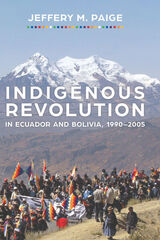
Uprisings by indigenous peoples of Ecuador and Bolivia between 1990 and 2005 overthrew the five-hundred-year-old racial and class order inherited from the Spanish Empire. It started in Ecuador with the Great Indigenous Uprising, which was fought for cultural and economic rights. A few years later massive indigenous mobilizations began in Bolivia, culminating in 2005 with the election of Evo Morales, the first indigenous president.
Jeffrey M. Paige, an internationally recognized authority on the sociology of revolutionary movements, interviewed forty-five indigenous leaders who were actively involved in the uprisings. The leaders recount how peaceful protest and electoral democracy paved the path to power. Through the interviews, we learn how new ideologies of indigenous socialism drew on the deep commonalities between the communal dreams of their ancestors and the modern ideology of democratic socialism. This new discourse spoke to the people most oppressed by both withering racism and neoliberal capitalism.
Emphasizing mutual respect among ethnic groups (including the dominant Hispanic group), the new revolutionary dynamic proposes a communal worldview similar to but more inclusive than Western socialism because it adds indigenous cultures and nature in a spiritual whole. Although absent in the major revolutions of the past century, the themes of indigenous revolution—democracy, indigeneity, spirituality, community, and ecology—are critically important.
Paige’s interviews present the powerful personal experiences and emotional intensity of the revolutionary leadership. They share the stories of mass mobilization, elections, and indigenous socialism that created a new form of twenty-first-century revolution with far-reaching applications beyond the Andes.


How can a society call itself inclusive while systematically excluding those who do not fit the norm? Intersectional Challenges to Cohesion? critically examines how people are marked as “not belonging” based on multiple, intersecting dimensions of identity: race, gender, disability, migration status, and more.
By bringing together diverse academic perspectives, this volume brings to light the lived realities of marginalized individuals at personal and social levels, depicting how systemic exclusion persists despite democratic ideals. Through interdisciplinary research and case studies, the contributors analyze the structures that enforce non-normativity and limit participation and ultimately question the very fabric of social cohesion. Through mapping these intersectional challenges, this book provides crucial insights for scholars and policymakers striving for genuine inclusion.
In Irrational Together, economic sociologist Adam S. Hayes takes readers on a fascinating journey to uncover the often-unseen social forces that shape our financial behavior. Drawing on original research and engaging real-world examples, Hayes challenges not only the notion that economic decisions are purely rational but also the prevailing behavioral economics view that irrational choices stem primarily from individual beliefs. Instead, he argues that our economic choices and actions are deeply embedded in our social and cultural contexts and that understanding these influences is crucial to fully grasp the complexities of financial decision-making.
From the impact of social class and cultural capital on risk-taking and the role of social networks and group identities in shaping consumer choices to the gendered dimensions of financial advice and literacy, this book weaves together insights from sociology, behavioral economics, and cultural studies to paint a nuanced picture of how we navigate the economic landscape as inherently social beings. Why, for example, would someone choose to continue paying 20% interest on a large credit card debt rather than taking out a low-interest mortgage on their home to pay off the card? As Hayes makes clear through rigorous analysis, cultural values—like those related to home ownership—hold as much or more sway over us than financial best practices.
Bridging the gap between behavioral economics and sociology, this groundbreaking work paves the way for a more holistic understanding of the social and cultural influences on economic behavior. Hayes also looks to the future and argues that to correct major disparities in our social understanding of wealth and money, we need to construct financial systems that consider a diversity of social backgrounds.
With its accessible language and thought-provoking insights, Irrational Together is an essential guide for anyone seeking to understand the intersection of money, society, and human behavior.
READERS
Browse our collection.
PUBLISHERS
See BiblioVault's publisher services.
STUDENT SERVICES
Files for college accessibility offices.
RECENTLY PUBLISHED







UChicago Accessibility Resources
home | accessibility | search | about | contact us
BiblioVault ® 2001 - 2026
The University of Chicago Press