
 A SCHOLARLY BOOK REPOSITORY
8 start with I start with I

Leo Lucassen tackles the question of whether the integration process of these recent immigrants will fundamentally differ in the long run (over multiple generations) from the experiences of similar immigrant groups in the past. For comparison, Lucassen focuses on "large and problematic groups" from Western Europe's past (the Irish in the United Kingdom, the Poles in Germany, and the Italians in France) and demonstrates a number of structural similarities in the way migrants and their descendants integrated into these nation states. Lucassen emphasizes that the geographic sources of the "threat" have changed and that contemporaries tend to overemphasize the threat of each successive wave of immigrants, in part because the successfully incorporated immigrants of the past have become invisible in national histories.

On October 21, 1996, attorney Michael Hausfeld, with a team of lawyers, filed a class-action complaint against Union Bank of Switzerland, Swiss Bank Corporation, and Credit Suisse on behalf of Holocaust victims. The suit accused the banks of, among other things, acting as the chief financiers for Nazi Germany. Hausfeld wanted to use the suit to prove that the banks not only concealed and refused to return millions of dollars in dormant accounts, but that they acted as a conduit for looted assets and slave labor profits. Such behavior, he charged, violated the code of ethics known as customary international law. On August 12, 1998, the plaintiffs and banks reached a $1.25 billion settlement.
Through interviews with a wide range of people involved in the case and detailed research of documents and court transcripts, Jane Schapiro shows the ways that egos, personalities, and values clash in such a complex and emotionally charged case. Inside a Class Action provides an insider’s view of a major lawsuit from its inception to its conclusion, which will appeal to anyone interested in human rights, reparations, and international law.
A gulf of centuries separates the Byzantine Empire from the academic field of Byzantine studies. This book offers a new approach to the history of Byzantine scholarship, focusing on the attraction that Byzantium held for Early Modern Europeans and challenging the stereotype that they dismissed the Byzantine Empire as an object of contempt.
The authors in this book focus on how and why the Byzantine past was used in Early Modern Europe: to diagnose cultural decline, to excavate the beliefs and practices of early Christians, to defend absolutism or denounce tyranny, and to write strategic ethnography against the Ottomans. By tracing Byzantium’s profound impact on everything from politics to painting, this book shows that the empire and its legacy remained relevant to generations of Western writers, artists, statesmen, and intellectuals as they grappled with the most pressing issues of their day.
Refuting reductive narratives of absence or progress, this book shows how “Byzantium” underwent multiple overlapping and often discordant reinventions before the institutionalization of “Byzantine studies” as an academic discipline. As this book suggests, it was precisely Byzantium’s ambiguity—as both Greek and Roman, ancient and medieval, familiar and foreign—that made it such a vibrant and vital part of the Early Modern European imagination.

In the aftermath of World War II, Prussia—a centuries-old state pivotal to Europe’s development—ceased to exist. In their eagerness to erase all traces of the Third Reich from the earth, the Allies believed that Prussia, the very embodiment of German militarism, had to be abolished. But as Christopher Clark reveals in this pioneering history, Prussia’s legacy is far more complex. Though now a fading memory in Europe’s heartland, the true story of Prussia offers a remarkable glimpse into the dynamic rise of modern Europe.
What we find is a kingdom that existed nearly half a millennium ago as a patchwork of territorial fragments, with neither significant resources nor a coherent culture. With its capital in Berlin, Prussia grew from being a small, poor, disregarded medieval state into one of the most vigorous and powerful nations in Europe. Iron Kingdom traces Prussia’s involvement in the continent’s foundational religious and political conflagrations: from the devastations of the Thirty Years War through centuries of political machinations to the dissolution of the Holy Roman Empire, from the enlightenment of Frederick the Great to the destructive conquests of Napoleon, and from the “iron and blood” policies of Bismarck to the creation of the German Empire in 1871, and all that implied for the tumultuous twentieth century.
By 1947, Prussia was deemed an intolerable threat to the safety of Europe; what is often forgotten, Clark argues, is that it had also been an exemplar of the European humanistic tradition, boasting a formidable government administration, an incorruptible civil service, and religious tolerance. Clark demonstrates how a state deemed the bane of twentieth-century Europe has played an incalculable role in Western civilization’s fortunes. Iron Kingdom is a definitive, gripping account of Prussia’s fascinating, influential, and critical role in modern times.
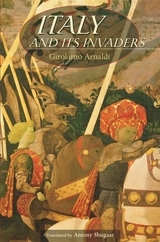
From the earliest times, successive waves of foreign invaders have left their mark on Italy. Beginning with Germanic invasions that undermined the Roman Empire and culminating with the establishment of the modern nation, Girolamo Arnaldi explores the dynamic exchange between outsider and “native,” liberally illustrated with interpretations of the foreigners drawn from a range of sources. A despairing Saint Jerome wrote, of the Sack of Rome by the Visigoths in 410, “My sobs stop me from dictating these words. Behold, the city that conquered the world has been conquered in its turn.” Other Christian authors, however, concluded that the sinning Romans had drawn the wrath of God upon them.
Arnaldi traces the rise of Christianity, which in the transition from Roman to barbarian rule would provide a social bond that endured through centuries of foreign domination. Incursions cemented the separation between north and south: the Frankish conquerors held sway north of Rome, while the Normans settled in the south. In the ninth century, Sicily entered the orbit of the Muslim world when Arab and Berber forces invaded. During the Renaissance, flourishing cities were ravaged by foreign armies—first the French, who during the siege of Naples introduced an epidemic of syphilis, then the Spanish, whose control preserved the country’s religious unity during the Counter-Reformation but also ensured that Italy would lag behind during the Enlightenment.
Accessible and entertaining, this outside-in history of Italy is a telling reminder of the many interwoven strands that make up the fabric of modern Europe.
READERS
Browse our collection.
PUBLISHERS
See BiblioVault's publisher services.
STUDENT SERVICES
Files for college accessibility offices.
RECENTLY PUBLISHED




UChicago Accessibility Resources
home | accessibility | search | about | contact us
BiblioVault ® 2001 - 2025
The University of Chicago Press