
 A SCHOLARLY BOOK REPOSITORY
4 start with J start with J

The case of the Trenton Six attracted international attention in its time (1948–1952) and was once known as the “northern Scottsboro Boys case.” Yet, there is no memory of it. The shame of racism evident in the case has been nearly erased from the public record. Now, historian Cathy D. Knepper takes us back to the courtroom to make us aware of this shocking chapter in American history.
Jersey Justice: The Story of the Trenton Six begins in 1948 when William Horner, an elderly junk dealer, was murdered in his downtown Trenton shop. Over a two-week period, six local African American men were arrested and charged with collectively killing Horner. Violating every rule in the book, the Trenton police held the six men in incommunicado detention, without warrants, and threatened them until they confessed. At the end of the trial the all-white jury sentenced the six men to die in the electric chair.
That might have been the end of the story were it not for the tireless efforts of Bessie Mitchell, the sister of one of the accused men. Undaunted by the refusal of the NAACP and the ACLU to help appeal the conviction of the Trenton Six, Mitchell enlisted the aid of the Civil Rights Congress, ultimately taking the case as far as the New Jersey Supreme Court. Along the way, the Trenton Six garnered the attention and involvement of many prominent activists, politicians, and artists, including Paul Robeson, Thurgood Marshall, Eleanor Roosevelt, Pete Seeger, Arthur Miller, and Albert Einstein. Jersey Justice brings to light a shameful moment in our nation’s history, but it also tells the story of a personal battle for social justice that changed America.

A revelatory history of the laws that conditioned the everyday lives of Chinese people in the American West—and of those who negotiated, circumvented, and resisted discrimination.
Legal discrimination against Chinese people in the United States began in 1852, when California passed a tax on foreign gold miners that was explicitly designed to exploit Chinese labor. Over the next seventy years, officials in California, Oregon, Washington, and other western states instituted more than five thousand laws that marginalized and controlled their Chinese residents. Long before the Chinese Exclusion Act banned Chinese immigration, these laws constrained the activities and opportunities of Chinese people already living in the United States.
In this eye-opening account, Beth Lew-Williams describes a legal architecture redolent of Jim Crow but tailored specifically to people often referred to only as “John Doe Chinaman” or “Mary Chinaman” in official records. Enforced by police and tax collectors, but also by schoolteachers, missionaries, and neighbors, these laws granted the Chinese only limited access to American society, falling far short of equality or belonging. Cementing stereotypes of Chinese residents as criminals, invaders, and predators, they regulated everything from healthcare to education, property ownership, business formation, and kinship customs. Yet in the face of these limitations, Chinese communities reacted resourcefully. Many fought, evaded, and manipulated these laws, finding ways to maintain their prohibited traditions, resist unfair treatment in court, and insist on their political rights.
Drawing on dozens of archives across the US West, John Doe Chinaman reveals the depth of anti-Chinese discrimination beyond federal exclusion and tells the stories of those who refused to accept a conditional place in American life.
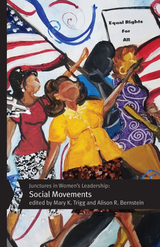
From Eleanor Roosevelt to feminist icon Gloria Steinem to HIV/AIDS activist Dazon Dixon Diallo, women have assumed leadership roles in struggles for social justice. How did these remarkable women ascend to positions of influence? And once in power, what leadership strategies did they use to deal with various challenges?
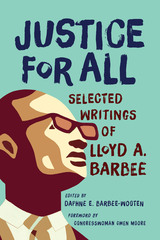
Civil rights leader and legislator Lloyd A. Barbee frequently signed his correspondence with "Justice for All," a phrase that embodied his life’s work of fighting for equality and fairness. An attorney most remembered for the landmark case that desegregated Milwaukee Public Schools in 1972, Barbee stood up for justice throughout his career, from defending University of Wisconsin students who were expelled after pushing the school to offer black history courses, to representing a famous comedian who was arrested after stepping out of a line at a protest march. As the only African American in the Wisconsin legislature from 1965 to 1977, Barbee advocated for fair housing, criminal justice reform, equal employment opportunities, women’s rights, and access to quality education for all, as well as being an early advocate for gay rights and abortion access.
This collection features Barbee’s writings from the front lines of the civil rights movement, along with his reflections from later in life on the challenges of legislating as a minority, the logistics of coalition building, and the value of moving the needle on issues that would outlast him. Edited by his daughter, civil rights lawyer Daphne E. Barbee-Wooten, these documents are both a record of a significant period of conflict and progress, as well as a resource on issues that continue to be relevant to activists, lawmakers, and educators.
READERS
Browse our collection.
PUBLISHERS
See BiblioVault's publisher services.
STUDENT SERVICES
Files for college accessibility offices.
RECENTLY PUBLISHED






UChicago Accessibility Resources
home | accessibility | search | about | contact us
BiblioVault ® 2001 - 2025
The University of Chicago Press