
 A SCHOLARLY BOOK REPOSITORY
2 start with J start with J
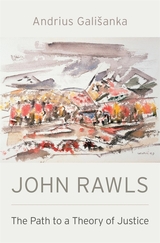
An engaging account of the titan of political philosophy and the development of his most important work, A Theory of Justice, coming at a moment when its ideas are sorely needed.
It is hard to overestimate the influence of John Rawls on political philosophy and theory over the last half-century. His books have sold millions of copies worldwide, and he is one of the few philosophers whose work is known in the corridors of power as well as in the halls of academe. Rawls is most famous for the development of his view of “justice as fairness,” articulated most forcefully in his best-known work, A Theory of Justice. In it he develops a liberalism focused on improving the fate of the least advantaged, and attempts to demonstrate that, despite our differences, agreement on basic political institutions is both possible and achievable.
Critics have maintained that Rawls’s view is unrealistic and ultimately undemocratic. In this incisive new intellectual biography, Andrius Gališanka argues that in misunderstanding the origins and development of Rawls’s central argument, previous narratives fail to explain the novelty of his philosophical approach and so misunderstand the political vision he made prevalent. Gališanka draws on newly available archives of Rawls’s unpublished essays and personal papers to clarify the justifications Rawls offered for his assumption of basic moral agreement. Gališanka’s intellectual-historical approach reveals a philosopher struggling toward humbler claims than critics allege.
To engage with Rawls’s search for agreement is particularly valuable at this political juncture. By providing insight into the origins, aims, and arguments of A Theory of Justice, Gališanka’s John Rawls will allow us to consider the philosopher’s most important and influential work with fresh eyes.
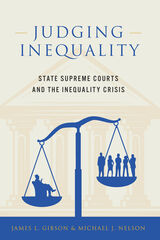
Drawing on an analysis of an original database of nearly 6,000 decisions made by over 900 judges on 50 state supreme courts over a quarter century, Judging Inequality documents two ways that state high courts have crafted policies relevant to inequality: through substantive policy decisions that fail to advance equality and by rulings favoring more privileged litigants (typically known as “upperdogs”). The authors discover that whether court-sanctioned policies lead to greater or lesser inequality depends on the ideologies of the justices serving on these high benches, the policy preferences of their constituents (the people of their state), and the institutional structures that determine who becomes a judge as well as who decides whether those individuals remain in office.
Gibson and Nelson decisively reject the conventional theory that state supreme courts tend to protect underdog litigants from the wrath of majorities. Instead, the authors demonstrate that the ideological compositions of state supreme courts most often mirror the dominant political coalition in their state at a given point in time. As a result, state supreme courts are unlikely to stand as an independent force against the rise of inequality in the United States, instead making decisions compatible with the preferences of political elites already in power. At least at the state high court level, the myth of judicial independence truly is a myth.
Judging Inequality offers a comprehensive examination of the powerful role that state supreme courts play in shaping public policies pertinent to inequality. This volume is a landmark contribution to scholarly work on the intersection of American jurisprudence and inequality, one that essentially rewrites the “conventional wisdom” on the role of courts in America’s democracy.
READERS
Browse our collection.
PUBLISHERS
See BiblioVault's publisher services.
STUDENT SERVICES
Files for college accessibility offices.
RECENTLY PUBLISHED


UChicago Accessibility Resources
home | accessibility | search | about | contact us
BiblioVault ® 2001 - 2026
The University of Chicago Press