
 A SCHOLARLY BOOK REPOSITORY
483 books about Italy and 4
start with J
483 books about Italy and 4
483 books about Italy
4 start with J start with J
4 start with J start with J
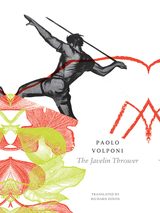
The Javelin Thrower
Paolo Volponi
Seagull Books, 2018
As a boy growing up in rural Italy in the 1930s, Damìn is experiencing the first stirrings of adolescence when he accidentally sees his mother having sex with the local Fascist commandant. His pain, anger, and confusion are uncomfortably intertwined with a compulsion to watch them, which becomes an obsession.
Isolating himself from anyone who might help him understand what he’s feeling, he channels his fury into his javelin, getting better and better until he is a local champion. But his success is fleeting, as wholly confused and caught up in his own anger, he ends up betraying and humiliating his friends. The Javelin Thrower is the story of an erotic education turned tragic, poisoned by the darkness running through Mussolini’s Italy.
Isolating himself from anyone who might help him understand what he’s feeling, he channels his fury into his javelin, getting better and better until he is a local champion. But his success is fleeting, as wholly confused and caught up in his own anger, he ends up betraying and humiliating his friends. The Javelin Thrower is the story of an erotic education turned tragic, poisoned by the darkness running through Mussolini’s Italy.
[more]
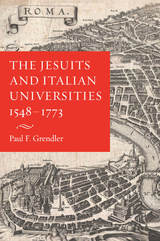
The Jesuits and Italian Universities, 1548-1773
Paul F. Grendler
Catholic University of America Press, 2017
The Society of Jesus arrived in Italy in 1540 brimming with enthusiasm to found new universities. These would be better than Italian universities, which the Jesuits believed were full of professors teaching philosophical atheism to debauched students. The Jesuits also wanted to become professors in existing Italian universities. They would teach Christian philosophy, true theology, sound logic, eloquent humanities, and practical mathematics. They would exert a positive moral influence on students.
The Jesuits were rejected. Italy already had fourteen universities famous for their research and teaching. They were ruled by princes and cities who refused to share their universities with a religious order led by Spaniards. Between 1548 and 1773 the Jesuits made sixteen attempts, from Turin in the north to Messina in Sicily, to found new universities or to become professors in existing universities. They had some successes, as they helped found four new universities and became professors of mathematics in three more universities. But they suffered nine total failures. The battles between universities, civil governments, and the Jesuits were memorable. Lay professors accused the Jesuits of teaching philosophy badly. The Jesuits charged that Italian professors delivered few lectures and skipped most of Aristotle. Behind the denunciations were profound differences about what universities should be.
Italian universities were dominated by law and the Jesuits emphasized the humanities and theology. Nevertheless, the Society of Jesus had an impact. They added cases of conscience to the training of clergymen. They made four years of study the norm for a degree in theology. They offered a student-centered alternative to Italian universities that focused on research and ignored student misbehavior.
Paul Grendler tells a new story based on years of research in a dozen archives. Anyone interested in the volatile mix of universities, religion, and politics will find this book fascinating and instructive, as will anyone who contemplates what it means to be a Catholic university.
The Jesuits were rejected. Italy already had fourteen universities famous for their research and teaching. They were ruled by princes and cities who refused to share their universities with a religious order led by Spaniards. Between 1548 and 1773 the Jesuits made sixteen attempts, from Turin in the north to Messina in Sicily, to found new universities or to become professors in existing universities. They had some successes, as they helped found four new universities and became professors of mathematics in three more universities. But they suffered nine total failures. The battles between universities, civil governments, and the Jesuits were memorable. Lay professors accused the Jesuits of teaching philosophy badly. The Jesuits charged that Italian professors delivered few lectures and skipped most of Aristotle. Behind the denunciations were profound differences about what universities should be.
Italian universities were dominated by law and the Jesuits emphasized the humanities and theology. Nevertheless, the Society of Jesus had an impact. They added cases of conscience to the training of clergymen. They made four years of study the norm for a degree in theology. They offered a student-centered alternative to Italian universities that focused on research and ignored student misbehavior.
Paul Grendler tells a new story based on years of research in a dozen archives. Anyone interested in the volatile mix of universities, religion, and politics will find this book fascinating and instructive, as will anyone who contemplates what it means to be a Catholic university.
[more]
Jews and the Italian Left
Socialism, Zionism, and Antisemitism from 1892 to 1992
Alessandra Tarquini, Translated by Max Matukhin
University of Wisconsin Press, 2026
Alessandra Tarquini, an expert on Italian Fascism, untangles the complicated relationship between the Italian left and Jews since the late nineteenth century. Due largely to indifference, and sometimes to antisemitism, Italian leftists consistently overlooked Jews in their visions for a collectivist future. Yet, from the birth of the Socialist Party in 1892 until 1992, when the heirs of the Marxist tradition dispersed or set out on a new path, questions continually arose in revolutionary efforts to remake the Italian state: Should Jews be seen as oppressed, and therefore welcome to participate in the struggle that would lead to the advent of a new civilization? Or might they hinder the realization of socialism because of their attachment to a religious identity?
Tarquini’s research fills an important lacuna by analyzing the antisemitism of twentieth-century socialist movements. Crucially, however, Tarquini makes important distinctions between antisemitism on the Italian left and right, and identifies the relationship between leftism and antisemitism as a distinct formation.
Tarquini’s research fills an important lacuna by analyzing the antisemitism of twentieth-century socialist movements. Crucially, however, Tarquini makes important distinctions between antisemitism on the Italian left and right, and identifies the relationship between leftism and antisemitism as a distinct formation.
[more]
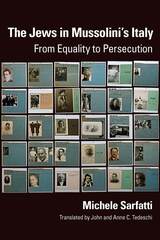
The Jews in Mussolini's Italy
From Equality to Persecution
Michele Sarfatti; Translated by John and Anne C. Tedeschi
University of Wisconsin Press, 2006
Often overshadowed by the persecution of Jews in Germany, the treatment of Jews in fascist Italy comes into sharp focus in this volume by Italian historian Michele Sarfatti. Using thorough and careful statistical evidence to document how the Italian social climate changed from relatively just to irredeemably prejudicial, Sarfatti begins with a history of Italian Jews in the decades before fascism—when Jews were fully integrated into Italian national life—and provides a deft and comprehensive history from fascism’s rise in 1922 to its defeat in 1945.
Outstanding Academic Title, Choice Magazine
[more]
READERS
Browse our collection.
PUBLISHERS
See BiblioVault's publisher services.
STUDENT SERVICES
Files for college accessibility offices.
RECENTLY PUBLISHED





UChicago Accessibility Resources
home | accessibility | search | about | contact us
BiblioVault ® 2001 - 2026
The University of Chicago Press