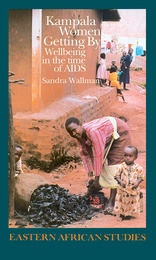
What do ordinary women in an African city do in the face of “serious enough” infections in themselves and signs of acute illness in their young children? How do they manage? What does it take to get by? How do they maintain the wellbeing of the household in a setting without what would be considered as basic health provision in an American or European city?
Professor Wallman focuses on women in a densely-populated part of Kampala called Kamwokya. With the help of a team of Ugandans and non-Ugandans, a vivid picture emerges, enhanced by color photographs, sketches and maps.
Women are largely responsible for the management of illness in all members of the family. Young children are at particular risk and the women have to take the first crucial decisions about treatment. Formal health resources are scarce and so they most often resort to an extraordinary range of treatments provided in the informal economy. A holistic picture of all the options that local people recognize is drawn, and an enriched understanding of problems and opportunities for health care in tropical cities emerges.
Multidisciplinary work on sexually transmitted disease is rare, even in this time of AIDS, and the book effectively maps the social contexts of its perception and management. Moreover, it focuses on women as ordinary citizens, selected by residence and not by reference to known medical conditions or high risk behavior. It is important too that the field strategies have encouraged local informants to become active participants in the definition of local problems and their solutions.