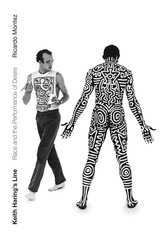
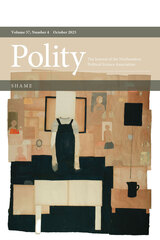
front cover of Keith Haring's Line
Keith Haring's Line
Race and the Performance of Desire
Ricardo Montez
Duke University Press, 2020
In the thirty years since his death, Keith Haring—a central presence on the New York downtown scene of the 1980s—has remained one of the most popular figures in contemporary American art. In one of the first book-length treatments of Haring’s artistry, Ricardo Montez traces the drawn and painted line that was at the center of Haring’s artistic practice and with which the artist marked canvases, subway walls, and even human flesh. Keith Haring’s Line unites performance studies, critical race studies, and queer theory in an exploration of cross-racial desire in Haring’s life and art. Examining Haring’s engagements with artists such as dancer and choreographer Bill T. Jones, graffiti artist LA II, and iconic superstar Grace Jones, Montez confronts Haring’s messy relationships to race-making and racial imaginaries, highlighting scenes of complicity in order to trouble both the positive connotations of inter-racial artistic collaboration and the limited framework of appropriation. 
[more]

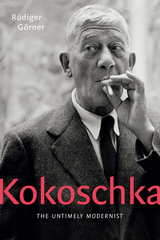
front cover of Kokoschka
Kokoschka
The Untimely Modernist
Rüdiger Görner
Haus Publishing, 2024

The Austrian artist Oskar Kokoschka (1886–1980) achieved global fame with his intense expressionistic portraits and landscapes. In this first English-language biography, Rüdiger Görner depicts the artist in all his fascinating and contradictory complexity. He traces Kokoschka’s path from bête noire of the bourgeoisie and “hunger artist” who had to flee the Nazis to a wealthy and cosmopolitan political and critical artist who played a significant role in shaping the European art scene of the twentieth century and whose relevance is undiminished to this day. 

In Kokoschka: A Life in Art, Görner emphasizes the artist’s versatility. Kokoschka, although best known for his expressionistic portraits and landscapes, was more than a mere visual artist: his achievements as a playwright, essayist, and poet bear witness to a remarkable literary talent. Music, too, played a central role in his work, and a passion for teaching led him to establish in 1953 the School of Seeing, an unconventional art school intended to revive humanist ideals in the horrific aftermath of war.  This biography shows brilliantly how all the pieces of Kokoschka’s disparate interests and achievements cohered in the richly creative life of a singular artist.

[more]

front cover of Kurt Schwitters
Kurt Schwitters
Space, Image, Exile
Megan R. Luke
University of Chicago Press, 2014
German artist Kurt Schwitters (1887–1948) is best known for his pioneering work in fusing collage and abstraction, the two most transformative innovations of twentieth-century art. Considered the father of installation art, Schwitters was also a theorist, a Dadaist, and a writer whose influence extends from Robert Rauschenberg and Eva Hesse to Thomas Hirschhorn. But while his early experiments in collage and installation from the interwar period have garnered much critical acclaim, his later work has generally been ignored. In the first book to fill this gap, Megan R. Luke tells the fascinating, even moving story of the work produced by the aging, isolated artist under the Nazi regime and during his years in exile.
 
Combining new biographical material with archival research, Luke surveys Schwitters’s experiments in shaping space and the development of his Merzbau, describing his haphazard studios in Scandinavia and the United Kingdom and the smaller, quieter pieces he created there. She makes a case for the enormous relevance of Schwitters’s aesthetic concerns to contemporary artists, arguing that his later work provides a guide to new narratives about modernism in the visual arts. These pieces, she shows, were born of artistic exchange and shaped by his rootless life after exile, and they offer a new way of thinking about the history of art that privileges itinerancy over identity and the critical power of humorous inversion over unambiguous communication. Packed with images, Kurt Schwitters completes the narrative of an artist who remains a considerable force today.

[more]


Send via email Share on Facebook Share on Twitter