
 A SCHOLARLY BOOK REPOSITORY
5 start with K start with K

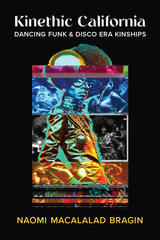
Kinethic California: Dancing Funk and Disco Era Kinships documents the emergence of new forms of black social and vernacular dance invented by youth living in 1970s California, who helped build the foundations of contemporary hip hop/streetdance culture. Naomi Macalalad Bragin weaves interviews and ethnographies of first-generation (1960s-70s) dancers of strutting, boogaloo, robotting, popping, locking, waacking, and punking styles, as it advances a theory of dance as kinetic kinship formation through a focus on techniques and practices of the dancers themselves. She offers that the term given to these collective movement practices is kinethic to bring attention to motion at the core of black aesthetics that generate dances as forms of kinship beyond blood relation. Kinethics reorient dancers toward kinetic kinship in ways that give continuity to black dance lineages under persistent conditions of disappearance and loss. As dancers engage kinethics, they reinvent gestural vocabularies that describe worlds they imagine into knowing-being.
The stories in Kinethic California attend to the aesthetics of everyday movement, seen through the lens of young artists who, from childhood, listened to their family’s soul and funk records, observed the bent-leg strolls and rhythmic handshakes of people moving through their neighborhoods, and watched each other move at house parties, school gyms, and around-the-way social clubs. Their aesthetic sociality and geographic movement provided materials for collective study and creative play. Bragin attends to such multidirectional conversations between dancer, community, and tradition, by which California dance lineages emerge and take flight.
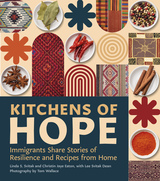
Culinary journeys from around the globe: recipes and stories from immigrants to the United States
Immigrants carry more than hope as they cross oceans and traverse continents to come to the United States. They hold tightly to stories and recipes, remembrances of what they left behind. Kitchens of Hope brings together these memories from contributors who hail from more than thirty countries, offering a glimpse into their kitchens and insight into their lives. This book is a celebration of people and cuisines from around the world, infused with the aromas of epazote and cardamom, the tang of fish sauce, the heat of chile peppers, and the bite of mustard greens.
With tales as compelling as the brimming bowls and overflowing platters of these foods that represent home, Kitchens of Hope features immigrants coming from vastly varied circumstances. Some arrived in the United States fleeing war and violence, others were seeking education and opportunity; some have called the United States home for years, and others have only recently arrived. Despite the differing situations that brought them here, the contributors all find comfort and tradition as they gather to share meals with family and friends. They are activists and entrepreneurs, parents and community leaders, and some are affiliated with the Minnesota-based nonprofit the Advocates for Human Rights, the organization that inspired the creation of this book.
Structured around the contributors’ personal stories of their journeys, the chapters reflect the main themes connecting them: community, resilience, opportunity, justice, hope, and celebration. In these pages, readers will find inspiration, along with more than fifty recipes, from curry, mole, biryani, and borscht, to pita, pho, sambusa, pupusas, and so much more. Welcome to the Kitchens of Hope table.
READERS
Browse our collection.
PUBLISHERS
See BiblioVault's publisher services.
STUDENT SERVICES
Files for college accessibility offices.
RECENTLY PUBLISHED






UChicago Accessibility Resources
home | accessibility | search | about | contact us
BiblioVault ® 2001 - 2026
The University of Chicago Press