
 A SCHOLARLY BOOK REPOSITORY
11 start with K start with K
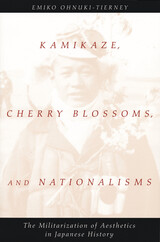
Drawing on diaries never before published in English, Ohnuki-Tierney describes these young men's agonies and even defiance against the imperial ideology. Passionately devoted to cosmopolitan intellectual traditions, the pilots saw the cherry blossom not in militaristic terms, but as a symbol of the painful beauty and unresolved ambiguities of their tragically brief lives. Using Japan as an example, the author breaks new ground in the understanding of symbolic communication, nationalism, and totalitarian ideologies and their execution.
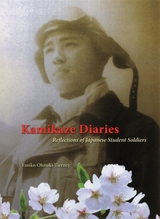
This moving history presents diaries and correspondence left by members of the tokkotai and other Japanese student soldiers who perished during the war. Outside of Japan, these kamikaze pilots were considered unbridled fanatics and chauvinists who willingly sacrificed their lives for the emperor. But the writings explored here by Emiko Ohnuki-Tierney clearly and eloquently speak otherwise. A significant number of the kamikaze were university students who were drafted and forced to volunteer for this desperate military operation. Such young men were the intellectual elite of modern Japan: steeped in the classics and major works of philosophy, they took Descartes’ “I think, therefore I am” as their motto. And in their diaries and correspondence, as Ohnuki-Tierney shows, these student soldiers wrote long and often heartbreaking soliloquies in which they poured out their anguish and fear, expressed profound ambivalence toward the war, and articulated thoughtful opposition to their nation’s imperialism.
A salutary correction to the many caricatures of the kamikaze, this poignant work will be essential to anyone interested in the history of Japan and World War II.
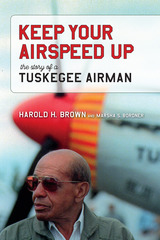
Inspiring memoir of Colonel Harold H. Brown, one of the 930 original Tuskegee pilots, whose dramatic wartime exploits and postwar professional successes contribute to this extraordinary account.
Keep Your Airspeed Up: The Story of a Tuskegee Airman is the memoir of an African American man who, through dedication to his goals and vision, overcame the despair of racial segregation to great heights, not only as a military aviator, but also as an educator and as an American citizen.
Unlike other historical and autobiographical portrayals of Tuskegee airmen, Harold H. Brown’s memoir is told from its beginnings: not on the first day of combat, not on the first day of training, but at the very moment Brown realized he was meant to be a pilot. He revisits his childhood in Minneapolis where his fascination with planes pushed him to save up enough of his own money to take flying lessons. Brown also details his first trip to the South, where he was met with a level of segregation he had never before experienced and had never imagined possible.
During the 1930s and 1940s, longstanding policies of racial discrimination were called into question as it became clear that America would likely be drawn into World War II. The military reluctantly allowed for the development of a flight-training program for a limited number of African Americans on a segregated base in Tuskegee, Alabama. The Tuskegee Airmen, as well as other African Americans in the armed forces, had the unique experience of fighting two wars at once: one against Hitler’s fascist regime overseas and one against racial segregation at home.
Colonel Brown fought as a combat pilot with the 332nd Fighter Group during World War II, and was captured and imprisoned in Stalag VII A in Moosburg, Germany, where he was liberated by General George S. Patton on April 29, 1945. Upon returning home, Brown noted with acute disappointment that race relations in the United States hadn’t changed. It wasn’t until 1948 that the military desegregated, which many scholars argue would not have been possible without the exemplary performance of the Tuskegee Airmen.
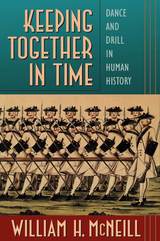
Could something as simple and seemingly natural as falling into step have marked us for evolutionary success? In Keeping Together in Time one of the most widely read and respected historians in America pursues the possibility that coordinated rhythmic movement--and the shared feelings it evokes--has been a powerful force in holding human groups together.As he has done for historical phenomena as diverse as warfare, plague, and the pursuit of power, William H. McNeill brings a dazzling breadth and depth of knowledge to his study of dance and drill in human history. From the records of distant and ancient peoples to the latest findings of the life sciences, he discovers evidence that rhythmic movement has played a profound role in creating and sustaining human communities. The behavior of chimpanzees, festival village dances, the close-order drill of early modern Europe, the ecstatic dance-trances of shamans and dervishes, the goose-stepping Nazi formations, the morning exercises of factory workers in Japan--all these and many more figure in the bold picture McNeill draws. A sense of community is the key, and shared movement, whether dance or military drill, is its mainspring. McNeill focuses on the visceral and emotional sensations such movement arouses, particularly the euphoric fellow-feeling he calls "muscular bonding." These sensations, he suggests, endow groups with a capacity for cooperation, which in turn improves their chance of survival.
A tour de force of imagination and scholarship, Keeping Together in Time reveals the muscular, rhythmic dimension of human solidarity. Its lessons will serve us well as we contemplate the future of the human community and of our various local communities.
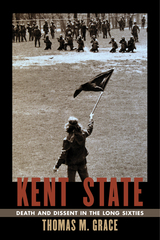
On May 4, 1970, National Guard troops opened fire on unarmed antiwar protesters at Kent State University in Ohio, killing four students and wounding nine others, including the author of this book. The shootings shocked the American public and triggered a nationwide wave of campus strikes and protests. To many at the time, Kent State seemed an unlikely site for the bloodiest confrontation in a decade of campus unrest—a sprawling public university in the American heartland, far from the coastal epicenters of political and social change.
Yet, as Thomas M. Grace shows, the events of May 4 were not some tragic anomaly but were grounded in a tradition of student political activism that extended back to Ohio's labor battles of the 1950s. The vast expansion of the university after World War II brought in growing numbers of working-class enrollees from the industrial centers of northeast Ohio, members of the same demographic cohort that eventually made up the core of American combat forces in Vietnam. As the war's rising costs came to be felt acutely in the home communities of Kent's students, tensions mounted between the growing antiwar movement on campus, the university administration, and the political conservatives who dominated the surrounding county as well as the state government.
The deadly shootings at Kent State were thus the culmination of a dialectic of radicalization and repression that had been building throughout the decade. In the years that followed, the antiwar movement continued to strengthen on campus, bolstered by an influx of returning Vietnam veterans. After the war ended, a battle over the memory and meaning of May 4 ensued. It continues to the present day.
Some might see police officers as benevolent sources of protection, but in many communities, they are often perceived as a threat due to a legacy of violent interactions and arrests for arbitrary offenses. How, then, do police sustain their presence in places where people might distrust them? In Kid Cops, sociologist Mai Thai offers one answer: junior police academies, high school programs in which police officers provide courses, mentorship, and job training to students in communities with high rates of juvenile delinquency and poverty. These school-police partnerships have expanded rapidly in the United States over the last few decades, largely in response to political unrest and police violence in the 1990s. Programs vary in their offerings, but they generally aim to ease tensions between communities and law enforcement, while also providing needed resources in neighborhoods where education and job opportunities are scarce.
Kid Cops draws on years of observations and interviews with educators, police officers, and, of course, kids. The junior police programs at each high school may have different emphases, but their common goal is for students to graduate from high school and enter college or the workforce. A second goal of the program is to cultivate a positive image of the police. Ultimately, however, Thai finds that these programs tighten the relationship between marginalized youth, schools, and the criminal justice system and strain the students’ relationships with their peers, families, and each other. These programs also distract residents from systemic issues of policing and suppress opportunities for meaningful change.
Written in an accessible tone that balances the seriousness of inequality with the playfulness of the study’s youth, Kid Cops moves beyond the narrative of detentions, suspensions, and arrests to tell a less conventional story about police in schools. It asks, does good, friendly policing exist—especially if it continues to tether low-income communities of color to the criminal justice system?
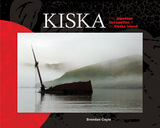
The bastion of Japan’s possessions in Alaska, Kiska was soon fortified with 7,500 enemy troops, their equipment, and a labyrinth of tunnels. For thirteen months Japanese troops withstood constant bombardment from American forces while retaining a tenuous hold on the island. Finally forced to abandon their position, the Japanese occupiers evacuated without their equipment and personal effects, leaving behind a trail of artifacts.
Brendan Coyle spent fifty-one days on the island searching out the tunnels, the equipment, and the objects, all frozen in time. Kiska brings together the images Coyle amassed during his exploration and his archival research. Accompanying explanations put the images in historical perspective, opening a window on a little-known battlefield and shining a rare light on a shadowy occupation.
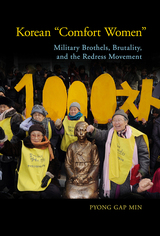
Korean “Comfort Women” synthesizes the previous major findings about Japanese military sexual slavery and legal recommendations, and provides new findings about the issues “comfort women” faced for an English-language audience. It also examines the transnational redress movement, revealing that the Japanese government has tried to conceal the crime of sexual slavery and to resolve the women’s human rights issue with diplomacy and economic power.
Winner of the 2023 Andrew F. Krepinevich Jr. Writing Award
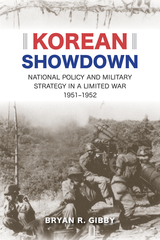
Korean Showdown: National Policy and Military Strategy in a Limited War, 1951–1952 takes a holistic and integrative approach to strategy, operations, and tactics during the Korean War’s stalemate period and demonstrates how these matters shaped each other and influenced, or were influenced by, political and strategic policy decision-making. Bryan R. Gibby offers an analysis of the major political and military decisions affecting how the war was conducted operationally and diplomatically by examining American, Chinese, North Korean, and South Korean operations in the context of fighting a limited war with limited means, but for objectives that were not always limited in scope or ambition. The foundational political decision was Harry Truman’s voluntary repatriation policy, which extended the war by up to eighteen months. Its military counterpart was the American-led Operation Showdown, the last deliberate military offensive to coerce concessions at the negotiation table. Showdown’s failure (and the Communists’ own equally disappointing military efforts) opened up new avenues for solving the war short of a militarily imposed solution.
Gibby’s research draws on primary sources from American, Korean, and Chinese archives and publications. Many of these sources have not yet been mined in diplomatic and military histories of the Korean War. This innovative book also addresses a significant gap in the study of Korean military operations—the linkage between ground and air pressure campaigns, as well as the many Chinese and American operations conducted to establish negotiation positions. Gibby also explores many political and propagandist developments that assumed great importance in the summer of 1952, such as prisoner of war riots, the bombing of hydroelectric dams, and the South Korean constitutional crisis, which significantly influenced American and Chinese military decision-making.
Ultimately, this volume serves as a cautionary analysis of the limits of force, the necessity to understand an adversary, and the importance of strategic consensus. It also offers an effective case study on an underappreciated period of civil-military tension during the Cold War and on how civilian politicians and military leaders must collaborate to determine a realistic and effective strategy.
READERS
Browse our collection.
PUBLISHERS
See BiblioVault's publisher services.
STUDENT SERVICES
Files for college accessibility offices.
RECENTLY PUBLISHED




UChicago Accessibility Resources
home | accessibility | search | about | contact us
BiblioVault ® 2001 - 2026
The University of Chicago Press