
 A SCHOLARLY BOOK REPOSITORY
6 start with L start with L
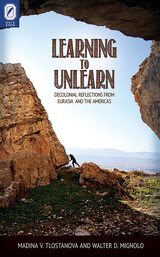
Learning to Unlearn: Decolonial Reflections from Eurasia and the Americas is a complex, multisided rethinking of the epistemic matrix of Western modernity and coloniality from the position of border epistemology. Colonial and imperial differences are the two key concepts to understanding how the logic of coloniality creates ontological and epistemic exteriorities. Being at once an enactment of decolonial thinking and an attempt to define its main grounds, mechanisms, and concepts, the book shifts the politics of knowledge from “studying the other” (culture, society, economy, politics) toward “the thinking other” (the authors).
Addressing areas as diverse as the philosophy of higher education, gender, citizenship, human rights, and indigenous agency, and providing fascinating and little-known examples of decolonial thinking, education, and art, Madina V. Tlostanova and Walter D. Mignolo deconstruct the modern architecture of knowledge—its production and distribution as manifested in the corporate university. In addition, the authors dwell on and define the echoing global decolonial sensibilities as expressed in the Americas and in peripheral Eurasia. The book is an important addition to the emerging transoceanic inquiries that introduce decolonial thought and non-Western border epistemologies not only to update or transform disciplines but also to act and think decolonially in the global futures to come.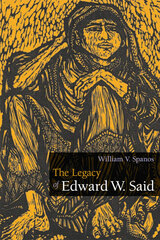
With the untimely death of Edward W. Said in 2003, various academic and public intellectuals worldwide have begun to reassess the writings of this powerful oppositional intellectual. Figures on the neoconservative right have already begun to discredit Said’s work as that of a subversive intent on slandering America’s benign global image and undermining its global authority. On the left, a significant number of oppositional intellectuals are eager to counter this neoconservative vilification, proffering a Said who, in marked opposition to the “anti-humanism” of the great poststructuralist thinkers who were his contemporaries--Jacques Derrida, Jean-Francois Lyotard, Jacques Lacan, Louis Althusser, and Michel Foucault--reaffirms humanism and thus rejects poststructuralist theory.
In this provocative assessment of Edward Said’s lifework, William V. Spanos argues that Said’s lifelong anti-imperialist project is actually a fulfillment of the revolutionary possibilities of poststructuralist theory. Spanos examines Said, his legacy, and the various texts he wrote--including Orientalism,Culture and Imperialism, and Humanism and Democratic Criticism--that are now being considered for their lasting political impact.
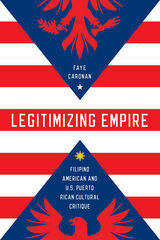
Faye Caronan's examination interprets the pivotal engagement of novels, films, performance poetry, and other cultural productions as both symptoms of and resistance against American military, social, economic, and political incursions. Though the Philippines became an independent nation and Puerto Rico a U.S. commonwealth, both remain subordinate to the United States. Caronan's juxtaposition reveals two different yet simultaneous models of U.S. neocolonial power and contradicts American exceptionalism as a reluctant empire that only accepts colonies for the benefit of the colonized and global welfare. Her analysis, meanwhile, demonstrates how popular culture allows for alternative narratives of U.S. imperialism, but also functions to contain those alternatives.
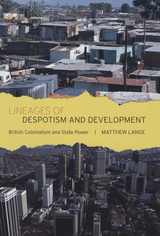
Traditionally, social scientists have assumed that past imperialism hinders the future development prospects of colonized nations. Challenging this widespread belief, Matthew Lange argues in Lineages of Despotism and Development that countries once under direct British imperial control have developed more successfully than those that were ruled indirectly.
Combining statistical analysis with in-depth case studies of former British colonies, this volume argues that direct rule promoted cogent and coherent states with high levels of bureaucratization and inclusiveness, which contributed to implementing development policy during late colonialism and independence. On the other hand, Lange finds that indirect British rule created patrimonial, weak states that preyed on their own populations. Firmly grounded in the tradition of comparative-historical analysis while offering fresh insight into the colonial roots of uneven development, Lineages of Despotism and Development will interest economists, sociologists, and political scientists alike.
READERS
Browse our collection.
PUBLISHERS
See BiblioVault's publisher services.
STUDENT SERVICES
Files for college accessibility offices.
RECENTLY PUBLISHED



UChicago Accessibility Resources
home | accessibility | search | about | contact us
BiblioVault ® 2001 - 2025
The University of Chicago Press