
 A SCHOLARLY BOOK REPOSITORY
7 start with L start with L
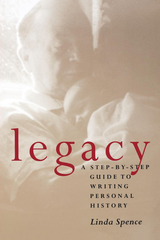
When Linda Spence asked her aging mother to write her life story, her mother stared at a blank sheet of paper and asked—“How? Where do I begin?” In this practical guide to capturing those memories that have been stored away, Linda Spence provides the questions that are the keys to unlocking the memories that make up a life.
Beyond the vital statistics are the personal stories that tell what it was like, what we did, and why we did it, how we feel about our choices, and what our circumstances were. Through encouraging coaching, shared memories, and open-ended questions, the process of producing a personal history becomes intriguing and engaging.
With Legacy the possibilities expand: a personal record is preserved—with its myths, traditions, joys, pains, gains, and losses; a family opens a potential dialogue that will last for generations; the writer has an opportunity for insight and resolution; the culture of a time and place is noted; the tradition of personal story is revitalized, and our present and future find nourishment and knowledge in the past.
Either as a gift that can act as a shared experience as the memories are recounted or as a personal way to take account of one’s experiences, often long since forgotten, Legacy is indeed a way to get one’s story down.
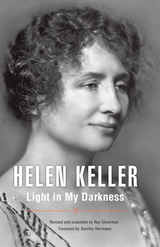
One of Time's women of the century, Helen Keller, reveals her mystical side in this best-selling spiritual autobiography. Writing that her first reading of Emanuel Swedenborg at age fourteen gave her truths that were "to my faculties what light, color and music are to the eye and ear," she explains how Swedenborg's works sustained her throughout her life.
This new edition includes a foreword by Dorothy Herrmann, author of the acclaimed Helen Keller: A Life, and a new chapter, "Epilogue: My Luminous Universe."
Formative Years
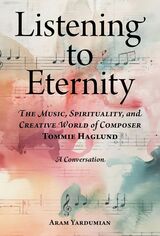
From the opening pages, we are drawn into Haglund's world, beginning with his earliest musical memories. The composer recalls the profound impact of his aunt Margreth's voice: “The heart of my music started with that voice.” This early connection between sound and emotion sets the stage for Haglund's lifelong exploration of music's power to evoke and express the deepest human experiences.
The book doesn't shy away from the challenges Haglund faced in his youth. We learn of his difficult relationship with his father and a prolonged hospital stay at a young age. These experiences, while painful, proved formative for the young musician. Haglund's description of listening to radio static in the hospital, imagining himself traveling through space, offers a poignant glimpse into the imaginative world that would later inform his compositions.
Creative Evolution
This book does not simply recount Haglund’s life; it explores the very essence of the creative process itself. Readers will find themselves captivated by Haglund's musical journey, from his first encounters with classical music to his development as a composer. The book details pivotal moments, such as hearing Mozart's Piano Concerto no. 21 for the first time, a visit to a medium, and his studies with the unconventional but inspiring teacher Claes-Göran Bjerding. These anecdotes not only chart Haglund's growth as a musician but also reveal the depth of his passion for music from an early age.
Haglund translates emotions, physical sensations, and spiritual experiences into sound. His approach to composition challenges conventional notions of music-making and invites readers to consider the physical and spiritual dimensions of musical experience.
Music and Spirituality
One of the book's most compelling aspects is its exploration of the connection between Haglund's music and his spiritual life. The composer's encounter with the writings of Emanuel Swedenborg marks a turning point, profoundly influencing his approach to composition.
Throughout the book, Yardumian maintains a delicate balance between chronicling Haglund's artistic development and exploring the deeper philosophical and spiritual questions that drive his work. The result is a narrative that is at once deeply personal and universally resonant, touching on themes of creativity, spirituality, and the human condition.
Music and Culture
Yardumian skillfully weaves commentary into the narrative, showing how the larger cultural context informs Haglund's creative process and his role in the larger artistic fabric. For readers interested in the contemporary classical music scene, Listening to Eternity places Haglund within the broader landscape of modern classical music, highlighting his distinctive voice and approach.
Music and Healing
Importantly, Listening to Eternity is a story of resilience and transformation. Haglund journeys through periods of illness, anxiety, and artistic struggle to eventual recognition and acclaim. He reveals how his compositions became both a sanctuary and an expression of his quest for healing and connection with the cosmos. Haglund’s unwavering commitment to his artistic vision, even in the face of adversity, serves as a powerful testament to the transformative potential of spiritually-influenced art.
The Somatic Experience of Music
Haglund and Yardumian reflect on the somatic power of music, how compositions generate visceral, bodily experiences that transcend mere sound. For Haglund, music is a medium of conveyance—one that channels spiritual insights and emotions from composer to listener. His works act as a bridge between the material and the divine, offering listeners a chance to journey inward while being transported by the music’s emotional and spiritual depth.
Accessible, Personal Story
This book will appeal to a wide range of readers, from classical music aficionados and composers seeking inspiration, to spiritual seekers interested in the intersection of art and spirituality. It also offers valuable insights for those studying the creative process or exploring the relationship between personal experience and artistic expression.
Listening to Eternity stands as a unique contribution to the literature on contemporary classical music and a compelling exploration of one artist's quest to translate the ineffable into sound.
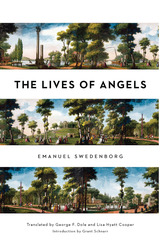
As his professional career was winding to a close, a remarkable spiritual awakening changed the course of his life. He believed that God allowed him to journey in spirit form to the afterlife and talk to angels, devils, and the spirits of the departed—not just once, but continuously, for decades—and he spent the rest of his life recording what he saw.
The Lives of Angels is a collection of Swedenborg’s most striking insights about life in heaven, with vivid descriptions of angels’ homes, their language, their communities, and even their romantic relationships. He tells us that angels are with us throughout our lives, guiding and supporting us, and that any person on earth can become an angel after death if he or she is loving and selfless. The introduction by Grant Schnarr gives readers a modern framework for understanding Swedenborg’s compelling vision of the spiritual world.

Lives of the Psychics, a journey through the terrain of psychic phenomena, tries to answer these questions through interviews with practicing psychics, a survey of the heroic attempts of researchers to test psychic abilities in controlled experiments, and an exploration of out-of-body, near-death, and mystical experiences. Fred M. Frohock brings together a wide variety of psychic claims and examines them with a rich set of materials—interviews, critical anecdotes, history, multiple theories of the paranormal—that allows him to use whatever tools are necessary to illuminate beliefs in the supernatural. He relates real-life events to scientific studies, so the reader is a party not only to fantastic experiences and first-hand stories of the paranormal but also to the rationales for these experiences proposed by scientists. There is no more rewarding guide to the limits and powers of science in explaining psychic phenomena.
To a field filled with uncertainty and suspicion, Frohock brings a discerning eye, a critical sensibility, and a fundamental sense of curiosity about the role of mysticism in science. Even skeptics will be intrigued.
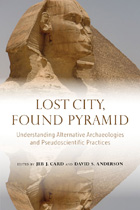
A critical investigation into how modern myths shape interpretations of the ancient past.
Lost City, Found Pyramid delves into the fascinating world of sensational “pseudoarchaeology,” from perennial discoveries of lost pyramids or civilizations to contemporary ghost-hunting and reality TV. It examines how nonscientific pursuit of myths and legends warps both public perceptions of archaeology and of human history itself.
A collection of twelve engaging and insightful essays, Lost City, Found Pyramid does far more than argue for the simple debunking of false archaeology. Rather, it brings into focus the value of understanding how and why pseudoarchaeology captures the public imagination. By comprehending pseudoarchaeology’s appeal as a media product, cultural practice, and communication strategy, archaeologists can enhance and enliven how they communicate about real archaeology in the classroom and in the public arena.
The first part of Lost City, Found Pyramid provides numerous case studies. Some examine the work of well-intentioned romantics who project onto actual archaeological data whimsical interpretative frameworks or quixotic “proofs” that confirm legends, such as that of the Lost White City of Honduras, or other alternative claims. Other case studies lay bare how false claims may inadvertently lead to the perpetuation of ethnic stereotypes, economic exploitation, political adventurism, and a misunderstanding of science.
Offering much of interest to scholars and students of archaeology, archaeology buffs, as well as policy-makers involved in the discovery, curation, and care of archaeological sites and relics, Lost City, Found Pyramid provides an invaluable corrective and hopeful strategy for engaging the public’s curiosity with the compelling world of archaeological discovery.
READERS
Browse our collection.
PUBLISHERS
See BiblioVault's publisher services.
STUDENT SERVICES
Files for college accessibility offices.
RECENTLY PUBLISHED


UChicago Accessibility Resources
home | accessibility | search | about | contact us
BiblioVault ® 2001 - 2026
The University of Chicago Press