front cover of Microbial Resolution
Microbial Resolution
Visualization and Security in the War against Emerging Microbes
Gloria Chan-Sook Kim
University of Minnesota Press, 2024

An interdisciplinary study charting the war against microbial futures leads to a new theory of contemporary vision and visuality
 

In 1989, a group of U.S. government scientists met to discuss some surprising findings: new diseases were appearing around the world, and viruses that they thought long vanquished were resurfacing. Their appearance heralded a future perpetually threatened by unforeseeable biological risks, sparking a new concept of disease: the “emerging microbe.” With the Cold War nearing its end, American scientists and security experts turned to confront this new “enemy,” redirecting national security against its risky horizons. In order to be fought, emerging microbes first needed to be made perceptible; but how could something immaterial, unknowable, and ever mutating be coaxed into visibility, knowability, and operability?


Microbial Resolution charts the U.S.-led war on the emerging microbe to show how their uncertain futures were transformed into objects of global science and security. Moving beyond familiar accounts that link scientific knowledge production to optical practices of visualizing the invisible, Gloria Chan-Sook Kim develops a theory of “microbial resolution” to analyze the complex problematic that arises when dealing with these entities: what can be seen when there is nothing to see? Through a syncretic analysis of data mining, animal-tracking technologies, media networks, computer-modeled futures, and global ecologies and infrastructures, she shows how a visual impasse—the impossibility of seeing microbial futures—forms the basis for new modes of perceiving, knowing, and governing in the present.


Timely and thought provoking, Microbial Resolution opens up the rich paradoxes, irreconcilabilities, and failures inherent in this project and demonstrates how these tensions profoundly animate twenty-first-century epistemologies, aesthetics, affects, and ecologies.

[more]

front cover of The Microbial State
The Microbial State
Global Thriving and the Body Politic
Stefanie R. Fishel
University of Minnesota Press, 2017

For three centuries, concepts of the state have been animated by one of the most powerful metaphors in politics: the body politic, a claustrophobic and bounded image of sovereignty. Climate change, neoliberalism, mass migration, and other aspects of the late Anthropocene have increasingly revealed the limitations of this metaphor. Just as the human body is not whole and separate from other bodies—comprising microbes, bacteria, water, and radioactive isotopes—Stefanie R. Fishel argues that the body politic of the state exists in dense entanglement with other communities and forms of life. 

Drawing on insights from continental philosophy, science and technology studies, and international relations theory, this path-breaking book critiques the concept of the body politic on the grounds of its very materiality. Fishel both redefines and extends the metaphor of the body politic and its role in understanding an increasingly posthuman, globalized world politics. By conceiving of bodies and states as lively vessels, living harmoniously with multiplicity and the biosphere, she argues that a radical shift in metaphors can challenge a politics based on fear to open new forms of global political practice and community. 

Reframing the concept of the body politic to accommodate greater levels of complexity, Fishel suggests, will result in new configurations for the political and social organization necessary to build a world in which the planet’s inhabitants do not merely live but actively thrive.

[more]

logo for University of Chicago Press
Microcomputers and Education
Edited by Jack Culbertson and Luvern L. Cunningham
University of Chicago Press, 1986

front cover of Micro-Doppler Radar and its Applications
Micro-Doppler Radar and its Applications
Francesco Fioranelli
The Institution of Engineering and Technology, 2020
This book covers the latest developments in radar micro-Doppler signatures and non-cooperative recognition of moving targets, for researchers and advanced students of radar systems. Micro-Doppler signatures is a very broad topic with applications in healthcare, security and surveillance. Edited by leading researchers in the field, the book consists of a series of chapters with contributions from different groups of authors who are international experts on their topics.
[more]

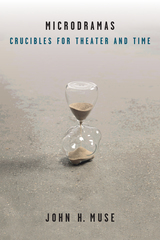
front cover of Microdramas
Microdramas
Crucibles for Theater and Time
John H. Muse
University of Michigan Press, 2017
In Microdramas, John H. Muse argues that plays shorter than twenty minutes deserve sustained attention, and that brevity should be considered a distinct mode of theatrical practice. Focusing on artists for whom brevity became both a structural principle and a tool to investigate theater itself (August Strindberg, Maurice Maeterlinck, F. T. Marinetti, Samuel Beckett, Suzan-Lori Parks, and Caryl Churchill), the book explores four episodes in the history of very short theater, all characterized by the self-conscious embrace of brevity. The story moves from the birth of the modernist microdrama in French little theaters in the 1880s, to the explicit worship of speed in Italian Futurist synthetic theater, to Samuel Beckett’s often-misunderstood short plays, and finally to a range of contemporary playwrights whose long compilations of shorts offer a new take on momentary theater.

Subjecting short plays to extended scrutiny upends assumptions about brief or minimal art, and about theatrical experience. The book shows that short performances often demand greater attention from audiences than plays that unfold more predictably. Microdramas put pressure on preconceptions about which aspects of theater might be fundamental and about what might qualify as an event. In the process, they suggest answers to crucial questions about time, spectatorship, and significance.
 
[more]

front cover of Microeconomics
Microeconomics
A Critical Companion
Ben Fine
Pluto Press, 2016
The culmination of forty years of teaching, researching, and advising on political economy, Ben Fine’s Microeconomics offers a clear and concise exposition of mainstream microeconomics from a heterodox perspective. Covering topics from consumer and producer theory to general equilibrium to perfect competition, it sets the emergence and evolution of microeconomics in both its historical and interdisciplinary context. Fine critically exposes the methodological and conceptual content of dominant microeconomic models without sacrificing the technical detail required for those completing a first degree in economics or entering postgraduate study. The result is a book which is sure to establish a strong presence on undergraduate reading lists and in comparative literature on the subject.
[more]

front cover of Microfinance and Its Discontents
Microfinance and Its Discontents
Women in Debt in Bangladesh
Lamia Karim
University of Minnesota Press, 2010
A feminist critique of the much-lauded microcredit process in Bangladesh

In 2006 the Grameen Bank of Bangladesh won the Nobel Peace Prize for its innovative microfinancing operations. This path-breaking study of gender, grassroots globalization, and neoliberalism in Bangladesh looks critically at the Grameen Bank and three of the leading NGOs in the country. Amid euphoria over the benefits of microfinance, Lamia Karim offers a timely and sobering perspective on the practical, and possibly detrimental, realities for poor women inducted into microfinance operations.

In a series of ethnographic cases, Karim shows how NGOs use social codes of honor and shame to shape the conduct of women and to further an agenda of capitalist expansion. These unwritten policies subordinate poor women to multiple levels of debt that often lead to increased violence at the household and community levels, thereby weakening women’s ability to resist the onslaught of market forces.

A compelling critique of the relationship between powerful NGOs and the financially strapped women beholden to them for capital, this book cautions us to be vigilant about the social realities within which women and loans circulate—realities that often have adverse effects on the lives of the very women these operations are meant to help.
[more]

front cover of The Microflora of Lakes and Its Geochemical Activity
The Microflora of Lakes and Its Geochemical Activity
By S. I. Kuznetsov
University of Texas Press, 1975

The geochemical processes that take place in water bodies do not stem entirely from the activity of bacteria, but are also determined by the biological activity of higher plants and animals. The Microflora of Lakes and Its Geochemical Activity, the first English translation of the work of S. I. Kuznetsov, renowned Soviet microbiologist, is a detailed description of these processes.

The Microflora of Lakes opens with a complete outline of the ecology and physical and chemical properties of water bodies and a discussion of the entire complex of hydrobionts, since these factors exert tremendous influence on the microbial population. The work then focuses on the principles of the morphology and physiology of the living cell, background knowledge essential to the understanding of the role of microorganisms in the chemical cycle. Having laid the groundwork for the discussion, Kuznetsov follows with chapters on the distribution of bacteria and transformations of organic matter in lakes. He then examines the role of bacteria in the oxygen regime, and the cycles of organic matter, nitrogen, sulfur, iron, manganese and phosphorus. The last chapter describes the role of microorganisms in sediments of calcium carbonate waters.

The Microflora of Lakes and Its Geochemical Activity provides a wealth of information on the microbial limnology of fresh-water lakes throughout the world, particularly in the Soviet Union. As a summary of the geochemical activities as related to the geographic, geological, and physical relationships of fresh-water lakes, it is a monumental study.

The Microflora of Lakes was translated for the National Science Foundation, Washington, D.C., by the Israel Program for Scientific Translations in Jerusalem.

[more]

front cover of Microfoundations of Economic Growth
Microfoundations of Economic Growth
A Schumpeterian Perspective
Gunnar Eliasson and Christopher Green, Editors; Charles R. McCann, Jr., Associate Editor
University of Michigan Press, 1998
The contributors to this volume seek further understanding of the microfoundations of economic growth. It focuses on three subjects that interested the great Austrian and Harvard economist, Joseph A. Schumpeter: innovation, technological change, and economic growth. The first part of the volume treats institutions, markets, and entrepreneurs, without which analysis of the firm makes little or no sense. The second part focuses on the firm as innovator, placing heavy emphasis on the role of knowledge formation. The subjects of innovation and knowledge formation are approached from three perspectives: theoretical; industry (case) studies; and empirical (cross section and panel data) analysis. In the third part of the book the action moves from the firm to the "macro" or economy-wide level. The volume's unique feature is combining institutions, the innovative behavior of firms, and an intuitively dynamic, macroeconomic analysis, all from a Schumpeterian perspective. It is argued that the study of micro-institutions such as firms and the evolving nature of markets are necessary ingredients to understanding macro-oriented phenomena such as economic growth. It is in this sense, then, that the book is concerned with microfoundations. Contributors are Daniele Archibugi, Spyros Arvanitis, David B. Audretsch, John R. Baldwin, Gerard Ballot, Pontus Braunerhjelm, Dagobert L. Brito, Uwe Cantner, Bo Carlsson, Robert W. Clower, Richard Day, Rinaldo Evangelista, Jan Glete, Horst Hanusch, Heinz Hollenstein, Michael D. Intrilgator, George Johnson, Joanne Johnson, Aija Leiponen, Staffan Laestadius, Richard N. Langlois, Frank M. Machovec, Maureen McKelvey, Valentina Meiciani, Douglass C. North, Giulio Perani, Andreas Pyka, Fabio Rapiti, Roberto Simonetti, Frank Stafford, Paula E. Stephan, Erol Taymaz, Clas Wihlborg, Erica R. Worth, and S. Y. Wu. Gunnar K. Eliasson is Professor of Industrial Economics, Royal Technical Institute (KTH), Stockholm. Christopher Green is Professor of Economics, McGill University. Charles R. McCann, Jr., is Research Associate, Department of Economics, University of Pittsburgh.
[more]


front cover of Microfoundations of Economic Growth
Microfoundations of Economic Growth
A Schumpeterian Perspective
Gunnar Eliasson and Christopher Green, Editors, and Charles R. McCann Jr., Associate Editor
University of Michigan Press, 1998
The contributors to this volume seek further understanding of the microfoundations of economic growth. It focuses on three subjects that interested the great Austrian and Harvard economist, Joseph A. Schumpeter: innovation, technological change, and economic growth. The first part of the volume treats institutions, markets, and entrepreneurs, without which analysis of the firm makes little or no sense. The second part focuses on the firm as innovator, placing heavy emphasis on the role of knowledge formation. The subjects of innovation and knowledge formation are approached from three perspectives: theoretical; industry (case) studies; and empirical (cross section and panel data) analysis. In the third part of the book the action moves from the firm to the "macro" or economy-wide level. The volume's unique feature is combining institutions, the innovative behavior of firms, and an intuitively dynamic, macroeconomic analysis, all from a Schumpeterian perspective. It is argued that the study of micro-institutions such as firms and the evolving nature of markets are necessary ingredients to understanding macro-oriented phenomena such as economic growth. It is in this sense, then, that the book is concerned with microfoundations. Contributors are Daniele Archibugi, Spyros Arvanitis, David B. Audretsch, John R. Baldwin, Gerard Ballot, Pontus Braunerhjelm, Dagobert L. Brito, Uwe Cantner, Bo Carlsson, Robert W. Clower, Richard Day, Rinaldo Evangelista, Jan Glete, Horst Hanusch, Heinz Hollenstein, Michael D. Intrilgator, George Johnson, Joanne Johnson, Aija Leiponen, Staffan Laestadius, Richard N. Langlois, Frank M. Machovec, Maureen McKelvey, Valentina Meiciani, Douglass C. North, Giulio Perani, Andreas Pyka, Fabio Rapiti, Roberto Simonetti, Frank Stafford, Paula E. Stephan, Erol Taymaz, Clas Wihlborg, Erica R. Worth, and S. Y. Wu. Gunnar K. Eliasson is Professor of Industrial Economics, Royal Technical Institute (KTH), Stockholm. Christopher Green is Professor of Economics, McGill University. Charles R. McCann, Jr., is Research Associate, Department of Economics, University of Pittsburgh.
[more]

front cover of Micrographia
Micrographia
Emily Wilson
University of Iowa Press, 2009

Eight years after her revelatory first book, Emily Wilson deepens her focus and extends her vision in new poems of striking intelligence and originality. Venturing into landscapes both interior and exterior, Micrographia explores what Wilson calls “the complex rigged wildness” of geographical, emotional, and verbal states, a territory located “somewhere in that / enjambment within / a cave within the brain.” Following in the tradition of such poets as Dickinson, Bishop, and Ammons, Wilson’s work regards the mind as “enmeshed” with the natural world, always “at the hinge of going over.” Her way of speaking is as precisely calibrated and as restless as her way of seeing, and the terrain of Micrographia rises from a rich and unpredictable encounter with poetic language and form. At the same time, the voice of these poems is never less than urgent, “coming clear by the foment / moving through it.” 

Wilson’s eye travels the troubled boundaries between visible and invisible worlds, ranging from coastal Nova Scotia to the Andean highlands to Brooklyn’s industrial Gowanus Canal to the poet’s own backyard. Steeped in tradition but spoken in tones that are utterly distinctive, these intricate poems enter into the microscopic, micrographic spaces between words and things, between thinking and being.

[more]

front cover of Microgrids and Active Distribution Networks
Microgrids and Active Distribution Networks
S. Chowdhury
The Institution of Engineering and Technology, 2009
A companion to Embedded Generation (IET, 2000), this book is a timely publication for an evolving industry. Renewable energy, ancillary services and deregulation of the power industry are changing electricity delivery networks. Microgrids, smartgrids and active distribution networks require a sound understanding of the basic concepts, generation technologies, impacts, operation, control and management, economic viability and market participation involved in grid integration. Practicing engineers in utilities and industry, researchers and students will appreciate this lucid description of the technologies that will enable future electricity systems.
[more]

front cover of Microgrids for Rural Areas
Microgrids for Rural Areas
Research and case studies
Rajeev Kumar Chauhan
The Institution of Engineering and Technology, 2020
Large rural areas in some regions of the world are still grappling with the challenge of electrification. The optimal solution is to provide reliable energy without adding more fossil fuel plants by using distributed renewable generation.
[more]

front cover of Microgroove
Microgroove
Forays into Other Music
John Corbett
Duke University Press, 2015
Microgroove continues John Corbett's exploration of diverse musics, with essays, interviews, and musician profiles that focus on jazz, improvised music, contemporary classical, rock, folk, blues, post-punk, and cartoon music. Corbett's approach to writing is as polymorphous as the music, ranging from oral history and journalistic portraiture to deeply engaged cultural critique. Corbett advocates for the relevance of "little" music, which despite its smaller audience is of enormous cultural significance. He writes on musicians as varied as Sun Ra, PJ Harvey, Koko Taylor, Steve Lacy, and Helmut Lachenmann. Among other topics, he discusses recording formats; the relationship between music and visual art, dance, and poetry; and, with Terri Kapsalis, the role of female orgasm sounds in contemporary popular music. Above all, Corbett privileges the importance of improvisation; he insists on the need to pay close attention to “other” music and celebrates its ability to open up pathways to new ideas, fresh modes of expression, and unforeseen ways of knowing.
 
[more]

front cover of Microhistories of Composition
Microhistories of Composition
Bruce Mccomiskey
Utah State University Press, 2016

Writing studies has been dominated throughout its history by grand narratives of the discipline, but in this volume Bruce McComiskey begins to explore microhistory as a way to understand, enrich, and complicate how the field relates to its past. Microhistory investigates the dialectical interaction of social history and cultural history, enabling historians to examine uncommon sites, objects, and agents of historical significance overlooked by social history and restricted to local effects by cultural history. This approach to historical scholarship is ideally suited for exploring the complexities of a discipline like composition.

Through an introduction and eleven chapters, McComiskey and his contributors—including major figures in the historical research of writing studies, such as Louise Wetherbee Phelps, Kelly Ritter, and Neal Lerner—develop focused narratives of particular significant moments or themes in disciplinary history. They introduce microhistorical methodologies and illustrate their application and value for composition historians, contributing to the complexity and adding momentum to the emerging trend within writing studies toward a richer reading of the field’s past and future. Scholars and historians of both composition and rhetoric will appreciate the fresh perspectives on institutional and disciplinary histories and larger issues of rhetorical agency and engagement enacted in writing classrooms that are found in Microhistories of Composition.

Other contributors include Cheryl E. Ball, Suzanne Bordelon, Jacob Craig, Matt Davis, Douglas Eyman, Brian Gogan, David Gold, Christine Martorana, Bruce McComiskey, Josh Mehler, Annie S. Mendenhall, Kendra Mitchell, Antony N. Ricks, David Stock, Kathleen Blake Yancey, Bret Zawilski, and James T. Zebroski.

[more]

logo for University of Minnesota Press
Micro-Politics
Agency in a Postfeminist Era
Patricia S. Mann
University of Minnesota Press, 1994

Micro-Politics was first published in 1994. Minnesota Archive Editions uses digital technology to make long-unavailable books once again accessible, and are published unaltered from the original University of Minnesota Press editions.

Patricia S. Mann explains our current period as a time of social transformation resulting from an "unmooring" of women, men, and children from the nuclear family, gender relations having replaced economic relations as the primary site of social tension and change in our lives. The feminist movement has evolved, according to Mann, into a popularly based postfeminist struggle to reconstruct relationships between women and men within everyday contexts of work, family, education, and politics.

Mann formulates a "postmodern" theory of political agency, utilizing it to explain political events such as the Hill-Thomas Senate hearings and their social aftermath. While liberal and progressive theories have explained political agency in terms of individual or group forms of identity, Mann suggests another alternative. Individuals such as Anita Hill are drawn into socially meaningful struggles in the context of their daily lives-as we all are potentially participating in micro-political forms of activism in a variety of institutional contexts. These dynamic micropolitical situations involve intersecting dimensions of race, class, and sexuality, as well as gender. Within specific conflicts, individuals rearticulate their notions of desire and responsibility, and their expectations for recognition and reward; according to Mann political agency resides in these choices. Addressing some of the most important controversies in political philosophy, Mann weaves together strands of the "participatory politics" of the 1960s and the multicultural politics of the 1990s. In doing so, she offers a new basis for understanding social change.
[more]

front cover of The Microscope and the Eye
The Microscope and the Eye
A History of Reflections, 1740-1870
Jutta Schickore
University of Chicago Press, 2007
The microscope’s technical capabilities and uses expanded dramatically in the early nineteenth century, when it emerged as an important tool for medical education and played a key role in the development of the cell theory, among other advancements. Focusing on the decades surrounding this crucial period, Jutta Schickore weaves a fascinating story of microscopy by tracing the entwined history of the eye and the optical instrument.

Concentrating on Great Britain and the German lands—home to the period’s most significant developments in microscopy—The Microscope and the Eye examines debates about such subjects as the legitimacy of human trespassing on the microcosm and the nature of light. Schickore also explores the microscope’s role in investigations of the finer structure of the eye and the workings of nerve fibers and the microscopists’ reflections on vision, illusion, artifacts, and the merits of instruments. Fully considering the epistemological, metaphysical, and methodological implications of this centuries-old relationship, The Microscope and the Eye will be an important contribution to the history of the life sciences, vision studies, and scientific methodology.
[more]

front cover of Microsociology
Microsociology
Discourse, Emotion, and Social Structure
Thomas J. Scheff
University of Chicago Press, 1990
Moving beyond the traditional boundaries of sociological investigation,
Thomas J. Scheff brings together the study of communication and the social
psychology of emotions to explore the microworld of thoughts, feelings,
and moods. Drawing on strikingly diverse and rich sources—the findings of
artificial intelligence and cognitive science, and examples from literary
dialogues and psychiatric interviews—Scheff provides an inventive account
of the nature of social life and a theory of motivation that brilliantly
accounts for the immense complexity involved in understanding even the most
routine conversation.

"A major contribution to some central debates in social theory at the
present time. . . . What Thomas Scheff seeks to develop is essentially a
quite novel account of the nature of social life, its relation to language
and human reflexivity, in which he insists upon the importance of a theory
of emotion. . . . A work of true originality and jolting impact. . . .
Microsociology is of exceptional interest, which bears witness to the
very creativity which it puts at the center of human social contact."
—Anthony Giddens, from the Foreword

"Scheff provides a rich theory that can easily generate further exploration. And he drives home the message that sociological work on interaction, social bonds, and society cannot ignore human emotionality."—Candace Clark, American Journal of Sociology

"This outstanding and ground-breaking little volume contains a wealth of original ideas that bring together many insights concerning the relationship of emotion to motivation in a wide variety of social settings. It is strongly recommended to all serious students of emotion, of society, and of human nature."—Melvin R. Lansky, American Journal of Psychiatry
[more]

front cover of The Microsoft Case
The Microsoft Case
Antitrust, High Technology, and Consumer Welfare
William H. Page and John E. Lopatka
University of Chicago Press, 2007

In 1998, the United States Department of Justice and state antitrust agencies charged that Microsoft was monopolizing the market for personal computer operating systems.  More than ten years later, the case is still the defining antitrust litigation of our era.  William H. Page and John E. Lopatka’s The Microsoft Case contributes to the debate over the future of antitrust policy by examining the implications of the litigation from the perspective of consumer welfare. 

The authors trace the development of the case from its conceptual origins through the trial and the key decisions on both liability and remedies.  They argue that, at critical points, the legal system failed consumers by overrating government’s ability to influence outcomes in a dynamic market. This ambitious book is essential reading for business, law, and economics scholars as well as anyone else interested in the ways that technology, economics, and antitrust law have interacted in the digital age.

“This book will become the gold standard for analysis of the monopolization cases against Microsoft. . . . No serious student of law or economic policy should go without reading it.”—Thomas C. Arthur, Emory University

[more]

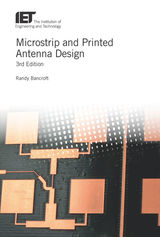
front cover of Microstrip and Printed Antenna Design
Microstrip and Printed Antenna Design
Randy Bancroft
The Institution of Engineering and Technology, 2020
This thoroughly updated third edition of this popular book covers all types of printed microstrip antenna design, from rectangular to circular, broadband and dual band, and millimeter wave microstrip antenna to microstrip arrays.
[more]

front cover of Microstrip and Printed Antenna Design
Microstrip and Printed Antenna Design
Randy Bancroft
The Institution of Engineering and Technology, 2009
The approach in this book is historical and practical. It covers basic designs in more detail than other microstrip antenna books that tend to skip important electrical properties and implementation aspects of these types of antennas. Examples include: quarter-wave patch, quarter by quarter patch, detailed design method for rectangular circularly polarized patch, the use of the TM11 (linear and broadside CP), TM21 (monopole CP pattern) and TM02 (monopole linear) circular patch modes in designs, dual-band antenna designs which allow for independent dual-band frequencies. Limits on broadband matching are discussed. The appendix contains useful simple matching approaches, design details (gain, matching, sidelobes) of the little-studied omnidirectional microstrip antenna (OMA), limits and properties of common single and dual band Planar Inverted F Antenna (PIFA) antenna designs. The second edition has numerous additions to the earlier text which will make the concepts presented clearer. New cavity model analysis equations of circular polarization bandwidth, axial ratio bandwidth and power fraction bandwidth have been included. The section on omnidirectional microstrip antennas is expanded with further design options and analysis. This is also true of the section on Planar Inverted F (PIFA) antennas. The discovery and description of the fictious resonance mode of a microstrip slot antenna has been added to that section. Appendix A, on microstrip antenna substrates has been expanded to provide more detail on the types of substrate and their composition. This is often neglected in other texts. An appendix on elementary impedance matching techniques has been added as these methods have proven useful in my industrial work.
[more]

logo for The Institution of Engineering and Technology
Microstrip Antenna Theory and Design
J.R. James
The Institution of Engineering and Technology, 1981
In the past few years, the concept of creating microwave antennas using microstrip has attracted increasing attention and viable practical designs are now emerging. The purpose of this monograph is to present the reader with an appreciation of the underlying physical action, up-to-date theoretical treatments, useful antenna design approaches and the overall state-of-the-art situation. The emphasis is on antenna engineering design, but to achieve this goal it has been necessary to delve into the behaviour of microstrip in a much wider sense and also include aspects of electromagnetic analysis. As a consequence, the monograph will also be of interest to microstrip circuit designers and to some extent those seeking electromagnetic problems of a challenging nature.
[more]

front cover of The Microstructure of Foreign Exchange Markets
The Microstructure of Foreign Exchange Markets
Edited by Jeffrey A. Frankel, Giampaolo Galli, and Alberto Giovannini
University of Chicago Press, 1996
The foreign exchange market is the largest, fastest-growing financial market in the world. Yet conventional macroeconomic approaches do not explain why people trade foreign exchange. At the same time, they fail to explain the short-run determinants of the exchange rate.

These nine innovative essays use a microstructure approach to analyze the workings of the foreign exchange market, with special emphasis on institutional aspects and the actual behavior of market participants. They examine the volume of transactions, heterogeneity of traders, the time of day and location of trading, the bid-ask spread, and the high level of exchange rate volatility that has puzzled many observers. They also consider the structure of the market, including such issues as nontransparency, asymmetric information, liquidity trading, the use of automated brokers, the relationship between spot and derivative markets, and the importance of systemic risk in the market.

This timely volume will be essential reading for anyone interested in the economics of international finance.
[more]

front cover of Microwave and RF Design
Microwave and RF Design
A Systems Approach
Michael Steer
The Institution of Engineering and Technology, 2010

front cover of Microwave and RF Design
Microwave and RF Design
A Systems Approach, 2nd Edition
Michael Steer
The Institution of Engineering and Technology, 2013

logo for The Institution of Engineering and Technology
Microwave Antenna Theory and Design
Samuel Silver
The Institution of Engineering and Technology, 1984
Microwave Antenna Theory and Design is an unabridged reprint of the book published by McGraw Hill, as Volume 12 of the MIT Radiation Laboratory Series in 1949. The Editor of the Volume, the late Professor Samuel Silver, contributed extensively to the text and subsequently became one of the best known people in the world of radio science.
[more]

logo for The Institution of Engineering and Technology
Microwave Circuit Theory and Foundations of Microwave Metrology
Glenn F. Engen
The Institution of Engineering and Technology, 1992
No system in science or engineering can be successfully designed, analysed and specified unless it is backed up by precise quantitative measurements. This is particularly difficult in the field of microwaves where, more often than not, the parameter(s) of interest cannot be observed directly but must be inferred from the measurement of other related parameters. Although the advent of the automated network analyser has eliminated much of the previous drudgery, the problems of interpreting the digitally displayed information still remain. One purpose of this book is to provide the reader with a thorough understanding of the microwave circuit model and its limitations, and thus eliminate the many potential pitfalls that otherwise await the unwary experimenter.
[more]

front cover of Microwave Field-Effect Transistors
Microwave Field-Effect Transistors
Theory, design and applications
Raymond S. Pengelly
The Institution of Engineering and Technology, 1994
This book covers the use of devices in microwave circuits and includes such topics as semiconductor theory and transistor performance, CAD considerations, intermodulation, noise figure, signal handling, S-parameter mapping, narrow- and broadband techniques, packaging and thermal considerations. Perhaps the most comprehensive text on GaAs FET technology and its practical application. It covers the use of MESFET devices in microwave circuits, such as low-noise amplifiers, mixers, oscillators, power amplifiers, switches and multipliers. This text is a classic reference for all engineers involved in the development of solid state microwave devices.
[more]

logo for The Institution of Engineering and Technology
Microwave Horns and Feeds
A.D. Olver
The Institution of Engineering and Technology, 1994
This book is the first comprehensive treatment of microwave horns and feeds for reflector antennas for use in satellite and terrestrial communications, radar and radio astronomy. The feed for a reflector antenna is a crucial component because the performance of the reflector depends on a good feed to collect or radiate signals.
[more]

front cover of Microwave Measurements
Microwave Measurements
R.J. Collier
The Institution of Engineering and Technology, 2007
The IET has organised training courses on microwave measurements since 1983, at which experts have lectured on modern developments. The purpose of this third edition of the lecture notes is to bring the latest techniques in microwave measurements to a wider audience. The book includes a survey of the theory of current microwave circuits as well as a description of the techniques for the measurement of power, spectrum, attenaution, circuit parameters, and noise, measurements of antenna characteristics, free fields, modulation and dielectric parameters. The emphasis throughout is on good measurement practice. All the essential theory is given and a previous knowledge of the subject is not assumed. The book will be of interest to those engaged in the design of microwave measurement systems in both research and industry, those providing microwave measurement systems in both research and industry, in measurement services and those involved in teaching microwave measurements in universities.
[more]

front cover of Microwave Receivers with Electronic Warfare Applications
Microwave Receivers with Electronic Warfare Applications
James Bao-Yen Tsui
The Institution of Engineering and Technology, 2005
This book is a treatise on EW receivers that is relevant to you if you are just looking for a top-level insight into EW receivers or need to know the intricate details of cause and effect behavior in EW receiver theory and design. The book begins with a general discussion of EW receivers in their functional context and then goes into just the right amount of detail about the theoretical characteristics common to all receiver designs. Examples of this include receiver design issues impacting probability of detection, false alarm rate, and dynamic range performance. Tsui then describes the important characteristics of key emitter parameters to be measured by an EW receiver. He goes on to systematically cover each of the types of EW receivers by dedicating a chapter to each in well-organized and exquisite detail.
[more]

front cover of Microwave Transmission Line Impedence Data
Microwave Transmission Line Impedence Data
M.A.R. Gunston
The Institution of Engineering and Technology, 1997
A compendium of data for computing the characteristic impedance of transmission lines based on physical dimensions. This book covers both conventional structures and unusual geometries, including coaxial, eccentric and elliptic coaxial, twin-wire, wire-above-ground, microstrip and derivatives, stripline, slabline and trough line. Also details numerous configurations of coupled lines.
[more]

front cover of Midas of the Rockies
Midas of the Rockies
Biography of Winfield Scott Stratton, Croesus of Cripple Creek
Frank Waters
Ohio University Press, 1972

This reprint makes available again Frank Waters’ dramatic and colorful 1937 biography of Winfield Scott Stratton, the man who struck it rich at the foot of Pike’s Peak and turned Cripple Creek into the greatest gold camp on earth. More than regional history, Midas of the Rockies is a story so fabulously impossible and yet so painfully true that it commends itself to the whole of America, the only earth, the only people who could have created it.

[more]

front cover of Midcentury Modern Art in Texas
Midcentury Modern Art in Texas
By Katie Robinson Edwards
University of Texas Press, 2014

Winner, Award of Merit for Non-Fiction, The Philosophical Society of Texas, 2015

Before Abstract Expressionism of New York City was canonized as American postwar modernism, the United States was filled with localized manifestations of modern art. One such place where considerable modernist activity occurred was Texas, where artists absorbed and interpreted the latest, most radical formal lessons from Mexico, the East Coast, and Europe, while still responding to the state’s dramatic history and geography. This barely known chapter in the story of American art is the focus of Midcentury Modern Art in Texas.

Presenting new research and artwork that has never before been published, Katie Robinson Edwards examines the contributions of many modernist painters and sculptors in Texas, with an emphasis on the era’s most abstract and compelling artists. Edwards looks first at the Dallas Nine and the 1936 Texas Centennial, which offered local artists a chance to take stock of who they were and where they stood within the national artistic setting. She then traces the modernist impulse through various manifestations, including the foundations of early Texas modernism in Houston; early practitioners of abstraction and non-objectivity; the Fort Worth Circle; artists at the University of Texas at Austin; Houston artists in the 1950s; sculpture in and around an influential Fort Worth studio; and, to see how some Texas artists fared on a national scale, the Museum of Modern Art’s “Americans” exhibitions.

The first full-length treatment of abstract art in Texas during this vital and canon-defining period, Midcentury Modern Art in Texas gives these artists their due place in American art, while also valuing the quality of Texan-ness that subtly undergirds much of their production.

[more]

front cover of Midday with Buñuel
Midday with Buñuel
Memories and Sketches, 1973-1983
Claudio Isaac
Swan Isle Press, 2007
Spanish filmmaker Luis Buñuel (1900–83), known for his surrealist themes and unflinching social criticism, was an artist defined by intellectual ambition and controversy. An exile who produced some of his most famous work in Mexico and France during Franco’s dictatorship, he left a complicated imprint on the creative landscape of the twentieth century and on generations of younger filmmakers—including his Mexican friend Claudio Isaac. Drawn from Isaac’s personal papers, Midday with Buñuel: Memories and Sketches, 1973–1983 is an intimate and unconventional portrait of this cinematic icon—and memoir of Isaac’s own artistic development.

The text includes sketches, vignettes, and anecdotes from Isaac’s notebooks, revealing his perspective first as a precocious boy and then as a young man. Isaac reflects on Buñuel’s presence among a community of exiles, artists, actors, writers, and intellectuals in Mexico City. These are at once touching, perceptive, and critical glimpses into Buñuel’s roles as husband and father, friend and colleague, surrealist, philosopher, and iconoclast during his last years. Throughout, Isaac’s words reveal his deep admiration and affection for an older friend full of contradictions. Intimate photographs from the Isaac family archive complement the writing, and Bryan Thomas Scoular’s careful translation makes this text available for the first time in English.

Part biography, part memoir, Midday with Buñuel brings to life the creative milieu of Mexico City and gives readers a privileged view of the relationship between these two filmmakers.
[more]

front cover of Middle Age and Aging
Middle Age and Aging
Edited by Bernice L. Neugarten
University of Chicago Press, 1968
The process of aging is receiving an increasing amount of attention from behavioral scientists. Middle Age and Aging is an attempt to organize and select from the proliferation of material available in this field. The selections in this volume emphasize some of the major topics that lie closest to the problem of what social and psychological adaptations are required as individuals move through the second half of their lives. Major attention is paid to the importance of age-status and age-sex roles; psychological changes in the life-cycle; social-psychological theories of aging; attitudes toward health; changing family roles; work, retirement, and leisure; certain other dimensions of the immediate social environment such as friendships, neighboring patterns, and living arrangements; differences in cultural settings; and perspectives of time and death.
[more]

front cover of Middle Class Union
Middle Class Union
Organizing the ‘Consuming Public’ in Post-World War I America
Mark W. Robbins
University of Michigan Press, 2017
Middle Class Union argues that the period following World War I was a pivotal moment in the development of middle-class consumer politics in the 20th century. At this time, middle-class Americans politically mobilized to define for society what was fair in the growing consumer marketplace. They projected themselves as guardians of the producerist values of hard work, honesty, and thrift, and called for greater adherence to them among the working and elite classes. In this era and in later periods, they flexed their muscles as consumers, and claimed to defend the values of the nation.

Combining social history with interdisciplinary approaches to the study of consumption and symbolic space, Middle Class Union illustrates how acts of consumption, representations of the middle class in literary, journalistic, and artistic discourses, and ground-level organizing combined to enable white-collar activists to establish themselves as both the middle class and the backbone of the nation. This book contributes to labor history by examining the nexus of class and consumption to show how many white-collar workers drew on their consumer identity to express an anti-labor politics, later facilitating the struggles of unions throughout the post–World War I years. It also contributes to political history by emphasizing how these middle-class activists laid important groundwork for both 1920s business conservatism and New Deal liberalism. They exerted their political influence well before the post–World War II period, when a self-interested and powerful middle-class consumer identity is more widely acknowledged to have taken hold.

[more]

front cover of The Middle East Remembered
The Middle East Remembered
Forged Identities, Competing Narratives, Contested Spaces
Jacob Lassner
University of Michigan Press, 2000
The Middle East Remembered is the latest work from one of the most productive of Near Eastern historians, Jacob Lassner. The essays and studies that make up this book seek to provide a deep explanation for traditional Muslim and Jewish reactions to events past and present. The volume is in many senses a meditation on the art of history-writing in four crucial eras of the Near East: the founding years of the Muslim community, the generation after the Abbasid overthrow of the early Caliphate, the events leading to collapse of Caliphal governance, and the end of traditional historiographical models on the edge of modernity.
In the first of the book's three parts, Lassner examines what he calls the stratigraphy of the text--he makes sense of the unusual organization of medieval Islamic narrative. The second section investigates issues such as work on city planning and on the creation of imperial centers. The last portion studies the interplay between Jewish and Muslim memory and the trading of themes and ideas between the cultures.
Shorter studies in the volume have been revised, and the author weaves new and complementary essays around them. Earlier work has been transformed and made more available to the general public. The style is accessible, and technical and arcane usages have been kept to a minimum. Throughout there are flashes of the author's wry humor.
Jacob Lassner is Philip M. and Ethel Klutsnick Professor of Jewish Civilization, Northwestern University, and Professor of Middle East History, Tel Aviv University.
[more]

front cover of Middle English Dictionary
Middle English Dictionary
A.1
Robert E. Lewis, Editor-in-Chief
University of Michigan Press, 1956
The most important modern reference work for Middle English studies
[more]
front cover of Middle English Dictionary
Middle English Dictionary
A.2
Robert E. Lewis, Editor-in-Chief
University of Michigan Press, 1956
The most important modern reference work for Middle English studies
[more]

front cover of Middle English Dictionary
Middle English Dictionary
A.3
Robert E. Lewis, Editor-in-Chief
University of Michigan Press, 1956
The most important modern reference work for Middle English studies
[more]
front cover of Middle English Dictionary
Middle English Dictionary
A.4
Robert E. Lewis, Editor-in-Chief
University of Michigan Press, 1957
The most important modern reference work for Middle English studies
[more]
front cover of Middle English Dictionary
Middle English Dictionary
B.1
Robert E. Lewis, Editor-in-Chief
University of Michigan Press, 1957
The most important modern reference work for Middle English studies
[more]

front cover of Middle English Dictionary
Middle English Dictionary
B.2
Robert E. Lewis, Editor-in-Chief
University of Michigan Press, 1957
The most important modern reference work for Middle English studies
[more]

front cover of Middle English Dictionary
Middle English Dictionary
B.3
Robert E. Lewis, Editor-in-Chief
University of Michigan Press, 1957
The most important modern reference work for Middle English studies
[more]

front cover of Middle English Dictionary
Middle English Dictionary
B.4
Robert E. Lewis, Editor-in-Chief
University of Michigan Press, 1958
The most important modern reference work for Middle English studies
[more]

front cover of Middle English Dictionary
Middle English Dictionary
B.5
Robert E. Lewis, Editor-in-Chief
University of Michigan Press, 1958
The most important modern reference work for Middle English studies
[more]

front cover of Middle English Dictionary
Middle English Dictionary
C.1
Robert E. Lewis, Editor-in-Chief
University of Michigan Press, 1959
The most important modern reference work for Middle English studies
[more]

front cover of Middle English Dictionary
Middle English Dictionary
C.2
Robert E. Lewis, Editor-in-Chief
University of Michigan Press, 1959
The most important modern reference work for Middle English studies
[more]

front cover of Middle English Dictionary
Middle English Dictionary
C.3
Robert E. Lewis, Editor-in-Chief
University of Michigan Press, 1959
The most important modern reference work for Middle English studies
[more]

front cover of Middle English Dictionary
Middle English Dictionary
C.4
Robert E. Lewis, Editor-in-Chief
University of Michigan Press, 1960
The most important modern reference work for Middle English studies
[more]

front cover of Middle English Dictionary
Middle English Dictionary
C.5
Robert E. Lewis, Editor-in-Chief
University of Michigan Press, 1960
The most important modern reference work for Middle English studies
[more]

front cover of Middle English Dictionary
Middle English Dictionary
C.6
Robert E. Lewis, Editor-in-Chief
University of Michigan Press, 1960
The most important modern reference work for Middle English studies
[more]

front cover of Middle English Dictionary
Middle English Dictionary
D.1
Robert E. Lewis, Editor-in-Chief
University of Michigan Press, 1961
The most important modern reference work for Middle English studies
[more]

front cover of Middle English Dictionary
Middle English Dictionary
D.2
Robert E. Lewis, Editor-in-Chief
University of Michigan Press, 1961
The most important modern reference work for Middle English studies
[more]

front cover of Middle English Dictionary
Middle English Dictionary
D.3
Robert E. Lewis, Editor-in-Chief
University of Michigan Press, 1961
The most important modern reference work for Middle English studies
[more]

front cover of Middle English Dictionary
Middle English Dictionary
D.4
Robert E. Lewis, Editor-in-Chief
University of Michigan Press, 1962
The most important modern reference work for Middle English studies
[more]

front cover of Middle English Dictionary
Middle English Dictionary
D.5
Robert E. Lewis, Editor-in-Chief
University of Michigan Press, 1962
The most important modern reference work for Middle English studies
[more]

front cover of Middle English Dictionary
Middle English Dictionary
E.1
Robert E. Lewis, Editor-in-Chief
University of Michigan Press, 1952
The most important modern reference work for Middle English studies
[more]

front cover of Middle English Dictionary
Middle English Dictionary
E.2
Robert E. Lewis, Editor-in-Chief
University of Michigan Press, 1953
The most important modern reference work for Middle English studies
[more]

front cover of Middle English Dictionary
Middle English Dictionary
E.3
Robert E. Lewis, Editor-in-Chief
University of Michigan Press, 1953
The most important modern reference work for Middle English studies
[more]

front cover of Middle English Dictionary
Middle English Dictionary
F.1
Robert E. Lewis, Editor-in-Chief
University of Michigan Press, 1953
The most important modern reference work for Middle English studies
[more]

front cover of Middle English Dictionary
Middle English Dictionary
F.2
Robert E. Lewis, Editor-in-Chief
University of Michigan Press, 1954
The most important modern reference work for Middle English studies
[more]

front cover of Middle English Dictionary
Middle English Dictionary
F.3
Robert E. Lewis, Editor-in-Chief
University of Michigan Press, 1954
The most important modern reference work for Middle English studies
[more]

front cover of Middle English Dictionary
Middle English Dictionary
F.4
Robert E. Lewis, Editor-in-Chief
University of Michigan Press, 1954
The most important modern reference work for Middle English studies
[more]

front cover of Middle English Dictionary
Middle English Dictionary
G.1
Robert E. Lewis, Editor-in-Chief
University of Michigan Press, 1963
The most important modern reference work for Middle English studies
[more]

front cover of Middle English Dictionary
Middle English Dictionary
G.2
Robert E. Lewis, Editor-in-Chief
University of Michigan Press, 1963
The most important modern reference work for Middle English studies
[more]

front cover of Middle English Dictionary
Middle English Dictionary
G.3
Robert E. Lewis, Editor-in-Chief
University of Michigan Press, 1964
The most important modern reference work for Middle English studies
[more]

front cover of Middle English Dictionary
Middle English Dictionary
H.1
Robert E. Lewis, Editor-in-Chief
University of Michigan Press, 1966
The most important modern reference work for Middle English studies
[more]

front cover of Middle English Dictionary
Middle English Dictionary
H.2
Robert E. Lewis, Editor-in-Chief
University of Michigan Press, 1966
The most important modern reference work for Middle English studies
[more]

front cover of Middle English Dictionary
Middle English Dictionary
H.3
Robert E. Lewis, Editor-in-Chief
University of Michigan Press, 1966
The most important modern reference work for Middle English studies
[more]

front cover of Middle English Dictionary
Middle English Dictionary
H.4
Robert E. Lewis, Editor-in-Chief
University of Michigan Press, 1966
The most important modern reference work for Middle English studies
[more]

front cover of Middle English Dictionary
Middle English Dictionary
H.5
Robert E. Lewis, Editor-in-Chief
University of Michigan Press, 1967
The most important modern reference work for Middle English studies
[more]

front cover of Middle English Dictionary
Middle English Dictionary
I.1
Robert E. Lewis, Editor-in-Chief
University of Michigan Press, 1968
The most important modern reference work for Middle English studies
[more]

front cover of Middle English Dictionary
Middle English Dictionary
I.2
Robert E. Lewis, Editor-in-Chief
University of Michigan Press, 1968
The most important modern reference work for Middle English studies
[more]

front cover of Middle English Dictionary
Middle English Dictionary
J.1
Robert E. Lewis, Editor-in-Chief
University of Michigan Press, 1969
The most important modern reference work for Middle English studies
[more]

front cover of Middle English Dictionary
Middle English Dictionary
K.1
Robert E. Lewis, Editor-in-Chief
University of Michigan Press, 1969
The most important modern reference work for Middle English studies
[more]

front cover of Middle English Dictionary
Middle English Dictionary
L.1
Robert E. Lewis, Editor-in-Chief
University of Michigan Press, 1970
The most important modern reference work for Middle English studies
[more]

front cover of Middle English Dictionary
Middle English Dictionary
L.2
Robert E. Lewis, Editor-in-Chief
University of Michigan Press, 1970
The most important modern reference work for Middle English studies
[more]

front cover of Middle English Dictionary
Middle English Dictionary
L.3
Robert E. Lewis, Editor-in-Chief
University of Michigan Press, 1971
The most important modern reference work for Middle English studies
[more]

front cover of Middle English Dictionary
Middle English Dictionary
L.4
Robert E. Lewis, Editor-in-Chief
University of Michigan Press, 1972
The most important modern reference work for Middle English studies
[more]

front cover of Middle English Dictionary
Middle English Dictionary
L.5
Robert E. Lewis, Editor-in-Chief
University of Michigan Press, 1973
The most important modern reference work for Middle English studies
[more]

front cover of Middle English Dictionary
Middle English Dictionary
L.6
Robert E. Lewis, Editor-in-Chief
University of Michigan Press, 1973
The most important modern reference work for Middle English studies
[more]

front cover of Middle English Dictionary
Middle English Dictionary
M.1
Robert E. Lewis, Editor-in-Chief
University of Michigan Press, 1975
The most important modern reference work for Middle English studies
[more]

front cover of Middle English Dictionary
Middle English Dictionary
M.2
Robert E. Lewis, Editor-in-Chief
University of Michigan Press, 1975
The most important modern reference work for Middle English studies
[more]

front cover of Middle English Dictionary
Middle English Dictionary
M.3
Robert E. Lewis, Editor-in-Chief
University of Michigan Press, 1975
The most important modern reference work for Middle English studies
[more]

front cover of Middle English Dictionary
Middle English Dictionary
M.4
Robert E. Lewis, Editor-in-Chief
University of Michigan Press, 1977
The most important modern reference work for Middle English studies
[more]

front cover of Middle English Dictionary
Middle English Dictionary
M.5
Robert E. Lewis, Editor-in-Chief
University of Michigan Press, 1977
The most important modern reference work for Middle English studies
[more]

front cover of Middle English Dictionary
Middle English Dictionary
M.6
Robert E. Lewis, Editor-in-Chief
University of Michigan Press, 1978
The most important modern reference work for Middle English studies
[more]

front cover of Middle English Dictionary
Middle English Dictionary
N.1
Robert E. Lewis, Editor-in-Chief
University of Michigan Press, 1978
The most important modern reference work for Middle English studies
[more]

front cover of Middle English Dictionary
Middle English Dictionary
N.2
Robert E. Lewis, Editor-in-Chief
University of Michigan Press, 1979
The most important modern reference work for Middle English studies
[more]

front cover of Middle English Dictionary
Middle English Dictionary
N.3
Robert E. Lewis, Editor-in-Chief
University of Michigan Press, 1979
The most important modern reference work for Middle English studies
[more]

front cover of Middle English Dictionary
Middle English Dictionary
O.1
Robert E. Lewis, Editor-in-Chief
University of Michigan Press, 1980
The most important modern reference work for Middle English studies
[more]

front cover of Middle English Dictionary
Middle English Dictionary
O.2
Robert E. Lewis, Editor-in-Chief
University of Michigan Press, 1980
The most important modern reference work for Middle English studies
[more]

front cover of Middle English Dictionary
Middle English Dictionary
O.3
Robert E. Lewis, Editor-in-Chief
University of Michigan Press, 1981
The most important modern reference work for Middle English studies
[more]

front cover of Middle English Dictionary
Middle English Dictionary
O.4
Robert E. Lewis, Editor-in-Chief
University of Michigan Press, 1981
The most important modern reference work for Middle English studies
[more]

front cover of Middle English Dictionary
Middle English Dictionary
P.1
Robert E. Lewis, Editor-in-Chief
University of Michigan Press, 1982
The most important modern reference work for Middle English studies
[more]

front cover of Middle English Dictionary
Middle English Dictionary
P.2
Robert E. Lewis, Editor-in-Chief
University of Michigan Press, 1982
The most important modern reference work for Middle English studies
[more]

front cover of Middle English Dictionary
Middle English Dictionary
P.3
Robert E. Lewis, Editor-in-Chief
University of Michigan Press, 1982
The most important modern reference work for Middle English studies
[more]

front cover of Middle English Dictionary
Middle English Dictionary
P.4
Robert E. Lewis, Editor-in-Chief
University of Michigan Press, 1983
The most important modern reference work for Middle English studies
[more]


Send via email Share on Facebook Share on Twitter