
 A SCHOLARLY BOOK REPOSITORY
8 start with M start with M
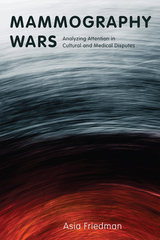
Mammography is a routine health screening performed forty million times each year in the United States, yet it remains one of the most deeply contested topics in medicine, with national health care organizations supporting conflicting guidelines. In Mammography Wars, sociologist Asia Friedman examines cultural and medical disagreements over mammography. At issue is whether to screen women under age fifty, which is rooted in deeper questions about early detection and the assumed linear and progressive development of breast cancer. Based on interviews with doctors and scientists, interviews with women ages 40 to 50, and newspaper coverage of mammography, Friedman uses the sociology of attention to map the cognitive structure of the “mammography wars,” offering insights into the entrenched nature of debates over mammography that often get missed when applying a medical lens. Friedman’s analysis also suggests the sociology of attention’s unique potential for analyzing cultural conflicts beyond mammography, and even beyond medicine.
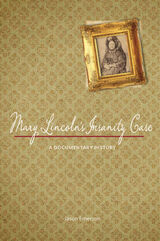
In 1875 Mary Lincoln, the widow of a revered president, was committed to an insane asylum by her son, Robert. The trial that preceded her internment was a subject of keen national interest. The focus of public attention since Abraham Lincoln's election in 1860, Mary Lincoln had attracted plentiful criticism and visible scorn from much of the public, who perceived her as spoiled, a spendthrift, and even too much of a Southern sympathizer. Widespread scrutiny only increased following her husband's assassination in 1865 and her son Tad's death six years later, after which her overwhelming grief led to the increasingly erratic behavior that led to her being committed to a sanitarium. A second trial a year later resulted in her release, but the stigma of insanity stuck. In the years since, questions emerged with new force, as the populace and historians debated whether she had been truly insane and subsequently cured, or if she was the victim of family maneuvering.
In this volume, noted Lincoln scholar Jason Emerson provides a documentary history of Mary Lincoln's mental illness and insanity case, evenhandedly presenting every possible primary source on the subject to enable a clearer view of the facts. Beginning with documents from the immediate aftermath of her husband's assassination and ending with reminiscences by friends and family in the mid-twentieth century, Mary Lincoln's Insanity Case: A Documentary History compiles more than one hundred letters, dozens of newspaper articles, editorials, and legal documents, and the daily patient progress reports from Bellevue Place Sanitarium during Mary Lincoln's incarceration. Including many materials that have never been previously published, Emerson also collects multiple reminiscences, interviews, and diaries of people who knew Mary Lincoln or were involved in the case, including the first-hand recollection of one of the jurors in the 1875 insanity trial.
Suggesting neither accusation nor exoneration of the embattled First Lady, Mary Lincoln's Insanity Case: A Documentary History gives scholars and history enthusiasts incomparable access to the documents and information crucial to understanding this vexing chapter in American history.
Published by Bucknell University Press. Distributed worldwide by Rutgers University Press.
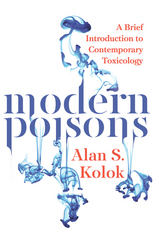
This accessible book explains basic principles in plain language while illuminating the most important issues in contemporary toxicology. Kolok begins by exploring age-old precepts of the field such as the dose-response relationship and the concept, first introduced by Ambroise Paré in the sixteenth century, that a chemical’s particular action depends on its inherent chemical nature. The author goes on to show exactly how chemicals enter the body and elicit their toxic effect, as well as the body’s methods of defense.
With the fundamentals established, Kolok digs into advances in toxicology, tracing the field’s development from World War II to the present day. The book examines both technical discoveries and their impacts on public policy. Highlights include studies of endocrine-disrupting chemicals in toiletries and prescriptions, the emerging science on prions, and our growing understanding of epigenetics.
Readers learn not only how toxic exposure affects people and wildlife, but about the long-term social and environmental consequences of our chemicals. Whether studying toxicology itself, public health, or environmental science, readers will develop a core understanding of—and curiosity about—this fast-changing field.
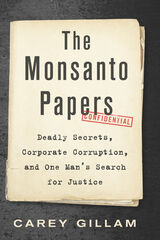
The Monsanto Papers is the inside story of Lee Johnson’s landmark lawsuit against Monsanto. For Lee, the case was a race against the clock, with doctors predicting he wouldn’t survive long enough to take the witness stand. For the eclectic band of young, ambitious lawyers representing him, it was a matter of professional pride and personal risk, with millions of dollars and hard-earned reputations on the line. For the public at large, the lawsuit presented a question of corporate accountability. With enough money and influence, could a company endanger its customers, hide evidence, manipulate regulators, and get away with it all—for decades?
Readers will be astounded by the depth of corruption uncovered, captivated by the shocking twists, and moved by Lee’s quiet determination to see justice served. With gripping narrative force that reads like fiction, The Monsanto Papers takes readers behind the scenes of a grueling legal battle, pulling back the curtain on the frailties of the American court system and the lengths to which lawyers will go to fight corporate wrongdoing.
READERS
Browse our collection.
PUBLISHERS
See BiblioVault's publisher services.
STUDENT SERVICES
Files for college accessibility offices.
RECENTLY PUBLISHED



UChicago Accessibility Resources
home | accessibility | search | about | contact us
BiblioVault ® 2001 - 2026
The University of Chicago Press