
 A SCHOLARLY BOOK REPOSITORY
7 start with M start with M

The life of Töhötöm Nagy (1908–1979), Jesuit, Mason, and secret service agent, offers fascinating insights into interwar Hungary, the Catholic Church and Vatican diplomacy, Freemasonry, and the activities of communist state security service.
As a young Jesuit Nagy was one of the leaders of a successful Catholic youth movement in interwar Hungary. After World War II he played an important role acting as an intermediary between the Vatican, the Red Army, and the Hungarian Catholic Church. After being sent to South America, he was attracted by liberation theology, but left the Society of Jesus, joined the Freemasons, and did social and philanthropic work in the slums of Buenos Aires. However, in the late 1960s he agreed to work for the Hungarian state security service in return for his repatriation. This latter period is reconstructed from the files of the Historical Archives of State Security in Budapest. Éva Petrás writes with empathy but with a sense of distance of the courage and restless energy of her subject. Her discussion of the limits of free choice and Nagy’s intense struggle to live a meaningful life make this biography breathtaking.

This scathing, at times humorous, and always insightful memoir by exiled Hungarian novelist Sándor Márai, provides one of the most poignant and human portraits of life in Hungary between the German occupation in 1944 and the solidification of communist power in 1948. Both a fervent anti-fascist and anti-communist, Márai draws a vivid portrait of the Hungarian peasantry and middle-class during this period, while delivering a telling indictment of the communist system from which he fled. Witty, aphoristic and psychologically clear-sighted, this memoir depicts the tragedy and pathos of a crucial period in the post-war history of a nation which has been 'central' to both the communists and the post-communist history of our times.
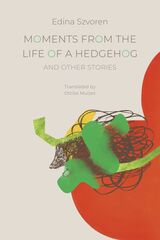
Available for the first time in English, Hungarian writer Edina Szvoren's short story collection gives voice to lives shaped by repression, cruelty, and silence.
Moments from the Life of a Hedgehog and Other Stories introduces English-language readers to the unsettling, exacting fiction of Hungarian author Edina Szvoren. Disturbing yet deliberately modest, these stories evoke a claustrophobic world of compromise and quiet desperation: fractured families warped by history and habit, boarding schools and workplaces ruled by cruelty, and domestic interiors heavy with unspoken dread. Set in the final decades of Hungarian socialism and its immediate aftermath, Szvoren’s sharply observed miniatures are animated by ever-shifting perspectives—outsiders, misfits, refusers—struggling to make sense of lives largely beyond their control. Grotesque without excess, absurd without relief, Szvoren’s narrative voices overlap and collide in ways that recall Franz Kafka and István Örkény. Yet her work remains firmly grounded in the body: queasy, intimate, and insistently physical, with a feminist and existential charge. Among polyester ornaments and unbearable family encounters, these stories offer a powerful, understated testimony to the unheard—and the nearly unhearable.
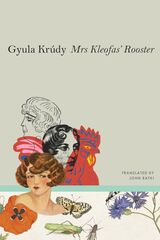
Mrs Kleofas’ Rooster brings together three captivating novellas by Gyula Krúdy, originally written in the 1920s and now available in English for the first time. Each story centers on a woman protagonist: a timeless adventuress, a resilient single mother, and a seductive Budapest femme fatale, respectively. In the title novella, a roguish narrator listens to the thrilling life story of an ageless, mysterious woman whose journey takes her from a childhood of suffering to a career as a cunning accomplice in daring schemes. The next story, NN, follows the life of a steadfast single mother, Juliska, amid the rhythms of village life. In Autumn Meeting, Krudy’s sharp wit unfolds through Rizili, a charming yet ruthless socialite who leads a suspended jockey on an intoxicating night through Budapest’s City Park.
READERS
Browse our collection.
PUBLISHERS
See BiblioVault's publisher services.
STUDENT SERVICES
Files for college accessibility offices.
RECENTLY PUBLISHED


UChicago Accessibility Resources
home | accessibility | search | about | contact us
BiblioVault ® 2001 - 2026
The University of Chicago Press