front cover of Magdalene House
Magdalene House
A Place about Mercy
Sarah VanHooser Suiter
Vanderbilt University Press, 2012
Women come to Magdalene House in Nashville when they are ready to leave the streets. They live togetherunsupervised and free of chargefor two years. During that time, the women are given time, space, and the resources they need to heal from what have often been lifelong experiences with suffering. (Of the twentytwo women now in residence, 80 percent have a diagnosed mental illness other than addiction, 40 percent are receiving treatment for hepatitis C, and onethird are HIV positive.)


However, the story of the Magdalene community is not about these statistics, but about the stories the women tell. They say they thrive in the community because it is a place where they are free to be themselves, safe to give and receive love, and free to speak their trutheven to complain sometimes about how their storytelling is exploited "for the good of the community." A Place about Mercy is a participantobservation account of the history of this remarkable community founded in 1997, its structure, its Thistle Farms beauty products operation, and Reverend Becca Stevens's communal and spiritual vision. The book is finally about what it means to walk the path of healing with a group of unlikely women as guide.


Magdalene House was the subject of a multiplepart documentary on National Public Radio.

[more]

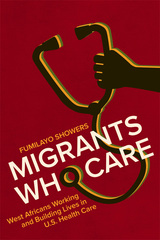
front cover of Migrants Who Care
Migrants Who Care
West Africans Working and Building Lives in U.S. Health Care
Fumilayo Showers
Rutgers University Press, 2023
As the U.S. population ages and as health care needs become more complex, demand for paid care workers in home and institutional settings has increased. This book draws attention to the reserve of immigrant labor that is called on to meet this need. Migrants Who Care tells the little-known story of a group of English-speaking West African immigrants who have become central to the U.S. health and long-term care systems. With high human capital and middle-class pre-migration backgrounds, these immigrants - hailing from countries as diverse as Cameroon, Sierra Leone, Ghana, Nigeria, and Liberia - encounter blocked opportunities in the U.S. labor market. They then work in the United States, as home health aides, certified nursing assistants, qualified disability support professionals, and licensed practical and registered nurses.

This book reveals the global, political, social, and economic factors that have facilitated the entry of West African women and men into the health care labor force (home and institutional care for older adults and individuals with physical and intellectual disabilities; and skilled nursing). It highlights these immigrants’ role as labor brokers who tap into their local ethnic and immigrant communities to channel co-ethnics to meet this labor demand. It illustrates how West African care workers understand their work across various occupational settings and segments in the health care industry. This book reveals the transformative processes migrants undergo as they become produced, repackaged, and deployed as health care workers after migration.

Ultimately, this book tells the very real and human story of an immigrant group surmounting tremendous obstacles to carve out a labor market niche in health care, providing some of the most essential and intimate aspects of care labor to the most vulnerable members of society.
[more]


Send via email Share on Facebook Share on Twitter