
 A SCHOLARLY BOOK REPOSITORY
18 start with M start with M
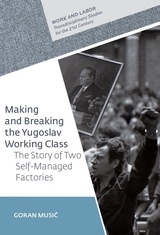
Workers' self-management was one of the unique features of communist Yugoslavia. Goran Musić has investigated the changing ways in which blue-collar workers perceived the recurring crises of the regime. Two self-managed metal enterprises, one in Serbia another in Slovenia, provide the frame of the analysis in the time span between 1945 and 1989. These two factories became famous for strikes in 1988 that evoked echoes in popular discourses in former Yugoslavia. Drawing on interviews, factory publications and other media, local archives, and secondary literature, Musić analyzes the two cases, going beyond the clichés of political manipulation from the top and workers' intrinsic attraction to nationalism.
The author explains how, in the later phase of communist Yugoslavia, growing social inequalities among the workers and undemocratic practices inside the self-managed enterprises facilitated the spread of a nationalist and pro-market ideology on the shop floors. Yet rather than being a mass taken advantage of by populist leaders, the working class Musić presents is one with agency and voice, a force that played an important role in shaping the fate of the country. The book thus seeks to open a debate on the social processes leading up to the dissolution of Yugoslavia.
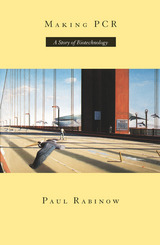
Making PCR explores the culture of biotechnology as it emerged at Certus Corporation during the 1980s and focuses on its distinctive configuration of scientific, technical, social, economic, political, and legal elements, each of which had its own separate trajectory over the preceding decade. The book contains interviews with the remarkable cast of characters who made PCR, including Kary Mullin, the maverick who received the Nobel prize for "discovering" it, as well as the team of young scientists and the company's business leaders.
This book shows how a contingently assembled practice emerged, composed of distinctive subjects, the site where they worked, and the object they invented.
"Paul Rabinow paints a . . . picture of the process of discovery in Making PCR: A Story of Biotechnology [and] teases out every possible detail. . . . Makes for an intriguing read that raises many questions about our understanding of the twisting process of discovery itself."—David Bradley, New Scientist
"Rabinow's book belongs to a burgeoning genre: ethnographic studies of what scientists actually do in the lab. . . . A bold move."—Daniel Zalewski, Lingua Franca
"[Making PCR is] exotic territory, biomedical research, explored. . . . Rabinow describes a dance: the immigration and repatriation of scientists to and from the academic and business worlds."—Nancy Maull, New York Times Book Review
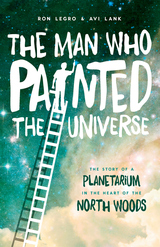
The Man Who Painted the Universe: The Story of a Planetarium in the Heart of the North Woods introduces readers to the mild-mannered astronomy enthusiast whose creativity, ingenuity, fervor, and endurance realized a dream of galactic proportions. The story of this stargazer from Wisconsin’s North Woods so inspired two newspapermen, authors Ron Legro and Avi Lank, that they sought to document the story of the Kovac Planetarium for a new generation of stargazers and dreamers.
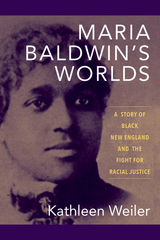
Maria Baldwin (1856–1922) held a special place in the racially divided society of her time, as a highly respected educator at a largely white New England school and an activist who carried on the radical spirit of the Boston area's internationally renowned abolitionists from a generation earlier.
African American sociologist Adelaide Cromwell called Baldwin “the lone symbol of Negro progress in education in the greater Boston area” during her lifetime. Baldwin used her respectable position to fight alongside more radical activists like William Monroe Trotter for full citizenship for fellow members of the black community. And, in her professional and personal life, she negotiated and challenged dominant white ideas about black womanhood. In Maria Baldwin's Worlds, Kathleen Weiler reveals both Baldwin's victories and what fellow activist W. E. B. Du Bois called her “quiet courage” in everyday life, in the context of the wider black freedom struggle in New England.

Political theorist and cultural critic, novelist, and cricket enthusiast, C. L. R. James (1901–89) was a brilliant polymath who was described by Edward Said as “a centrally important twentieth-century figure.” Through such landmark works as The Black Jacobins, Beyond a Boundary, and American Civilization, James’s thought continues to influence and inspire scholars in a variety of fields.
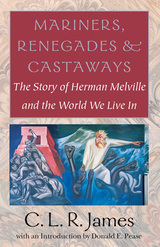
In this complete edition of his seminal work of literary and cultural criticism, Mariners, Renegades, and Castaways, James anticipated many of the concerns and ideas that have shaped the contemporary fields of American and postcolonial studies. In this provocative study of Moby Dick in which he challenged the prevailing Americanist interpretation that opposed a “totalitarian” Ahab and a “democratic, American” Ishmael, James offers instead a vision of a factory-like Pequod whose “captain of industry” leads the crew to their doom. In addition to demonstrating how such an interpretation supported the United States’ emerging national security state, he also related the narrative of Moby Dick to his own persecuted position at the height of McCarthyism. It is precisely this personal, deeply original material that was excised from the first edition of this book.
With a new foreword by Professor Chanda Prescod-Weinstein—theoretical physicist, advocate for a just science, and James’s granddaughter—and an introduction by Professor Donald E. Pease at Dartmouth College that places the work in its critical and cultural context, Mariners, Renegades, and Castaways is once again available in a new edition.
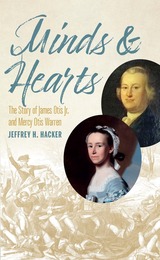
Minds and Hearts is the dual biography of these remarkable siblings, placing James and Mercy in the spotlight together for the first time, amid the rush of events, competing ideologies, and changing social conditions of eighteenth-century America. Jeffrey H. Hacker crafts a compelling narrative that focuses on the Otises' unique and dramatic relationship and traces their impact on the Revolutionary movement in Massachusetts. If the real American Revolution took place "in the minds and hearts of the people," as John Adams claimed, then the Otises were among the nation's true patriots.
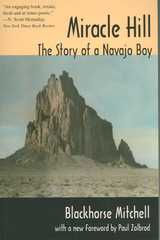
In Miracle Hill, Blackhorse Mitchell presents the unforgettable account of a boy’s struggle to learn—which would be for him a miracle—in the face of handicaps most people would call insurmountable. Under the guidance of a teacher determined to help him pursue that miracle, he records his life from birth to the dawn of manhood: herding family sheep, living at a boarding school, encountering whites for the first time, journeying home, and finally enrolling in the Institute of American Indian Arts in Santa Fe, where his talent was encouraged.
Miracle Hill is written in a distinctively personal style, without strict adherence to orthodox grammar that would have robbed Mitchell of his true voice. Filled with unforgettable characters and brimming with insights into Navajo ways and family relationships, it is a book that crosses cultural barriers and speaks to the miracle-seeker in us all.
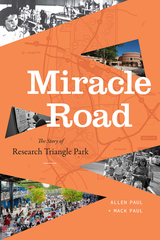
Research Triangle Park in North Carolina (RTP) emerged under the unique circumstances of a poor Southern state that needed to find a way to offset the declining industries of tobacco, furniture, and textiles in the 1950s. Through the sustained commitment of nearby universities, business leaders, and local and state officials, state leaders established the largest science and research park in the United States in an area that was nothing but “possums and pines.” Miracle Road tells this story through the eyes of those at the center of it, like the local black leaders who convinced white officials to desegregate public schools with the justification that it would make the area more appealing to tech companies, or how a chance meeting between the governor and a Danish executive led to North Carolina becoming an epicenter for weight loss drugmakers decades later. Allen Paul and Mack Paul organize the story around major periods in RTP’s growth, showing how RTP came to define the region and the state by the 1990s as well as the major setbacks it encountered in the early 2000s. Breaking down the strategies that led to RTP’s success, like creating new institutions in targeted tech areas to spur activity and factoring quality of life into the regional planning of the area, Miracle Road demonstrates how the story of Research Triangle Park is a fascinating and important case study of urban development in the twenty-first century.
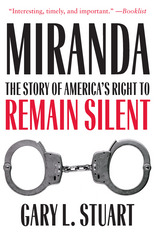
Ernesto Miranda was an uneducated Hispanic man arrested in 1963 in connection with a series of sexual assaults, to which he confessed within hours. He was convicted not on the strength of eyewitness testimony or physical evidence but almost entirely because he had incriminated himself without knowing it—and without knowing that he didn’t have to. Miranda’s lawyers, John P. Frank and John F. Flynn, were among the most prominent in the state, and their work soon focused the entire country on the issue of their client’s rights. A 1966 Supreme Court decision held that Miranda’s rights had been violated and resulted in the now-famous "Miranda warnings."
Stuart personally knows many of the figures involved in Miranda, and here he unravels its complex history, revealing how the defense attorneys created the argument brought before the Court and analyzing the competing societal interests involved in the case. He considers Miranda's aftermath—not only the test cases and ongoing political and legal debate but also what happened to Ernesto Miranda. He then updates the story to the Supreme Court’s 2000 Dickerson decision upholding Miranda and considers its implications for cases in the wake of 9/11 and the rights of suspected terrorists. Interviews with 24 individuals directly concerned with the decision—lawyers, judges, and police officers, as well as suspects, scholars, and ordinary citizens—offer observations on the case’s impact on law enforcement and on the rights of the accused.
Ten years after the decision in the case that bears his name, Ernesto Miranda was murdered in a knife fight at a Phoenix bar, and his suspected killer was "Mirandized" before confessing to the crime. Miranda: The Story of America’s Right to Remain Silent considers the legacy of that case and its fate in the twenty-first century as we face new challenges in the criminal justice system.
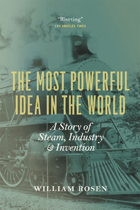
This bracing history uses the earth-shaking development of the steam engine to show how the very idea of intellectual property was essential to the entire Industrial Revolution.
Hardly a week passes without some high-profile court case that features intellectual property at its center. But how did the belief that one could own an idea come about? And how did that belief change the way humankind lives and works?
William Rosen, author of Justinian's Flea, seeks to answer these questions and more with The Most Powerful Idea in the World. A lively and passionate study of the engineering and scientific breakthroughs that led to the steam engine, this book argues that the very notion of intellectual property drove not only the invention of the steam engine but also the entire Industrial Revolution: history’s first sustained era of economic improvement. To do so, Rosen conjures up an eccentric cast of characters, including the legal philosophers who enabled most the inventive society in millennia, and the scientists and inventors—Thomas Newcomen, Robert Boyle, and James Watt—who helped to create and perfect the steam engine over the centuries. With wit and wide-ranging curiosity, Rosen explores the power of creativity, capital, and collaboration in the brilliant engineering of the steam engine and how this power source, which fueled factories, ships, and railroads, changed human history.
Deeply informative and never dull, Rosen's account of one of the most important inventions made by humans is a rollicking ride through history, with careful scholarship and fast-paced prose in equal measure.
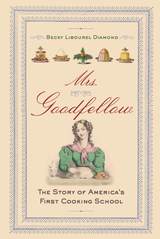
Recovering the Life and Influence of the “Mother of American Cooking,” the Woman Who Changed the Way We Learn How to Prepare Meals
In Philadelphia during the first decades of the nineteenth century, a widow, Mrs. Elizabeth Goodfellow, ran a popular bakery and sweet shop. In addition to catering to Philadelphia’s wealthy families and a reputation of having the finest desserts and sweet dishes in the young country, her business stood out from every other establishment in another way: she ran a small school to learn the art of cooking, the first of its kind in America. Despite her fame—references to her cooking as a benchmark abound in the literature of the period—we know very little about who she was. Since she did not keep a journal and never published any of her recipes, we have to rely on her students, most notably Eliza Leslie, who fortunately recorded many of Goodfellow’s creations and techniques. Goodfellow is known to have made the first lemon meringue pie and for popularizing regional foods, such as Indian (corn) meal. Her students also recall that Mrs. Goodfellow stressed using simple wholesome ingredients that were locally grown, presaging modern culinary fashion.
By assembling the many parts of this puzzle from old recipe books, advertisements, letters, diaries, genealogical records, and other primary sources, researcher and writer Becky Diamond has been able to provide a more complete portrait of this influential figure in cooking history. Mrs. Goodfellow: The Story of America’s First Cooking School begins with what we know about Elizabeth Goodfellow—where she was born, her husbands, her children, where her shop was located. We then travel back in time to discover the kinds of foods that would have been available to Goodfellow and how she may have used them. The book next turns to the rise of both commercial eating establishements and books of recipes. From here, the author explains the rapid expansion of cooking schools, such as the New York Cooking Academy and the Boston Cooking School, made famous through its association with Fannie Farmer, and ends with a discussion of the role of celebrity chefs. Thoroughly researched and including a range of authentic recipes, Mrs. Goodfellow is a delicious exploration of the life and legacy of one of America’s most influential cooks.
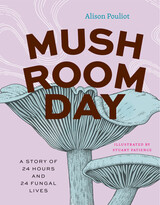
On this mushroom-filled day, ecologist Alison Pouliot tours the world to introduce readers to a fascinating variety of fungi. Each chapter of Mushroom Day introduces a single fungus during a single hour, highlighting twenty-four different species.
In the dark of the night, the green glow of the ghost fungus guides us into the forest to learn about the mysteries of bioluminescence. At dawn, we awaken to find a fairy ring of mushrooms that has appeared overnight like something out of folklore. But we don’t have much time to linger, as we must reach the Italian forest before other porcino hunters forage the morning’s fattest and finest. In the heat of the afternoon, the ripe stench of the stinkhorn might send us out of the woods, while the enticing aroma of the aniseed funnel lures us back in. Late in the evening we spy a fungus known as the witches cauldron and wonder what it might tell us about the future. By the end of our mushroom day, we’ll have glimpsed the diversity of this unique kingdom, met fungus friends that feed and fascinate, and learned how humans can encourage their flourishing.
For each hour, celebrated artist Stuart Patience has depicted these scenes with evocative pen and ink illustrations. Working together to narrate and illustrate these unique moments in time, Pouliot and Patience have created an engaging read that is a perfect way to spend an hour or two—and a true gift for foragers, mycophiles, and anyone who wants to stop and appreciate fungi.

Music and Maestros was first published in 1952. Minnesota Archive Editions uses digital technology to make long-unavailable books once again accessible, and are published unaltered from the original University of Minnesota Press editions.
Music lovers all over the United States as well as in other countries have heard the music of the Minneapolis Symphony Orchestra under the direction of such noted conductors as Dimitri Mitropoulos and Eugene Ormandy. Now they can enjoy the story behind those concerts, records, and radio broadcasts through this intimate history of the men and music that have made the orchestra famous.
The story begins with the lively musical activities of a frontier town, the antecedents of the symphony orchestra that took shape at the turn of the century. From the early years of the organization under the batons of Emil Oberhoffer and Henri Verbrugghen, the chronicle rises to the period of the great contemporaries, Ormandy, Mitropoulos, and Antal Dorati. There is a wealth of detail on the career of Mitropoulos, the renowned New York Philharmonic conductor who reached his present stature during his leadership of the Minneapolis orchestra.The extensive concert tours that have earned for the Minneapolis symphony the nickname of "orchestra on wheels" are recalled in anecdotes that will evoke many a chuckle and plenty of amazement. Accounts of early recording sessions offer fascinating sidelights on this aspect of musical history. A complete list of the works performed by the orchestra during the past fifty years provides a significant record of changing trends in musical tastes. A roster of al the players who have been members of the orchestra is given, and the reference section also includes a complete list of out-of-town engagements and a list of the orchestra's recordings which are available.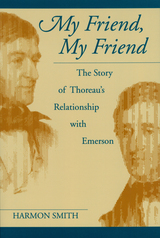
Henry David Thoreau was a twenty-year-old scholarship student at Harvard when he met Ralph Waldo Emerson in 1837. Emerson, fourteen years Thoreau's senior and independently wealthy, had recently shaken the intellectual world of New England with the publication of Nature. Despite the disparity in their circumstances, Thoreau and Emerson quickly formed a close relationship that lasted until Thoreau's death at the age of forty-four. This book tells the story of their friendship. Harmon Smith emphasizes their personal bond, but also shows how their relationship affected their thought and writing, and was in turn influenced by their careers.
Without Emerson's interest and support, it is unlikely that Thoreau could have expended the energy on writing that enabled him to achieve greatness. By inviting Thoreau into his home to live during two different periods in the 1840s, Emerson effectively made Thoreau “one of the family.” He provided him with work, lent him money, and allowed him to build a cabin on the shore of Walden Pond. Emerson also broadened Thoreau's horizon immeasurably by introducing him to an ever-widening circle of friends and colleagues.
Although the bond between Thoreau and Emerson was strong, their needs were often greatly at variance. While this led to a prolonged period of estrangement between them, they were ultimately able to reconcile their differences. Many years after Thoreau died, Emerson could look back over his long life and say that Henry had been his best friend. Since the thoughts and feelings of the two men are so well documented in their journals and letters, Smith is able to trace the pattern of their emotional involvement in great detail. What emerges is both a remarkable portrait of their relationship and an intimate look at the nature of friendship itself.
READERS
Browse our collection.
PUBLISHERS
See BiblioVault's publisher services.
STUDENT SERVICES
Files for college accessibility offices.
RECENTLY PUBLISHED


UChicago Accessibility Resources
home | accessibility | search | about | contact us
BiblioVault ® 2001 - 2026
The University of Chicago Press