
 A SCHOLARLY BOOK REPOSITORY
18 start with N start with N

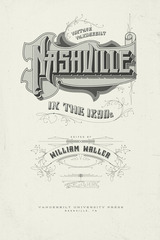
It is, however, not a complete insight into Nashville in the 1890s. Readers should take note that the book focuses almost exclusively on the experiences and worldviews of white Nashvillians. These stories have incredible value for local historians and anyone interested in Nashville history, but the book’s failure to deal with race—as evidenced by Waller’s belief that “the social order was thought to be providential,” which was clearly not true for Nashville’s Black residents who struggled against the unjust systems designed to oppress them—is a grave shortcoming.

This is a valuable artifact in itself, but the new foreword by Judge David Briley—former Nashville mayor and grandson of the first metro Nashville mayor, Beverly Briley—offers a firsthand account of the realities of metropolitan government sixty years on.

More than just a useful guide to Nashville’s flora, Nashville Native Orchids is a reminder of the risk that unbridled urban development can pose to the delicate natural ecosystem. Throughout the book, Parr shows the local effects of climate change on Nashville’s native orchid population and advocates for a more sustainable approach to development. Beyond the environmental dimensions, this book presents an illuminating discussion of the historical significance of orchids and their central role in folkloric traditions.
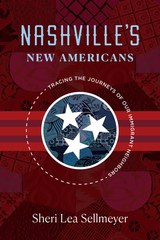
Whether it’s building skyscrapers, running successful restaurants, researching diseases, performing music, cleaning hotel rooms, or holding public office, immigrants are changing Nashville from a mid‑sized city known for its country music industry to an increasingly diverse, multicultural destination. In Metro Nashville schools today, students speak more than 120 languages. The city is bigger, more congested, and more expensive than it’s ever been, drawing criticism from both longtime residents and newcomers. But growth has also brought top‑notch scientists and educators, a world‑class symphony, major league sports teams, investment from major corporations—and a wide range of immigrants whose talent and hard work have helped make all of that happen.
Through its profiles of thirty-nine immigrants from thirty-eight countries in Asia, the Middle East, Africa, Europe, Latin America, and Australia, Nashville’s New Americans provides a case study from one of the fastest-growing cities in the country on the contributions immigrants are making to its culture and economy.

Author Elia Barceló's setup is funny and feminist, and it raises questions of what it means to be "male" or "female"—prescient, considering this novel was first published twenty-five years ago. The anniversary is being celebrated now with the first English-language edition, translated by veteran sci-fi translators Yolanda Molina-Gavilán and Andrea Bell, who also provide a critical introduction.

We know a great deal about aggression, conflict, and war, but relatively little about peace, partially because it has been such a scarce phenomenon throughout history and in our own times. Peace is more than the absence of war. Peace requires special relationships, structures, and attitudes to promote and protect it.
A Natural History of Peace provides the first broadly interdisciplinary examination of peace as viewed from the perspectives of social anthropology, primatology, archeology, psychology, political science, and economics. Among other notable features, this volume offers:
a major theory concerning the evolution of peace and violence through human history;
an in-depth comparative study of peaceful cultures with the goal of discovering what it is that makes them peaceful;
one of the earliest reports of a new theory of the organization and collapse of ancient Maya civilization;
a comparative examination of peace from the perspective of change, including the transition of one of the world's most violent societies to a relatively peaceful culture, and the decision-making process of terrorists who abandon violence;
and a theory of political change that sees the conclusion of wars as uniquely creative periods in the evolution of peace among modern nations.

As embedded anthropologists, Saethre and Stadler provide a unique and nuanced perspective of the reality of a clinical trial that is often hidden from view.

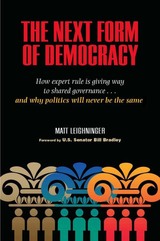
The stories of civic experiments in this book can show us the realpolitik of deliberative democracy, and illustrate how the evolution of democracy is already reshaping politics.

For each era, Chavez reveals the ways Nicaraguan popular culture adapted and interpreted the new political order, shaping, critiquing, or amplifying the regime's message of stability and prosperity for the people. These tactics of interpretation, otherwise known as meaning-making, became all-important for the Nicaraguan people, as they opposed the autocracy of Somocismo, or complemented the Sandinistas, or struggled to find their place in the Neoliberal era. In every case, Chavez shows the reflective nature of cultural production and its pursuit of utopian idealism.

The book opens with key themes that will help students and scholars understand the century, such as the civilization and barbarism binary, urbanism, the divide between conservatives and liberals, and transculturation. In the chapters that follow, Conway weaves transnational trends together with brief case studies and compelling snapshots that help us understand the period. How much did books and photographs cost in the nineteenth century? What was the dominant style in painting? What kinds of ballroom dancing were popular? Richly illustrated with striking photographs and lithographs, this is a book that invites the reader to rediscover a past age that is not quite past, still resonating into the present.
The book opens with key themes that will help students and scholars understand the century, such as the civilization and barbarism binary, urbanism, the divide between conservatives and liberals, and transculturation. In the chapters that follow, Conway weaves transnational trends together with brief case studies and compelling snapshots that help us understand the period. How much did books and photographs cost in the nineteenth century? What was the dominant style in painting? What kinds of ballroom dancing were popular? Richly illustrated with striking photographs and lithographs, this is a book that invites the reader to rediscover a past age that is not quite past, still resonating into the present.
Most of Cartagena's privateers were people of color and descendants of slaves who benefited from the relative freedom and flexibility of life at sea, but also faced kidnapping, enslavement, and brutality. Many came from Haiti and Guadeloupe; some had been directly involved in the Haitian Revolution. While their manpower proved crucial in the early Anti-Spanish struggles, Afro-Caribbean privateers were also perceived as a threat, suspected of holding questionable loyalties, disorderly tendencies, and too strong a commitment to political and social privileges for people of color. Based on handwritten and printed sources in Spanish, English, and French, this book tells the story of Cartagena's multinational and multicultural seafarers, revealing the Trans-Atlantic and maritime dimensions of South American independence.
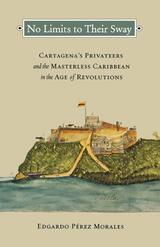
Most of Cartagena's privateers were people of color and descendants of slaves who benefited from the relative freedom and flexibility of life at sea, but also faced kidnapping, enslavement, and brutality. Many came from Haiti and Guadeloupe; some had been directly involved in the Haitian Revolution. While their manpower proved crucial in the early Anti-Spanish struggles, Afro-Caribbean privateers were also perceived as a threat, suspected of holding questionable loyalties, disorderly tendencies, and too strong a commitment to political and social privileges for people of color. Based on handwritten and printed sources in Spanish, English, and French, this book tells the story of Cartagena's multinational and multicultural seafarers, revealing the Trans-Atlantic and maritime dimensions of South American independence.
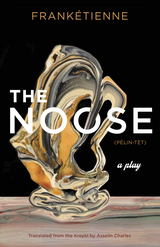
With recent productions in Canada and the United States, the publication of this play in English will provide a new generation of audiences access to this important text, accompanied by an introduction by translator Asselin Charles and an afterword by Jean Jonassaint, both preeminent scholars of Frankétienne’s literary output.

But the majority of women who struggle with fertility avoid treatment. The women whose interviews appear in Not Trying belong to this majority. Their attitudes vary and may change as their life circumstances evolve. Some support the prevailing cultural narrative that women are meant to be mothers and refuse to see themselves as childfree by choice. Most of these women, who come from a wider range of social backgrounds than most researchers have studied, experience deep ambivalence about motherhood and non-motherhood, never actually choosing either path. They prefer to let life unfold, an attitude that seems to reduce anxiety about not conforming to social expectations.
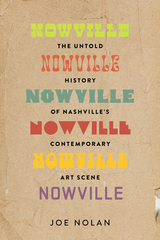
Nowville is an oral history of the Nashville art scene beginning in the 1990s. Author Joe Nolan tracks down the city’s art punks, art monks, radical art students, and visionary pioneers to share what made their moments in Nashville so special. He also offers insights into how this homespun movement powered by DIY innovating came to be a thriving creative community and a cornerstone of the city’s contemporary allure.
READERS
Browse our collection.
PUBLISHERS
See BiblioVault's publisher services.
STUDENT SERVICES
Files for college accessibility offices.
RECENTLY PUBLISHED






UChicago Accessibility Resources
home | accessibility | search | about | contact us
BiblioVault ® 2001 - 2026
The University of Chicago Press