
 A SCHOLARLY BOOK REPOSITORY
19 start with N start with N

The “problem” of photography in Mexico, Tejada shows, reveals cross-cultural episodes that are rife with contradictions, especially in the complex terms of cultural and sexual difference. Analyzing such topics as territory, sexuality, and social and ethnic relations in image making, Tejada delves into the work of key figures including Manuel Alvarez Bravo, Edward Weston, Tina Modotti, Marius de Zayas, and Julien Levy, as well as the Agustín Víctor Casasola Archive, the Boystown photographs, and contemporary Mexican and Latina photo-based artists.
From the Mexican Revolution of 1910–1920 to the U.S.–Mexico borderlands of today, Tejada traces the connective thread that photography has provided between Mexican and U.S. American intellectual and cultural production and, in doing so, defines both nations.
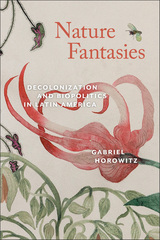
In this original study, Gabriel Horowitz examines the work of select nineteenth- and twentieth-century Latin American writers through the lens of contemporary theoretical debates about nature, postcoloniality, and national identity. In the work of José Martí, Gertrudis Gómez de Avellaneda, Jorge Luis Borges, Augusto Roa Bastos, Cesar Aira, and others, he traces historical constructions of nature in regional intellectual traditions and texts as they inform political culture on the broader global stage. By investigating national literary discourses from Cuba, Argentina, and Paraguay, he identifies a common narrative thread that imagines the utopian wilderness of the New World as a symbolic site of independence from Spain. In these texts, Horowitz argues, an expressed desire to return to the nation’s foundational nature contributed to a movement away from political and social engagement and toward a “biopolitical state,” in which nature, traditionally seen as pre-political, conversely becomes its center.
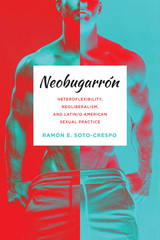
How should we understand the bugarrón, a man who has sex with other men while regarding himself as heterosexual? Reaching beyond queer and gay studies, Ramón E. Soto-Crespo’s research suggests that this paradoxical figure mutated into what he calls the “neobugarrón,” a neoliberal market-oriented actor who used the traditional sexual practice as an optimizing strategy for manipulating the forces of globalization during the 1990s. In Neobugarrón: Heteroflexibility, Neoliberalism, and Latin/o American Sexual Practice, Soto-Crespo chronicles the cultural modifications of bugarrón, a distinct male-male sexual practice in Latin/o America and the Caribbean, during the twentieth and twenty-first centuries. Working with and against Foucault and Kinsey to examine diverse works from anthropology, literature, cinema, and social media, he investigates a wide array of bugarrón sources, ranging from previously underexamined multimedia to ethnographies, fiction, films, and beyond. These works constitute a neobugarrón archive and attest to a sexual practice currently metamorphosing on the cusp of extinction. Soto-Crespo’s analysis challenges conventional understandings of “heteroflexible” sex between men and reveals a hitherto unnoticed transformation in neoliberal ecologies of bugarrón sexual practice.
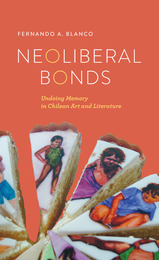
Neoliberal Bonds vehemently criticizes how Chile’s transition governments, through a series of political and legal maneuvers, created the state’s official memory narratives. Blanco argues that the state, the media, academia, and the neoliberal market colluded to colonize and mediatize the “memory scene.” In contrast to these official narratives, Neoliberal Bonds analyzes alternative memory accounts within the visual arts and literature that push back against the state, its institutions, and its economic allies. These alternative memory narratives highlight the ontological fracture of the new neoliberal subjects; they also bring into sharp relief the urgent need for democratization that still poses a challenge to Chile a quarter century after its “transition to democracy” began.
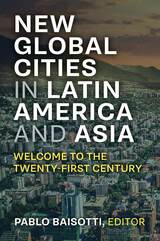
New Global Cities in Latin America and Asia: Welcome to the Twenty-First Century proposes new visions of global cities and regions historically considered “secondary” in the international context. The arguments are not only based on material progress made by these metropolises, but also on the growing social difficulties experienced (e.g., organized crime, drug trafficking, slums, economic inequalities). The book illustrates the growth of cities according to these problems arising from the modernity of the new century, comparing Latin American and Asian cities.
This book analyzes the complex relationships within cities through an interdisciplinary approach, complementing other research and challenging orthodox views on global cities. At the same time, the book provides new theoretical and methodological tools to understand the progress of “Third World” cities and the way of understanding “globality” in the 21st century by confronting the traditional views with which global cities were appreciated since the 1980s. Pablo Baisotti brings together researchers from various fields who provide new interpretative keys to certain cities in Latin America and Asia.
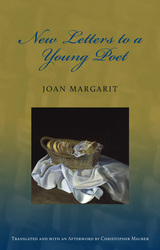
In these intimate pages, award-winning Catalan poet Joan Margarit offers a passionate defense of poetry and of the intelligible poem—the well-made text that can provide refuge, wisdom, and consolation. Inspired by Rilke's classic Letters to a Young Poet, this slender volume explores poetry as vocation, obsession, and partnership between writer and reader, a "road toward inner growth." For Margarit, poetry promises "a clarity that allows us mysteriously to live without the need to forget." This is essential reading for poets young and old, writers, and readers seeking insights into the creative process and "the way both poet and reader can find their own way to face solitude."
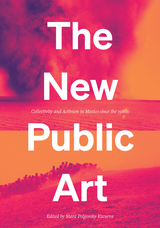
Essays on the rise of community-focused art projects and anti-monuments in Mexico since the 1980s.
Mexico has long been lauded and studied for its post-revolutionary public art, but recent artistic practices have raised questions about how public art is created and for whom it is intended. In The New Public Art, Mara Polgovsky Ezcurra, together with a number of scholars, artists, and activists, looks at the rise of community-focused art projects, from collective cinema to off-stage dance and theatre, and the creation of anti-monuments that have redefined what public art is and how people have engaged with it across the country since the 1980s.
The New Public Art investigates the reemergence of collective practices in response to privatization, individualism, and alienating violence. Focusing on the intersection of art, politics, and notions of public participation and belonging, contributors argue that a new, non-state-led understanding of "the public" came into being in Mexico between the mid-1980s and the late 2010s. During this period, community-based public art bore witness to the human costs of abuses of state and economic power while proposing alternative forms of artistic creation, activism, and cultural organization.

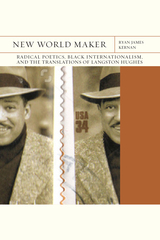
Through original research and close readings alert to the foreign prosody underlying Hughes’s work, New World Maker recuperates his political writing, which had been widely maligned by Cold War detractors and adherents of New Criticism, and affirms his place as a progenitor of African diasporic literature and within the pantheon of US modernists. Demonstrating the integral part translation played in Hughes’s creative process, this book challenges a number of common assumptions about this canonical thinker and offers important insights for scholars of African diasporic literature, comparative literature, and American, Caribbean, and translation studies.

For each era, Chavez reveals the ways Nicaraguan popular culture adapted and interpreted the new political order, shaping, critiquing, or amplifying the regime's message of stability and prosperity for the people. These tactics of interpretation, otherwise known as meaning-making, became all-important for the Nicaraguan people, as they opposed the autocracy of Somocismo, or complemented the Sandinistas, or struggled to find their place in the Neoliberal era. In every case, Chavez shows the reflective nature of cultural production and its pursuit of utopian idealism.
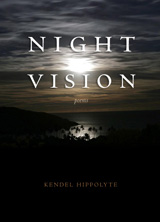
it is difficult to see through it. And yet we must
or we become it, become nothing else but history.
It is this challenge, laid down in the powerful title poem of this collection, which Kendel Hippolyte takes up in Night Vision. And the history that Hippolyte penetrates is a history of the change overtaking the island of St. Lucia. As town becomes city and city spreads like a cancer, the poet's searching verse finds among the waste of humanity, nature, and culture a microcosm of the transforming Caribbean-from tradition, community, rooted identity, to social fragmentation, isolation, uncertainty. And yet, in the personal, away from the daytime public glare, Night Vision also finds the possibility of renewal. Engaging society and self, the poet's dialogue is conducted in a range of poetic voices and styles-the traditional forms of sonnet, villanelle, triolet, echo poem, as well as dramatic monologues in Caribbean English idioms and rhythms of speech; poems written to the metrics of blues and rap alongside free verse poems that expand in long-breath incantatory lines and contract in miniaturist forms as concise as graffiti. The joyful linguistic energy of the poems is perhaps what makes them, and us, look beyond the glaring reality they contemplate to a more hopeful, if nighttime, vision.
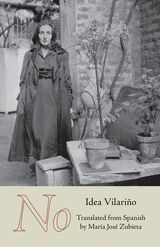
In No, Idea Vilariño strips poetry to its essence—distilling love, loss, and the inexorable passage of time into spare yet searing verses. Renowned as a leading voice of Uruguay’s “Generation of 45,” Vilariño’s final collection is at once a defiant refusal and an unrelenting assertion of existence. From its stark nihilism emerges a poetic voice that insists on being heard, even as it denies life’s joys.
Now available in English for the first time, No has been masterfully translated by María José Zubieta, in collaboration with poet and musicologist J. Martin Daughtry. This bilingual edition preserves Vilariño’s rhythmic precision and existential intensity, giving readers a rare glimpse into a body of work that continues to resonate far beyond its origins. No is a testament to the power of poetry to confront the void, and to carve meaning from silence.
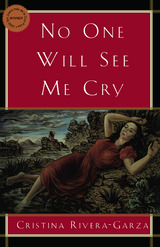
Winner of the Mexico National Novel Prize, Sor Juana Inés de la Cruz Prize, and IMPACT Prize
Joaquín Buitrago, a photographer in the Castaneda Insane Asylum, believes a patient is a prostitute he knew years earlier. His obsession in confirming Matilde's identity leads him to explore the clinics records, and her tragic history. Joaquín and Matilda begin to tell each other fragmented stories about a past they almost shared, and a future in which they do not believe. Set in 1920s Mexico, this novel is at once an overview of one of the most turbulent times in Mexican history, a love story, and a meditation on the ways in which medical and popular language define insanity. No One Will See Me Cry is a lyrical and startling visitation with the so-called losers of an era as they try to plumb the meaning of their lives.
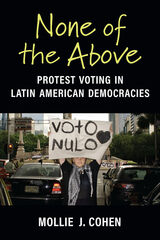
Contrary to received wisdom, this book shows that most citizens cast blank or spoiled votes in presidential elections on purpose. By participating in invalid vote campaigns, citizens can voice their concerns about low-quality candidates while also expressing a preference for high-quality democracy. Campaigns promoting blank and spoiled votes come about more often, and succeed at higher rates, when incumbent politicians undermine the quality of elections. Surprisingly, invalid vote campaigns can shore up the quality of democracy in the short term. None of the Above shows that swings in blank and spoiled vote rates can serve as a warning about the trajectory of a country’s democracy.
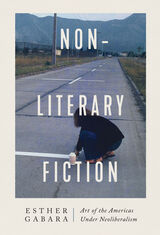
With Non-literary Fiction, Esther Gabara examines how contemporary art produced across the Americas has reacted to the rising tide of neoliberal regimes, focusing on the crucial role of fiction in daily politics. Gabara argues that these fictions depart from familiar literary narrative structures and emerge in the new mediums and practices that have revolutionized contemporary art. Each chapter details how fiction is created through visual art forms—in performance and body art, posters, mail art, found objects, and installations. For Gabara, these fictions comprise a type of art that asks viewers to collaborate in the creation of the work and helps them to withstand the brutal restrictions imposed by dominant neoliberal regimes.
During repressive regimes of the 1960s and 1970s and free trade agreements of the 1990s, artists and critics consistently said no to economic privatization, political deregulation, and reactionary social logic as they rejected inherited notions of visual, literary, and political representation. Through close analyses of artworks and writings by leading figures of these two generations, including Indigenous thinkers, Gabara shows how negation allows for the creation of fiction outside textual forms of literature.
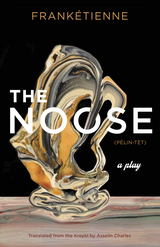
With recent productions in Canada and the United States, the publication of this play in English will provide a new generation of audiences access to this important text, accompanied by an introduction by translator Asselin Charles and an afterword by Jean Jonassaint, both preeminent scholars of Frankétienne’s literary output.
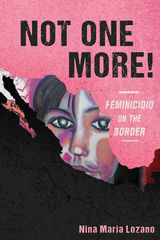
Finding theories of new materialism inadequate to explain the feminicidios, Lozano critiques and extends this approach—advancing instead a new theoretical framework, border materialism, to argue that capitalist systems of neoliberalism and free trade are directly correlated to the killing of women on the US–Mexico border. Through the author’s fifteen-plus years of on-the-ground fieldwork, readers are presented with firsthand accounts, testimonies, and new social movement strategies from family members and activists attempting to stop these gendered crimes.
By offering concrete case studies—including analysis of maquiladoras/factories and free trade zones, public monuments and murals memorializing the victims, rastreos/searches by family members for victims’ DNA remains, and testimony from Mothers, family members, and activists—Not One More! lays bare the socioeconomic and geopolitical forces at work in the killing of women in Juárez.
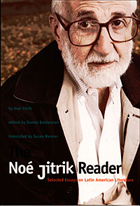
The Noé Jitrik Reader showcases Jitrik’s reflections on marginality and the canon, exile and return, lack and excess, autobiography, Argentine nationalism, the state of literary criticism, the avant-garde, and the so-called Boom in Latin American literature. Among the writers whose work he analyzes in the essays collected here are Jorge Luis Borges, Esteban Echeverría, Domingo Faustino Sarmiento, José Martí, César Vallejo, José Bianco, Juan Carlos Onetti, José María Arguedas, Julio Cortázar, and Augusto Roa Bastos. The Noé Jitrik Reader offers English-language readers a unique opportunity to appreciate the rigor and thoughtfulness of one of Latin America’s most informed and persuasive literary critics.

READERS
Browse our collection.
PUBLISHERS
See BiblioVault's publisher services.
STUDENT SERVICES
Files for college accessibility offices.
RECENTLY PUBLISHED




UChicago Accessibility Resources
home | accessibility | search | about | contact us
BiblioVault ® 2001 - 2026
The University of Chicago Press