front cover of NAFTA and Labor in North America
NAFTA and Labor in North America
Norman Caulfield
University of Illinois Press, 2010
As companies increasingly look to the global market for capital, cheaper commodities and labor, and lower production costs, the impact on Mexican and American workers and labor unions is significant. National boundaries and the laws of governments that regulate social relations between laborers and management are less relevant in the era of globalization, rendering ineffective the traditional union strategies of pressuring the state for reform. Focusing especially on the effects of the North American Free Trade Agreement and the North American Agreement on Labor Cooperation (the first international labor agreement linked to an international trade agreement), Norman Caulfield notes the waning political influence of trade unions and their disunity and divergence on crucial issues such as labor migration and workers' rights. Comparing the labor movement's fortunes in the 1970s with its current weakened condition, Caulfield notes the parallel decline in the United States' hegemonic influence in an increasingly globalized economy. As a result, organized labor has been transformed from organizations that once pressured management and the state for worker concessions to organizations that now request that workers concede wages, pensions, and health benefits to remain competitive in the global marketplace.
[more]

front cover of Napalm
Napalm
An American Biography
Robert M. Neer
Harvard University Press, 2013

Napalm, incendiary gel that sticks to skin and burns to the bone, came into the world on Valentine’s Day 1942 at a secret Harvard war research laboratory. On March 9, 1945, it created an inferno that killed over 87,500 people in Tokyo—more than died in the atomic explosions at Hiroshima or Nagasaki. It went on to incinerate sixty-four of Japan’s largest cities. The Bomb got the press, but napalm did the work.

After World War II, the incendiary held the line against communism in Greece and Korea—Napalm Day led the 1950 counter-attack from Inchon—and fought elsewhere under many flags. Americans generally applauded, until the Vietnam War. Today, napalm lives on as a pariah: a symbol of American cruelty and the misguided use of power, according to anti-war protesters in the 1960s and popular culture from Apocalypse Now to the punk band Napalm Death and British street artist Banksy. Its use by Serbia in 1994 and by the United States in Iraq in 2003 drew condemnation. United Nations delegates judged deployment against concentrations of civilians a war crime in 1980. After thirty-one years, America joined the global consensus, in 2011.

Robert Neer has written the first history of napalm, from its inaugural test on the Harvard College soccer field, to a Marine Corps plan to attack Japan with millions of bats armed with tiny napalm time bombs, to the reflections of Phan Thi Kim Phuc, a girl who knew firsthand about its power and its morality.
[more]

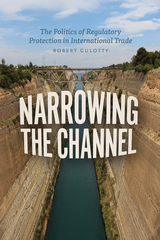
front cover of Narrowing the Channel
Narrowing the Channel
The Politics of Regulatory Protection in International Trade
Robert Gulotty
University of Chicago Press, 2020
While large, multinational corporations have supported the removal of tariffs, behind the scenes these firms have fought for protection in the form of product regulations, including testing, labeling, and registration requirements. Unlike tariffs, these regulations can raise fixed costs, excluding smaller firms from the market and shifting profits toward global giants.

Narrowing the Channel demonstrates that globalization and globalized firms can paradoxically hinder rather than foster economic cooperation as larger firms seek to protect their markets through often unnecessarily strict product regulations. To illustrate the problem of regulatory protectionism, Robert Gulotty offers an in-depth analysis of contemporary rulemaking in the United States and the European Union in the areas of health, safety, and environmental standards. He shows how large firms seek regulatory schemes that disproportionately disadvantage small firms. When multinationals are embedded in the local economy, governments too have an incentive to use these regulations to shift profits back home. Today, the key challenge to governing global trade is not how much trade occurs but who is allowed to participate, and this book shows that new rules will be needed to allow governments to widen the benefits of global commerce and avoid further inequality and market concentration.
 
[more]

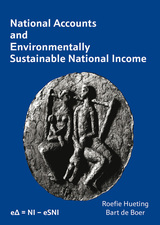
front cover of National Accounts and Environmentally Sustainable National Income
National Accounts and Environmentally Sustainable National Income
Roefie Hueting and Bart de Boer
Eburon Academic Publishers, 2019
Our planet is threatened by a mistaken confidence in erroneously calculated growth. The term “economic growth” can only mean an increase in human welfare, but it is often wrongly identified with production growth that may in fact be destructive to the environment. Thus, while the measures of standard National Income (NI) or Gross Domestic Product (GDP) are useful for many purposes, they are inadequate in guiding environmental policy making. This book develops the corrective concept of an environmentally Sustainable National Income (eSNI). eSNI is defined as the maximally attainable level of production, using the technology of the year under review, whereby the vital environmental functions (possible uses) of the not-human-made physical surroundings remain available for future generations. In order to accurately judge environmental sustainability, the authors show, NI and eSNI must be addressed jointly. Drawing on data from the Netherlands from 1990 to 2015, the authors demonstrate the effectiveness of eSNI and argue that national statistical bureaus around the world should provide this measure to their own policymakers, so that policymaking across the globe might be informed by sound information about both national economies and the global environment.
[more]

front cover of The New Argonauts
The New Argonauts
Regional Advantage in a Global Economy
AnnaLee Saxenian
Harvard University Press, 2006

Like the Greeks who sailed with Jason in search of the Golden Fleece, the new Argonauts--foreign-born, technically skilled entrepreneurs who travel back and forth between Silicon Valley and their home countries--seek their fortune in distant lands by launching companies far from established centers of skill and technology. Their story illuminates profound transformations in the global economy.

Economic geographer AnnaLee Saxenian has followed this transformation, exploring one of its great paradoxes: how the "brain drain" has become "brain circulation," a powerful economic force for development of formerly peripheral regions. The new Argonauts--armed with Silicon Valley experience and relationships and the ability to operate in two countries simultaneously--quickly identify market opportunities, locate foreign partners, and manage cross-border business operations.

The New Argonauts extends Saxenian's pioneering research into the dynamics of competition in Silicon Valley. The book brings a fresh perspective to the way that technology entrepreneurs build regional advantage in order to compete in global markets. Scholars, policymakers, and business leaders will benefit from Saxenian's firsthand research into the investors and entrepreneurs who return home to start new companies while remaining tied to powerful economic and professional communities in the United States.

For Americans accustomed to unchallenged economic domination, the fast-growing capabilities of China and India may seem threatening. But as Saxenian convincingly displays in this pathbreaking book, the Argonauts have made America richer, not poorer.

[more]

front cover of The New International Money Game
The New International Money Game
Robert Z. Aliber
University of Chicago Press, 2002
Previous editions of Robert Z. Aliber's The New International Money Game have been widely acclaimed as the best and most entertaining introduction to the arcane enigmas of international finance. Since its original publication, the book has become a classic primer for beginning students, businesspersons, and anyone interested in a clear explanation of international monetary and financial issues.

With expert knowledge and a wry sense of humor, Aliber demystifies international finance by breaking through the jargon barrier and presenting technical issues in a clear and concise manner. Aliber takes the reader on a tour of a multiplicity of international finance issues, included fixed and floating exchange rates, devaluations, money markets, monetary policy, and the concepts that lie behind the esoteric language of financial economists.

This sixth edition tracks the changes that have taken place in the world economy since the previous editions by exploring financial globalization, postcommunist transition, European integration, and the Asian economic crisis. It is an indispensable and highly readable guide to the complex and increasingly fragile system through which the world's business is financed.

[more]

logo for Harvard University Press
The New Missionaries
Memoirs of a Foreign Adviser in Less-Developed Countries
Richard D. Mallon
Harvard University Press

This volume looks at the changing face of policy advising from the perspective of the author's forty years of work in and for developing countries. Both a personal memoir and an essay on the nature of the development profession, the book will be of particular interest to those just starting their careers as policy advisers.

The main lesson to be learned, says the author, is that "there is no common formula for solving a country's problems. Each society must come up with its own formula, in which economic policy is only one important variable in a complex equation. We missionaries can best help our counterparts carry out this daunting task by teaching more than preaching, and by insisting that they themselves take full responsibility for their recommendations and actions."

Richard D. Mallon is a Fellow Emeritus of the Harvard Institute for International Development. He has provided macroeconomic policy and planning advice in fifteen countries.
[more]

front cover of Nonfuel Minerals
Nonfuel Minerals
Foreign Dependence and National Security
Raymond F. Mikesell
University of Michigan Press, 1987
In an uncertain international economic environment, the United States is increasingly dependent upon foreign suppliers for many things, including nonfuel minerals. This book deals with the major problems and policy issues involved with these minerals. The major problems concern the medium- and long-term availability of world supplies, the competitive structure of nonfuel mineral industries, and the location of world production and consumption. Special attention is given to the production of nonfuel minerals in developing countries and the role of foreign investment in Third World mineral industries. The major policy include reducing U.S. vulnerability to disruption of imports of nonfuel minerals; subsidizing, or protecting against imports, domestic producers of nonfuel minerals; conflicts between environmentalists and the mining industry; and international loans to Third World metal-producing countries. While the treatment of conflicting policy positions is objective, the author comes out on the side of unrestricted competition in world markets, including elimination of domestic subsidies to import barriers, the use of economic stockpiles to reduce vulnerability to import disruption, and maintenance of strict environmental pollution standards. The author is optimistic about the long-run outlook for mineral supplies necessary to meet world requirements for economic growth. United States domestic mineral independence may be unnecessary in terms of national security and too costly to consumers and the environment.
[more]

logo for University of Minnesota Press
Normal and Abnormal International Capital Transfers
Marco Fanno
University of Minnesota Press, 1939

Normal and Abnormal International Capital Transfers was first published in 1939. Minnesota Archive Editions uses digital technology to make long-unavailable books once again accessible, and are published unaltered from the original University of Minnesota Press editions.

[more]

front cover of Nourish the People
Nourish the People
The State Civilian Granary System in China, 1650–1850
Pierre-Etienne Will and R. Bin Wong; With James Lee; Contributions by Jean Oi and Peter Perdue
University of Michigan Press, 1991
The Qing state, driven by Confucian precepts of good government and urgent practical needs, committed vast resources to its granaries. Nourish the People traces the basic practices of this system, analyzes the organizational bases of its successes and failures, and examines variant practices in different regions. The volume concludes with an assessment of the granary system’s social and economic impact and historical comparison with the food supply policies of other states.
[more]


Send via email Share on Facebook Share on Twitter