
 A SCHOLARLY BOOK REPOSITORY
6 start with N start with N

The naval leader has taken centre stage in traditional naval histories. However, while the historical narrative has been fairly consistent the development of various navies has been accompanied by assumptions, challenges and competing visions of the social characteristics of naval leaders and of their function. Whilst leadership has been a constant theme in historical studies, it has not been scrutinised as a phenomenon in its own right. This book examines the critical period in Europe between 1700 -1850, when political, economic and cultural shifts were bringing about a new understanding of the individual and of society. Bringing together context with a focus on naval leadership as a phenomenon is at the heart of this book, a unique collaborative venture between British, French and Spanish scholars. As globalisation develops in the twenty-first century the significance of navies looks set to increase. This volume of essays aims to place naval leadership in its historical context.
An electronic version of this book is freely available, thanks to the support of libraries working with Knowledge Unlatched. KU is a collaborative initiative designed to make high quality books Open Access for the public good. The Open Access ISBN for this book is 978-1-911534-76-1. More information about the initiative and details about KU’s Open Access programme can be found at www.knowledgeunlatched.org
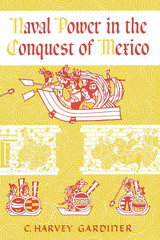
In this account of the naval aspect of Hernando Cortés's invasion of the Aztec Empire, C. Harvey Gardiner has added another dimension to the drama of Spanish conquest of the New World and to Cortés himself as a military strategist. The use of ships, in the climactic moment of the Spanish-Aztec clash, which brought about the fall of Tenochtitlán and consequently of all of Mexico, though discussed briefly in former English-language accounts of the struggle, had never before been detailed and brought into a perspective that reveals its true significance. Gardiner, on the basis of previously unexploited sixteenth-century source materials, has written a historical revision that is as colorful as it is authoritative.
Four centuries before the term was coined, Cortés, in the key years of 1520–1521, used the technique of "total war." He was able to do so victoriously primarily because of his courage in taking a gamble and his brilliance in tactical planning, but these qualities might well have signified nothing without the fortunate presence in his forces of a master shipwright, Martin López.
As the exciting story unrolls, Cortés, López, and the many other participants in the venture of creating and using a navy in the midst of the New World mountains and forests are seen as real personalities, not embalmed historical stereotypes, and the indigenous defenders are revealed as complex human beings facing huge odds. Much of the tale is told in the actual words of the protagonists; Gardiner has probed letters, court records, and other contemporary documents. He has also compared this naval feat of the Spaniards with other maritime events from ancient times to the present.
Naval Power in the Conquest of Mexico as a book was itself the result of an interesting combination of circumstances. C. Harvey Gardiner, as teacher, scholar, and writer, had long been interested in Latin American history generally and Mexican history in particular. During World War II, from 1942 to 1946, he served with the U.S. Navy. As he relates: "One day in early autumn 1945, while loafing on the bow of a naval vessel knifing its way southward in the Pacific a few degrees north of the Equator, my thoughts turned to the naval side of the just-ended conflict, and in time the question emerged, 'I wonder how the little ships and the little men will fare in the eventual record?' Then, because I was eager to return to my civilian life of pursuit of Latin American themes, the concomitant question came: 'I wonder what little fighting ships and minor men of early Latin America have been consigned to the oblivion of historical neglect?' As I began later to rummage my way from Columbus toward modem times, I seized upon the Mexican Conquest as the prime period with pay dirt for the researcher in quest of the answer to that latter question."

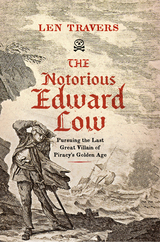
In The Notorious Edward Low: Pursuing the Last Great Villain of Piracy’s Golden Age, historian Len Travers reexamines this critical period through the career of Low, a complicated pirate leader, and his nemesis, Peter Solgard, captain of the Royal Navy warship HMS Greyhound. By the time Solgard, aboard Greyhound, was tracking Low in 1723, the era’s other notable pirates were gone—dead, captured, or disappeared. Drawing on previously unpublished Admiralty records and consulting both contemporary and modern chroniclers, Travers directs readers to much powerful testimony minimized in or excluded from histories of piracy’s “Golden Age,” leveling a critical eye at familiar sources too long accepted at face value. Travers demonstrates that, feared as they certainly were, pirates were largely ordinary seamen trapped in desperate circumstances who, in the end, had little to show for their efforts. Contrary to popular portrayals, for pirates the second decade of the eighteenth century was a time of radically diminishing returns, scant treasure, buried or otherwise, and increasingly successful suppression by state authorities. One by one, safe havens shut out the sea-rovers, who with their depredations in America quickly squandered the sympathy and support they had once enjoyed among common folk. The Notorious Edward Low puts individual actors, from colonial governors to captains to common seamen, at center stage, and reveals how British authorities used new anti-piracy laws to reclaim a measure of authority over their fractious North American colonies—a compelling and meaningful story with its own brand of true-life swashbuckling on the high seas.
READERS
Browse our collection.
PUBLISHERS
See BiblioVault's publisher services.
STUDENT SERVICES
Files for college accessibility offices.
RECENTLY PUBLISHED







UChicago Accessibility Resources
home | accessibility | search | about | contact us
BiblioVault ® 2001 - 2025
The University of Chicago Press