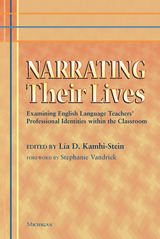
front cover of Narrating Their Lives
Narrating Their Lives
Examining English Language Teachers' Professional Identities within the Classroom
Edited by Lia Kamhi-Stein
University of Michigan Press, 2013

“…a groundbreaking book that will…engage, inform, and connect with present and future teachers and teacher educators.”                 

---Stephanie Vandrick, Foreword to Narrating Their Lives

The field of TESOL has called attention to the ways that the issues of race and ethnicity, language status and power, and cultural background affect second language learners’ identities and, to some degree, those of teachers. In Narrating Their Lives, Kamhi-Stein examines the process of identity construction of classroom teachers so as to make connections between their personal and professional identities and their instructional practices. To do that, she has selected six autobiographical narratives from teachers who were once part of her TESL 570 (Educational Sociolinguistics) class in the MA TESOL program at California State University, Los Angeles. These six narratives cover a surprisingly wide range of identity issues but also touch on broader instructional themes that are part of teacher education programs.

Because of the reflective nature of the narratives—with the teachers using their stories to better understand how their experiences shape what they do in the classroom—this volume includes provocative chapter-opening and reflective chapter-closing questions. An informative discussion of the autobiographical narrative assignment and the TESL 570 course (including supplemental course readings and assessment criteria) is also included.

[more]

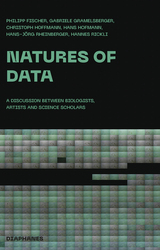
front cover of Natures of Data
Natures of Data
A Discussion between Biologists, Artists and Science Scholars
Philipp Fischer, Gabriele Gramelsberger, Christoph Hoffmann, Hans Hofmann, Hans-Jörg Rheinberger, and Hannes Rickli
Diaphanes, 2020
Computer-based technologies for the production and analysis of data have been an integral part of biological research since the 1990s at the latest. This not only applies to genomics and its offshoots but also to less conspicuous subsections such as ecology. But little consideration has been given to how this new technology has changed research practically. How and when do data become questionable? To what extent does necessary infrastructure influence the research process? What status is given to software and algorithms in the production and analysis of data? These questions are discussed by the biologists Philipp Fischer and Hans Hofmann, the philosopher Gabriele Gramelsberger, the historian of science and biology Hans-Jörg Rheinberger, the science theorist Christoph Hoffmann, and the artist Hannes Rickli. The conditions of experimentation in the digital sphere are examined in four chapters—“Data,” “Software,” “Infrastructure,” and “in silico”—in which the different perspectives of the discussion partners complement one another. Rather than confirming any particular point of view, Natures of Data deepens understanding of the contemporary basis of biological research.
[more]

front cover of Navigating Academia
Navigating Academia
Writing Supporting Genres
John M. Swales & Christine B. Feak
University of Michigan Press, 2011

Navigating Academia is a bit different from the other volumes in the series because it focuses on the supporting genres that facilitate the more public genres that form the building blocks of an academic and/or research career. Included are statements of purpose for graduate school applications, letters of recommendation, and responses to journal reviewers.

One feature that these genres have in common is that they are largely hidden from public view; it is difficult to find examples of them in university libraries. Although guidance about these genres can increasingly be found on the Internet, this guidance is often too general to be helpful in an individual particular situation. This is unfortunate because in almost all cases, the individual needs to be seen as both a serious scholar, researcher, or instructor (whether beginning or getting established) and as a collegial but objective person. As a result, many of these academic communications need to be carefully considered, particularly with regard to the likely effect this communication will have on its intended recipients, who, more often than not, are established figures in the field (as with a job application letter). Because of the roles of these genres, this volume also differs somewhat from the others in that it is as much concerned with social academic practice as it is with more formal academic texts.

This volume represents a revision and expansion of the material on academic correspondence  that appeared in English in Today's Research World.

[more]

front cover of Negotiating Pharmaceutical Uncertainty
Negotiating Pharmaceutical Uncertainty
Women's Agency in a South African HIV Prevention Trial
Eirik Saethre
Vanderbilt University Press, 2017
Telling the story of a clinical trial testing an innovative gel designed to prevent women from contracting HIV, Negotiating Pharmaceutical Uncertainty provides new insight into the complex and contradictory relationship between medical researchers and their subjects. Although clinical trials attempt to control and monitor participants' bodies, Saethre and Stadler argue that the inherent uncertainty of medical testing can create unanticipated opportunities for women to exercise control over their health, sexuality, and social relationships. Combining a critical analysis of the social production of biomedical knowledge and technologies with a detailed ethnography of the lives of female South African trial participants, this book brings to light issues of economic exclusion, racial disparity, and spiritual insecurity in Johannesburg's townships. Built on a series of tales ranging from strategy sessions at the National Institutes of Health to witchcraft accusations against the trial, Negotiating Pharmaceutical Uncertainty illuminates the everyday social lives of clinical trials.

As embedded anthropologists, Saethre and Stadler provide a unique and nuanced perspective of the reality of a clinical trial that is often hidden from view.
[more]

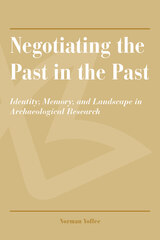
front cover of Negotiating the Past in the Past
Negotiating the Past in the Past
Identity, Memory, and Landscape in Archaeological Research
Norman Yoffee
University of Arizona Press, 2008
Ralph Waldo Emerson once said that “all history becomes subjective,” that, in fact, “properly there is no history, only biography.” Today, Emerson’s observation is hardly revolutionary for archaeologists; it has become conventional wisdom that the present is a battleground where interpretations of the events and meanings of the past are constantly being disputed. What were the major events? Whose lives did these events impact, and how? Who were the key players? What was their legacy? We know all too well that the answers to these questions can vary considerably depending on what political, social, or personal agenda is driving the response.

Despite our keen eye for discerning historical spin doctors operating today, it has been only in recent years that archaeologists have begun exploring in detail how the past was used in the past itself. This volume of ten original works brings critical insight to this frequently overlooked dimension of earlier societies. Drawing on the concepts of identity, memory, and landscape, the contributors show how these points of entry can lead to substantially new accounts of how people understood their lives and why things changed as they did.

Chapters include the archaeologies of the eastern Mediterranean, including Mesopotamia, Iran, Greece, and Rome; prehistoric Greece; Achaemenid and Hellenistic Armenia; Athens in the Roman period; Nubia and Egypt; medieval South India; and northern Maya Quintana Roo. The contributors show how and why, in each society, certain versions of the past were promoted while others were aggressively forgotten for the purpose of promoting innovation, gaining political advantage, or creating a new group identity.

Commentaries by leading scholars Lynn Meskell and Jack Davis blend with newer voices to create a unique set of essays that is diverse but interrelated, exceptionally researched, and novel in its perspectives.
CONTENTS

1. Peering into the Palimpsest: An Introduction to the Volume
Norman Yoffee

2. Collecting, Defacing, Reinscribing (and Otherwise Performing) Memory in the Ancient World
Catherine Lyon Crawford

3. Unforgettable Landscapes: Attachments to the Past in Hellenistic Armenia
Lori Khatchadourian

4. Mortuary Studies, Memory, and the Mycenaean Polity
Seth Button

5. Identity under Construction in Roman Athens
Sanjaya Thakur

6. Inscribing the Napatan Landscape: Architecture and Royal Identity
Lindsay Ambridge

7. Negotiated Pasts and the Memorialized Present in Ancient India: Chalukyas of Vatapi
Hemanth Kadambi

8. Creating, Transforming, Rejecting, and Reinterpreting Ancient Maya Urban Landscapes: Insights from Lagartera and Margarita
Laura P. Villamil

9. Back to the Future: From the Past in the Present to the Past in the Past
Lynn Meskell

10. Memory Groups and the State: Erasing the Past and Inscribing the Present in the Landscapes of the Mediterranean and Near East
Jack L. Davis

About the Editor
About the Contributors
Index
 
[more]

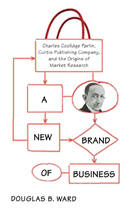
front cover of A New Brand of Business
A New Brand of Business
Charles Coolidge Parlin, Curtis Publishing Company, and the Origins of Market Research
Douglas B. Ward
Temple University Press, 2009

Charles Coolidge Parlin was considered by many to be the founder of market research. Working for the dominant Curtis Publishing Company, he revolutionized the industry by providing added value to advertisers through information about the racial, ethnic, and regional biases of readers and consumers. By maintaining contact with both businesses and customers, Parlin and Curtis publications were able to turn consumer wants into corporate profits.

In A New Brand of Business, Douglas Ward provides an intriguing business history that explains how and why Curtis developed its market research division. He reveals the evolution and impact of Parlin’s work, which understood how readers and advertisers in the emerging consumer economy looked at magazines and advertisements. Ward also examines the cultural and social reasons for the development and use of market research—particularly in regard to Curtis' readership of upper-income elites. The result weaves the stories of Parlin and Curtis into the changes taking place in American business and advertising in the early twentieth century.

[more]

front cover of New Deep Territories
New Deep Territories
A Story of France’s Exploration of the Seafloor
Beatriz Martinez-Rius
University of Chicago Press, 2026
How France integrated the seafloor into its national territory through an interplay of science, technology, and geopolitical ambition during the Cold War.
 
Beneath the surface of the seas and oceans lies a territory as important for human societies as the exposed land and the airspace above them: the seafloor. Our daily life is inextricably linked to the seafloor and its resources, from global telecommunications infrastructure to offshore oil and gas extraction to strategic mineral mining.
 
By focusing on France, a country with an underwater territory seventeen times larger than its emerged lands, New Deep Territories explains how the seafloor emerged as a territory during the second half of the twentieth century. Beatriz Martinez-Rius traces the evolution of the country’s seafloor exploration and the motivations that fueled it from the aftermath of World War I to the late 1970s. In the early 1960s, the seafloor, instead of colonial territories, came to be seen as a source of natural resources. The French government, corporations such as oil companies, and scientists all imagined future uses of the seafloor, and these ever-evolving aspirations drove the development of technologies, techniques, and scientific fields that built up the submerged territory. Government officers and industrial stakeholders massively invested in technoscientific development to prepare for a future reliant on seafloor resources, including oil, gas, and minerals, well before it was technologically possible, economically feasible, and legally acceptable to extract them. The future they envisioned did not arrive, but their investment resulted in an unprecedented understanding of the ocean’s crust. Today, once again, national governments, international organizations, and private stakeholders are turning their attention to the seafloor.
[more]

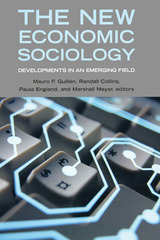
front cover of The New Economic Sociology
The New Economic Sociology
Developments in an Emerging Field
Maruo F. Guillen
Russell Sage Foundation, 2002
As the American economy surged in the 1990s, economic sociology made great strides as well. Economists and sociologists worked across disciplinary boundaries to study the booming market as both a product and a producer of culture, tracing the correlations they saw between economic and social phenomena. In the process, they debated the methodological issues that arose from their interdisciplinary perspectives. The New Economic Sociology provides an overview of these debates and assesses the state of the burgeoning discipline. The contributors summarize economic sociology's accomplishments to date, identifying key theoretical problems and opportunities, and formulating strategies for future research in the field. The book opens with an introduction to the main debates and conceptual approaches in economic sociology. Contributor Neil Fligstein suggests that the current resurgence of interest in economic sociology is due to the way it brings together many sociological subdisciplines including the study of markets, households, labor markets, stratification, networks, and culture. Other contributors examine the role of economic phenomena from a network perspective. Ron Burt, for example, demonstrates how social relationships affect competitive dynamics in the marketplace. A third set of chapters addresses the role of gender in economic sociology. In her chapter, Barbara Reskin rethinks conventional notions about discrimination and points out that the law only covers one type of discrimination, while in recent years social scientists have uncovered other forms of hidden discrimination, which must be addressed as well. The New Economic Sociology also addresses the problem of economic development and change from a sociological perspective. Alejandro Portes and Margarita Mooney elaborate on one of the key emerging concepts in economic sociology, arguing that social capital—as an attribute of communities and regions—can contribute to economic and social well-being by fostering collaboration and entrepreneurship. The contributors concur that economic action must be interpreted through the cultural understandings that lend it stability and meaning. By rendering these often complex debates accessible, The New Economic Sociology makes a significant contribution to this still rapidly developing field, and provides a useful guide for future avenues of research.
[more]

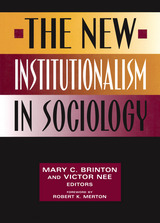
front cover of The New Institutionalism in Sociology
The New Institutionalism in Sociology
Mary C. Brinton
Russell Sage Foundation, 1998
Institutions play a pivotal role in the economic functioning of any society. Understanding the foundation of social norms, networks, and beliefs within institutions is crucial to explaining much of what occurs in modern economies. Recently, economic sociologists have explored how ties among individuals and groups facilitate economic activity, while "institutional economists" have focused on the formal "rules of the game" that regulate economic processes via government and law. The New Institutionalism in Sociology argues that a full understanding of economic life will depend on blending these new lines of research on institutions with traditional sociological insights into the social structures that lie at their core. The contributors to this volume explore many questions about the way institutions emerge and operate. How do grassroots mores and practices evolve to an institutional level? How do institutional norms then regulate economic activity, and what are the advantages of formal versus informal constraints? What are the sources of trust and cooperation in trading markets? What role do cultural networks play in the economic survival of immigrant communities? And how does conflict and bargaining affect the evolution of community norms? The New Institutionalism in Sociology also discusses how economic fluctuations arise from interactions between local agencies and the institutional environment. Among the topics addressed here are the influence of labor activism on the distribution of income, the association between highly competitive "winner-take-all" job markets and increased wage inequality in the United States, and the effect of property right conventions on technical innovation and productivity in pre-industrial England. A final section explores how deeply embedded cultural traditions have colored the transition from state socialism to market economies in Eastern Europe. The New Institutionalism in Sociology establishes a valuable template for a sociological conception of economic organization. Its interdisciplinary paradigm signals an important advance in understanding how institutions shape social and economic life.
[more]

logo for American Library Association
The New Isearch, You Search, We All Learn to Research
A How-To-Do-It Manual for Teaching Research Using Web 2.0 Tools and Digital Resources
American Library Association
American Library Association, 2012

front cover of The Next Generation of Research in Interpreter Education
The Next Generation of Research in Interpreter Education
Pursuing Evidence-Based Practices
Cynthia B. Roy
Gallaudet University Press, 2018
This collection contributes to an emerging body of research in sign language interpreter education, a field in which research on teaching practices has been rare. The Next Generation of Research in Interpreter Education investigates learning experiences and teaching practices that provide the evidence necessary to inform and advance instructional approaches. The five studies included in this volume examine role-play activities in the classroom, the experiences of Deaf students in interpreting programs, reducing anxiety in the interpreting process, mentoring, and self-assessment. The contributors are a nascent group of educators who represent a growing mastery of contemporary standards in interpreter education. Their chapters share a common theme: the experiences and learning environments of students as they progress toward entry into the interpreting profession.
[more]

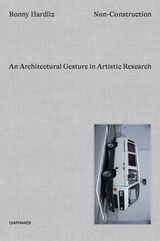
front cover of Non-Construction
Non-Construction
An Architectural Gesture in Artistic Research
Ronny Hardliz
Diaphanes, 2021
By defining a concept of architecture based on the tactile experience and not on construction, this book allows us to explore both discursive practice as the study of architectural art and the integration of architectural art as a discourse of spatial practice. In order to take on this new lens, Non-Construction utilizes a cinematographic documentary image strategy that engages with a critical spatial exploration of current entanglements of art and research at the crossroads of art, theory, and architecture. A challenge to visual conventions, this book offers conceptual and aesthetic insights into spiraling and voiding sensual experiences, with implications for the decolonization of the documentary and cinematographic reaching far beyond architecture.
 
[more]

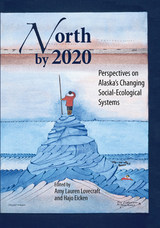
front cover of North by 2020
North by 2020
Perspectives on Alaska’s Changing Social-Ecological Systems
Edited by Amy Lauren Lovecraft and Hajo Eicken
University of Alaska Press, 2011

Originating from a series of workshops held at the Alaska Forum of the Fourth International Polar Year, this interdisciplinary volume addresses a host of current concerns regarding the ecology and rapid transformation of the arctic. Concentrating on the most important linked social-ecological systems, including fresh water, marine resources, and oil and gas development, this volume explores opportunities for sustainable development from a variety of perspectives, among them social sciences, natural and applied sciences, and the arts. Individual chapters highlight expressions of climate change in dance, music, and film, as well as from an indigenous knowledge–based perspective.

[more]

logo for Assoc of College & Research Libraries
Not Just Where to Click
Teaching Students How to Think About Information
Troy A. Swanson
Assoc of College & Research Libraries, 2015

logo for American Library Association
Not Just Where To Click
Teaching Students (Pil #68)
Heather Jagman
American Library Association, 2015


Send via email Share on Facebook Share on Twitter