front cover of Objects of Empire
Objects of Empire
The Ceramic Tradition of the Imperial Inca State
Tamara L. Bray
University of Texas Press, 2025

A comparative, empire-wide study of the ceramics associated with the imperial Inca state, theorizing the role of these highly recognizable vessel forms in legitimizing Inca rule and establishing imperial identities.

The beautiful polychrome ceramics of the imperial Inca state have long been noted for their seemingly repetitive nature but little considered beyond this basic observation. The widespread distribution and general uniformity of the Inca pottery, however, hints at its larger importance to the imperial project. Moving beyond the pervasive "seen one, seen 'em all" mentality, Objects of Empire brings to light the variability and rich semiotic content of imperial Inca vessels. Taking a comparative, empire-wide approach, Tamara Bray identifies the parameters and significance of this variability, and defines the core elements of the imperial state style. She then investigates where, when, and why differences and deviations from the perceived norm occur.

This study illuminates the strategies of territorial expansion and political control that lay at the heart of the Inca juggernaut, as well as the role of objects in the calculus of would-be rulers and subjects. Based on a unique and extensive database of imperial Inca pottery developed through detailed study of archaeologically recovered and museum-based collections, Objects of Empire reveals how power and legitimacy were produced and reproduced under the Inca through the material culture of everyday life.

[more]

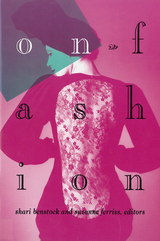
front cover of On Fashion
On Fashion
Benstock, Shari
Rutgers University Press, 1994

Until recently, fashion was considered the "F-word" in intellectual circles, dismissed as unworthy of serious attention. Yet no area of life, no individual moment, stands outside fashion's discourses. Intuitively, we all know that clothing is a language, incessantly communicating messages about its wearer. But who speaks this language, to whom is it addressed, what does it mean, and how are its meanings established and transformed? On Fashion explores the ways our material, political, psychological, sexual, even intellectual lives are woven into fashion's fabric.

This stimulating collection of essays explores fashion's symbolic and figurative functions in photography, cinema, and video; in consumerism, postmodernism, and feminism; in political and material culture; and in self-definition and subjectivity. They demonstrate the pervasive reach of fashion and its expressions.

This collection contains over sixty photographs and illustrations and includes essays by Barbara Brodman, Mary Ann Caws, Linda Benn DeLibero, Hlne Cixous, Diana Fuss, Cheryl Herr, Karla Jay, Deborah Jenson, Douglas Kellner, Ingeborg Majer O'Sickey, Leslie W. Rabine, Andrew Ross, Sonia Rykiel, Carol Shloss, Kaja Silverman, Maureen Turim, and Iris Marion Young.


[more]

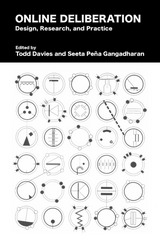
front cover of Online Deliberation
Online Deliberation
Design, Research, and Practice
Edited by Todd Davies and Seeta Peña Gangadharan
CSLI, 2009
Can new technology enhance local, national, and global democracy? Online Deliberation is the first book that attempts to sample the full range of work on online deliberation, forging new connections between academic research, web designers, and practitioners.
Since the most exciting innovations in deliberation have occurred outside of traditional institutions, and those involved have often worked in relative isolation from each other, research conducted on this growing field has to this point neglected the full perspective of online participation. This volume, an essential read for those working at the crossroads of computer and social science, illuminates the collaborative world of deliberation by examining diverse clusters of Internet communities.
[more]

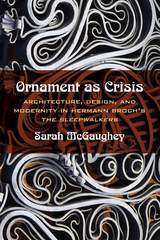
front cover of Ornament as Crisis
Ornament as Crisis
Architecture, Design, and Modernity in Hermann Broch's "The Sleepwalkers"
Sarah McGaughey
Northwestern University Press, 2015

Ornament as Crisis explores the ways in which the novels of Hermann Broch’s Sleepwalkers (Schlafwandler) trilogy participate in and employ the history of architecture and architectural theory.

Beginning with the visual and architectural experiences of the figures in each novel, Sarah McGaughey analyzes the role of architecture in the trilogy as a whole, while discussing work by Broch’s contemporaries on architecture. She argues that The Sleepwalkers allows us to better understand how literature responds and contributes to social, theoretical, and spatial concepts of architecture. Ornament as Crisis guides readers through the spaces of Broch’s mdernist masterpiece and the architectural debates of his time.

[more]


Send via email Share on Facebook Share on Twitter