logo for University of London Press
Obama's Washington
Political Leadership in a Partisan Era
Edited by Clodagh Harrington
University of London Press, 2014
This volume examines the array of challenges facing the Obama administration and the president himself. Topics range from how best to manage a ruptured economy to controlling the budget, the green agenda, foreign policy, and the recalibration of U.S. relations with Britain. It also includes sections on presidential leadership, elections,healthcare, and food poverty. The common theme throughout is the issue of governing in a fractured, unruly political environment, and the accompanying difficulties. Contributing scholars, based at academic institutions in the United States and the UK, offer a range of informed perspectives throughout this engaging work. Packed with detail yet highly accessible, this volume will appeal to those interested in American politics, history, and the political process.
[more]

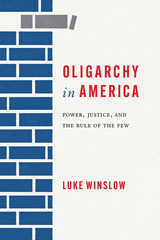
front cover of Oligarchy in America
Oligarchy in America
Power, Justice, and the Rule of the Few
Luke Winslow
University of Alabama Press, 2024

Roderick P. Hart Outstanding Book Award for the National Communication Association's Political Communication Division 

A fascinating survey of the history of political and economic ideas in the US that have led to an increasingly entrenched ultra-rich class of oligarchs.

To an American, oligarchy is something that happens somewhere else. In Oligarchy in America, Luke Winslow reveals oligarchy’s deep intellectual roots and alarming growth in America. The book provides conceptual tools the lack of which have prevented Americans from recognizing oligarchy at home.

Winslow argues that generic labels like “billionaires” for a class of ultra-rich masks the pervasive structures that entrench their power. He introduces instead the concept of democratic oligarchy—an institutional arrangement in which the ultra-rich form a class consciously creating and leveraging state power to accumulate wealth.

Like a master class in political ideas, Winslow traces the intellectual lineage of oligarchy in the US. His lively and compulsively readable survey examines key rhetorical sources such as Herbert Spencer, Andrew Carnegie, Friedrich Hayek, Lewis Powell, Milton Friedman, Charles Koch, Donald Trump, Tucker Carlson, and others.

Oligarchy in America maps the connective web of oligarchic ideas uniting these disparate figures. By offering a lucid framework through which to view oligarchic ideas ambient in American culture, Winslow makes a vital contribution to readers and scholars of communication and rhetorical studies, public address, economics, and political science.
[more]

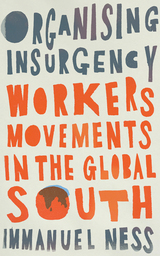
front cover of Organizing Insurgency
Organizing Insurgency
Workers' Movements in the Global South
Immanuel Ness
Pluto Press, 2021
Workers in the Global South are doomed through economic imperialism to carry the burden of the entire world. While these workers appear isolated from the Global North, they are in fact deeply integrated into global commodity chains and essential to the maintenance of global capitalism. Looking at contemporary case studies in India, the Philippines and South Africa, this book affirms the significance of political and economic representation to the struggles of workers against deepening levels of poverty and inequality that oppress the majority of people on the planet. Immanuel Ness shows that workers are eager to mobilise to improve their conditions, and can achieve lasting gains if they have sustenance and support from political organisations. From the Dickensian industrial zones of Delhi to the agrarian oligarchy on the island of Mindanao, a common element remains – when workers organise they move closer to the realisation of socialism, solidarity and equality.
[more]

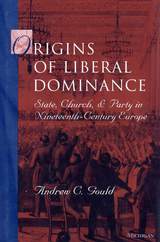
front cover of Origins of Liberal Dominance
Origins of Liberal Dominance
State, Church, and Party in Nineteenth-Century Europe
Andrew C. Gould
University of Michigan Press, 1999
How did liberal movements reshape the modern world? Origins of Liberal Dominance offers a revealing account of how states, churches, and parties joined together in France, Belgium, Switzerland, and Germany to produce fundamentally new forms of organization that have shaped contemporary politics.
Modern political life emerged when liberal movements sought to establish elections, constitutions, free markets, and religious liberty. Yet liberalism even at its height faced strong and often successful opposition from conservatives. What explains why liberals overcame their opponents in some countries but not in others? This book compares successful and unsuccessful attempts to build liberal political parties and establish liberal regimes in France, Belgium, Switzerland, and Germany from 1815 to World War I.
Andrew Gould argues that relations between states and churches set powerful conditions on any attempt at liberalization. Liberal movements that enhanced religious authority while reforming the state won clerical support and successfully built liberal institutions of government. Furthermore, liberal movements that organized peasant backing around religious issues founded or sustained mass movements to support liberal regimes.
Origins of Liberal Dominance offers striking new insights into the emergence of modern states and regimes. It will be of interest to political scientists, sociologists, comparative historians, and those interested in comparative politics, regime change and state-building, democratization, religion and politics, and European politics.
Andrew C. Gould is Assistant Professor of Government and Kellogg Institute Fellow, University of Notre Dame.
[more]

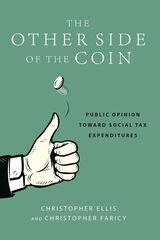
front cover of The Other Side of the Coin
The Other Side of the Coin
Public Opinion toward Social Tax Expenditures
Christopher G. Faricy
Russell Sage Foundation, 2021
Despite high levels of inequality and wage stagnation over several decades, the United States has done relatively little to address these problems—at least in part due to public opinion, which remains highly influential in determining the size and scope of social welfare programs that provide direct benefits to retirees, unemployed workers or poor families. On the other hand, social tax expenditures—or tax subsidies that help citizens pay for expenses such as health insurance or the cost of college and invest in retirement plans—have been widely and successfully implemented, and they now comprise nearly 40 percent of the spending of the American social welfare state.  In The Other Side of the Coin, political scientists Christopher Ellis and Christopher Faricy examine public opinion towards social tax expenditures—the other side of the American social welfare state—and their potential to expand support for such social investment.
 
Tax expenditures seek to accomplish many of the goals of direct government expenditures, but they distribute money indirectly, through tax refunds or reductions in taxable income, rather than direct payments on goods and services or benefits. They tend to privilege market-based solutions to social problems such as employer-based tax subsidies for purchasing health insurance versus government-provided health insurance. Drawing on nationally representative surveys and survey experiments, Ellis and Faricy show that social welfare policies designed as tax expenditures, as opposed to direct spending on social welfare programs, are widely popular with the general public. Contrary to previous research suggesting that recipients of these subsidies are often unaware of indirect government aid—sometimes called “the hidden welfare state”—Ellis and Faricy find that citizens are well aware of them and act in their economic self-interest in supporting tax breaks for social welfare purposes. The authors find that many people view the beneficiaries of social tax expenditures to be more deserving of government aid than recipients of direct public social programs, indicating that how government benefits are delivered affects people’s views of recipients’ worthiness. Importantly, tax expenditures are more likely to appeal to citizens with anti-government attitudes, low levels of trust in government, or racial prejudices. As a result, social spending conducted through the tax code is likely to be far more popular than direct government spending on public programs that have the same goals. 
 
The first empirical examination of the broad popularity of tax expenditures, The Other Side of the Coin provides compelling insights into constructing a politically feasible—and potentially bipartisan—way to expand the scope of the American welfare state.
 
[more]

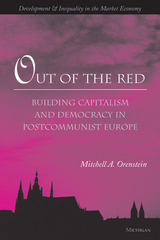
front cover of Out of the Red
Out of the Red
Building Capitalism and Democracy in Postcommunist Europe
Mitchell A. Orenstein
University of Michigan Press, 2001
After the fall of the Berlin Wall, the countries of East-Central Europe embarked on a journey to transform themselves into democratic capitalist societies. Their governments searched for strategies that would allow them to pursue radical market reforms within the context of nascent democratic politics. Poland adopted a neoliberal strategy that attempted to push through as much reform as possible before an antireform backlash could occur. In the Czech Republic, a social liberal strategy for transformation attempted to combine neoliberal macro-economic policies with social democratic measures designed to avert such a backlash.
A detailed analysis of Poland and the Czech Republic suggests that alternation between strategies has been the secret to the success of East-Central European countries.
This comparative case analysis identifies the significance of reform mistakes during transition and the corrective benefits of policy alternation, its claims illustrated with an in-depth study of privatization policy in the two countries.
Mitchell A. Orenstein delves into the historic struggle to build capitalism and democracy during a decade of post- communist transition in East-Central Europe and develops a model that explains why democratic policy alternation may accelerate policy learning under conditions of uncertainty and constraint.
Out of the Red is accessible to a general audience and as such is suitable for both graduate and undergraduate courses on political economy. It will be of particular interest to economists, political scientists, sociologists, students of postcommunism, and anyone interested in the relations between capitalism and democracy in the contemporary world.
Mitchell A. Orenstein is Assistant Professor of Political Science, Syracuse University.
[more]


Send via email Share on Facebook Share on Twitter