
 A SCHOLARLY BOOK REPOSITORY
5 start with O start with O
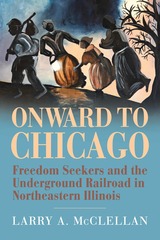
Uncovering stories of the freedom network in northeastern Illinois
Decades before the Civil War, Illinois’s status as a free state beckoned enslaved people, particularly those in Kentucky and Missouri, to cross porous river borders and travel toward new lives. While traditional histories of the Underground Railroad in Illinois start in 1839, and focus largely on the romanticized tales of white men, Larry A. McClellan reframes the story, not only introducing readers to earlier freedom seekers, but also illustrating that those who bravely aided them were Black and white, men and women. McClellan features dozens of individuals who made dangerous journeys to reach freedom as well as residents in Chicago and across northeastern Illinois who made a deliberate choice to break the law to help.
Onward to Chicago charts the evolution of the northeastern Illinois freedom network and shows how, despite its small Black community, Chicago emerged as a point of refuge. The 1848 completion of the I & M Canal and later the Chicago to Detroit train system created more opportunities for Black men, women, and children to escape slavery. From eluding authorities to confronting kidnapping bands working out of St. Louis and southern Illinois, these stories of valor are inherently personal. Through deep research into local sources, McClellan presents the engrossing, entwined journeys of freedom seekers and the activists in Chicagoland who supported them.
McClellan includes specific freedom seeker journey stories and introduces Black and white activists who provided aid in a range of communities along particular routes. This narrative highlights how significant biracial collaboration led to friendships as Black and white abolitionists worked together to provide support for freedom seekers traveling through the area and ultimately to combat slavery in the United States.
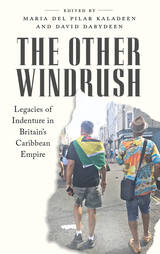

Between the arrival of the HMT Empire Windrush in 1948 and the passing of the 1971 Immigration Act, half a million people came to the UK from the Caribbean. In the aftermath of the 2018 Windrush Scandal, the story of the Windrush Generation is more widely known than ever. But is it the whole story?
Through a series of biographical essays, poems and articles, The Other Windrush shines a light on the hidden history of a 'minority within a minority': Caribbean migrants of Indian and Chinese descent - often the descendants of indentured labourers - who were the 'invisible passengers' of the Windrush generation.
Both highlighting the diversity of their lives and cultural backgrounds, and delving into the largely forgotten history of the system of indenture in the British Caribbean, The Other Windrush makes a unique addition to the literature on migration and the British Empire.
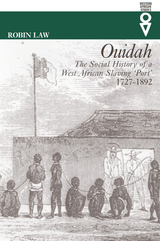
Ouidah, an African town in the Republic of Benin, was the principal precolonial commercial center of its region and the second-most-important town of the Dahomey kingdom. It served as a major outlet for the transatlantic slave trade. Between the seventeenth and the nineteenth centuries, Ouidah was the most important embarkation point for slaves in the region of West Africa known to outsiders as the Slave Coast. This is the first detailed study of the town’s history and of its role in the Atlantic slave trade.
Ouidah is a well-documented case study of precolonial urbanism, of the evolution of a merchant community, and in particular of the growth of a group of private traders whose relations with the Dahomian monarchy grew increasingly problematic over time.
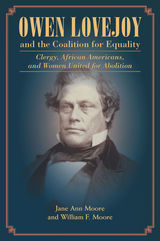
Owen Lovejoy and the Coalition for Equality examines how these three distinct groups merged their agendas into a single antislavery, religious, political campaign for equality with Lovejoy at the helm. Combining scholarly biography, historiography, and primary source material, Jane Ann Moore and William F. Moore demonstrate Lovejoy's crucial role in nineteenth-century politics, the rise of antislavery sentiment in religious spaces, and the emerging congressional commitment to end slavery. Their compelling account explores how the immorality of slavery became a touchstone of political and religious action in the United States through the efforts of a synergetic coalition led by an essential abolitionist figure.
READERS
Browse our collection.
PUBLISHERS
See BiblioVault's publisher services.
STUDENT SERVICES
Files for college accessibility offices.
RECENTLY PUBLISHED



UChicago Accessibility Resources
home | accessibility | search | about | contact us
BiblioVault ® 2001 - 2026
The University of Chicago Press