
 A SCHOLARLY BOOK REPOSITORY
10 start with O start with O

Despite the comprehensively understood severity of environmental problems faced today, progress in the United States is continually stymied, making sustainability feel like a far-off goal. Obstacles to Environmental Progress takes up the structural, political, and cultural forces that routinely hinder progress on existing environmental issues. Addressing problems both small and large, often regardless of whether an issue is controversial, this book illustrates obstacles that manifest in the United States but are globally pertinent. Peter Schulze identifies eighteen practical obstacles that fall into three categories: scientific challenges to anticipating and detecting problems; political and economic factors that interfere with responding; and obstacles to effective responses. This book seeks to hasten environmental progress by bridging academic disciplines to forewarn and forearm those who might otherwise encounter these anti-environmentalist obstacles in an ad-hoc manner.

Dube’s account examines and documents the issues that drew women into the movement, from concerns for themselves and their communities to grander visions for the Ogoni. As she shows, these issues not only influenced organizing in Nigeria but also the diaspora in general and the United States in particular. Ogoni women relied upon nonviolent protest to realize their aims. Dube looks at their campaigns and how their actions reflected their concerns, values, interests, and priorities. The result is a rare account of Black women and transnational organizing for women’s, climate, and environmental justice that merges a history of their involvement with an in-depth analysis of the racial, gender, and ethnic dimensions of the Ogoni Struggle.

Colliding environmental and development interests have shaped national policy reforms supporting both oil development and environmental protection in Alaska. Oil and Wilderness in Alaska examines three significant national policy reform efforts that came out of these conflicts: the development of the Trans-Alaska pipeline, the establishment of a vast system of protected natural areas through the Alaska National Interest Lands Conservation Act, and the reform of the environmental management of the marine oil trade in Alaska to reduce the risk of oil pollution after the Exxon Valdez disaster.
Illuminating the delicate balance and give-and-take between environmental and commercial interests, as well as larger issues shaping policy reforms, Busenberg applies a theoretical framework to examine the processes and consequences of these reforms at the state, national, and international levels. The author examines the enduring institutional legacies and policy consequences of each reform period, their consequences for environmental protection, and the national and international repercussions of reform efforts. The author concludes by describing the continuing policy conflicts concerning oil development and nature conservation in Alaska left unresolved by these reforms. Rich case descriptions illustrate the author’s points and make this book an essential resource for professors and students interested in policies concerning Alaska, the Arctic, oil development, nature conservation, marine oil spills, the policy process, and policy theory.

Based on detailed studies of specific communities and plantations and an analysis of the regional political economy of oil palm, this book unpicks the dominant policy narratives, business strategies, models of land acquisition, and labour-processes. It presents the oil palm industry in Malaysia and Indonesia as a complex system in which land, labour and capital are closely interconnected. Understanding this complex is a prerequisite to developing better strategies to harness the oil palm boom for a more equitable and sustainable pattern of rural development.
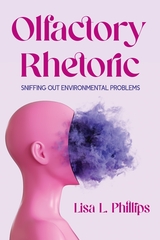
Human senses have the potential to play a significant role in inspiring action to combat climate change. When we smell pollutants in the air, for example, or feel the blast of a polar vortex, we are more likely to act in response to these changes in environmental conditions. However, the sensorium—and particularly our sense of smell—is often downplayed when we consider the rhetorics of environmental crises. In Olfactory Rhetoric, Lisa L. Phillips argues that how we sense the world around us should be a crucial piece of rhetorical evidence when evaluating environmental injustices. Specifically, Phillips elevates olfaction (what we smell) and olfactory rhetoric (how we talk about and experience what we smell) when discussing three contemporary environmental crises set in historically marginalized communities: the Sriracha sauce factory controversy, the Salton Sea scent events, and the Blue Ridge Landfill emissions problem. On a broader scale, Phillips develops an intersectional ecofeminist sensory-rhetorical approach for evaluating how olfactory and sensory persuasions work and how they can be used to advocate for environmental justice and a more breathable future.

The Other Public Lands looks at both differences and common patterns in state land management, including the structure of natural resource agencies. Davis examines the privatization and commercialization of state parks, and the tensions between recreation, revenue and the preservation of biodiversity and natural landscapes. He also raises issues about equity, access, appropriate development, and ecological health. Chapters review state forests, state wildlife management areas, and school trust lands. In addition, the roles of interest groups, the courts, and agency culture and behavior are compared and analyzed both between states and the federal government and between states with differing approaches to specific issues.
As there has been a demand to transfer at least some federal lands to the states, The Other Public Lands concludes with an appraisal of whether states could handle this transfer and goes on to suggest ways to ensure adequate access in an era of increased demand.

Motivated by a deeply rooted sense of place and community, Appalachian women have long fought against the damaging effects of industrialization. In this collection of interviews, sociologist Shannon Elizabeth Bell presents the voices of twelve Central Appalachian women, environmental justice activists fighting against mountaintop removal mining and its devastating effects on public health, regional ecology, and community well-being.
Each woman narrates her own personal story of injustice and tells how that experience led her to activism. The interviews--many of them illustrated by the women's "photostories"--describe obstacles, losses, and tragedies. But they also tell of new communities and personal transformations catalyzed through activism. Bell supplements each narrative with careful notes that aid the reader while amplifying the power and flow of the activists' stories. Bell's analysis outlines the relationship between Appalachian women's activism and the gendered responsibilities they feel within their families and communities. Ultimately, Bell argues that these women draw upon a broader "protector identity" that both encompasses and extends the identity of motherhood that has often been associated with grassroots women's activism. As protectors, the women challenge dominant Appalachian gender expectations and guard not only their families but also their homeplaces, their communities, their heritage, and the endangered mountains that surround them.
30% of the proceeds from the sale of this book will be donated to organizations fighting for environmental justice in Central Appalachia.
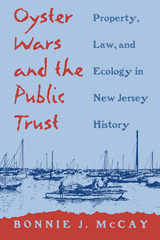
Bonnie McCay now puts that doctrine in perspective by tracing the history of attempts to defend common resources against privatization. She tells of conflicts in New Jersey communities over the last two centuries: how fishermen dependent on common-use rights employed poaching, piracy, and test cases to protect their stake in tidal resources, and how oyster planters whose businesses depended on the enclosure of marine commons engineered test cases of their own to seek protection for their claims.
McCay presents some of the most significant cases relating to fishing and waterfront development, describing how the oyster wars were fought on the waters and in the court rooms—and how the public trust doctrine was sometimes reinterpreted to support private interests. She explores the events and people behind the proceedings and addresses the legal, social, and ecological issues these cases represent.
Oyster Wars and the Public Trust is an important study of contested property rights from an anthropological perspective that also addresses significant issues in political ecology, institutional economics, environmental history, and the evolution of law. It contributes to our understanding of how competing claims to resources have evolved in the United States and shows that making nature a commodity remains a moral problem even in a market-driven economy.


Hailed in the Foreign Service Journal as “a landmark book that should command the attention of every serious student of American diplomacy, international environmental issues, or the art of negotiation,” and cited in Nature for its “worthwhile insights on the harnessing of science and diplomacy,” the first edition of Ozone Diplomacy offered an insider’s view of the politics, economics, science, and diplomacy involved in creating the precedent-setting treaty to protect the Earth: the 1987 Montreal Protocol on Substances That Deplete the Ozone Layer.
The first edition ended with a discussion of the revisions to the protocol in 1990 and offered lessons for global diplomacy regarding the then just-maturing climate change issue. Now Richard Benedick—a principal architect and the chief U.S. negotiator of the historic treaty—expands the ozone story, bringing us to the eve of the tenth anniversary of the Montreal Protocol. He describes subsequent negotiations to deal with unexpected major scientific discoveries and important amendments adding new chemicals and accelerating the phaseout schedules. Implementing the revised treaty has forced the protocol’s signatories to confront complex economic and political problems, including North–South financial and technology transfer issues, black markets for banned CFCs, revisionism, and industry’s willingness and ability to develop new technologies and innovative substitutes. In his final chapter Benedick offers a new analysis applying the lessons of the ozone experience to ongoing climate change negotiations.
Ozone Diplomacy has frequently been cited as the definitive book on the most successful environment treaty, and is essential reading for those concerned about the future of our planet.
READERS
Browse our collection.
PUBLISHERS
See BiblioVault's publisher services.
STUDENT SERVICES
Files for college accessibility offices.
RECENTLY PUBLISHED




UChicago Accessibility Resources
home | accessibility | search | about | contact us
BiblioVault ® 2001 - 2025
The University of Chicago Press