
 A SCHOLARLY BOOK REPOSITORY
3 start with O start with O
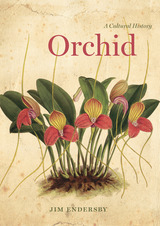
Following the stories of orchids throughout history, Jim Endersby divides our attraction to them into four key themes: science, empire, sex, and death. When it comes to empire, for instance, orchids are a prime example of the exotic riches sought by Europeans as they shaped their plans for colonization. He also reveals how Charles Darwin’s theory of evolution became intimately entangled with the story of the orchid as he investigated their methods of cross-pollination. As he shows, orchids—perhaps because of their extraordinarily diverse colors, shapes, and sizes—have also bloomed repeatedly in films, novels, plays, and poems, from Shakespeare to science fiction, from thrillers to elaborate modernist novels.
Featuring many gorgeous illustrations from the collection of the Royal Botanic Gardens, Kew, Orchid: A Cultural History tells, for the first time, the extraordinary story of orchids and our prolific interest in them. It is an enchanting tale not only for gardeners and plant collectors, but anyone curious about the flower’s obsessive hold on the imagination in history, cinema, literature, and more.

This lively examination of the structure, classification, evolution, and ecology of the Orchidaceae will appeal to anyone with an eye for beauty or a bent for natural history. It will provide professional biologists and amateur orchidists alike with a deeper understanding--and a thoroughly new classification--of this, the largest flowering family in the plant kingdom.
The book is richly illustrated, with 95 color photographs and 99 line drawings emphasizing orchid morphology. But in the context of serious orchidology, aesthetic richness is not a superficial vanity. It is the result of evolutionary processes that demand adaptation and reward diversity, and Dressler's exploration of these mechanisms demonstrates how well the orchids have met the challenge, with over 20,000 species, a geographical range from Sweden to Tierra del Fuego, and, at times, as many as 47 different species on a single tree. But both the orchids' success and their profligate beauty are grounded, in part, in their voluptuary nature, and one of Dressler's most engaging themes is the reproductive adaptations, worthy of a Renaissance courtesan, that orchids use to attract, deceive, and manipulate pollinating insects.
The orchid family is actively evolving, providing rich possibilities for comparative study. Yet no one, whether professional or amateur, could reasonably proceed without first addressing Robert Dressler's The Orchids. Its new classification alone, including pollination biology, phyletic trends, chromosome counts, and generic relationships, will stand as a watershed contribution to the field.
READERS
Browse our collection.
PUBLISHERS
See BiblioVault's publisher services.
STUDENT SERVICES
Files for college accessibility offices.
RECENTLY PUBLISHED






UChicago Accessibility Resources
home | accessibility | search | about | contact us
BiblioVault ® 2001 - 2026
The University of Chicago Press