
 A SCHOLARLY BOOK REPOSITORY
22 start with O start with O
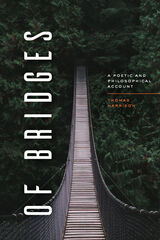
Offers a philosophical history of bridges—both literal bridges and their symbolic counterparts—and the acts of cultural connection they embody.
“Always,” wrote Philip Larkin, “it is by bridges that we live.” Bridges represent our aspirations to connect, to soar across divides. And it is the unfinished business of these aspirations that makes bridges such stirring sights, especially when they are marvels of ingenuity.
A rich compendium of myths, superstitions, and literary and ideological figurations, Of Bridges organizes a poetic and philosophical history of bridges into nine thematic clusters. Leaping in lucid prose between distant times and places, Thomas Harrison questions why bridges are built and where they lead. He probes links forged by religion between life’s transience and eternity as well as the consolidating ties of music, illustrated by the case of the blues. He investigates bridges in poetry, as flash points in war, and the megabridges of our globalized world. He illuminates real and symbolic crossings facing migrants each day and the affective connections that make persons and societies cohere. In readings of literature, film, philosophy, and art, Harrison engages in a profound reflection on how bridges form and transform cultural communities. Of Bridges is a mesmerizing, vertiginous tale of bridges both visible and invisible, both lived and imagined.
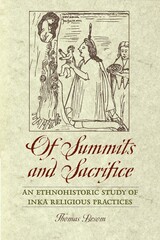
In perhaps as few as one hundred years, the Inka Empire became the largest state ever formed by a native people anywhere in the Americas, dominating the western coast of South America by the early sixteenth century. Because the Inkas had no system of writing, it was left to Spanish and semi-indigenous authors to record the details of the religious rituals that the Inkas believed were vital for consolidating their conquests. Synthesizing these arresting accounts that span three centuries, Thomas Besom presents a wealth of descriptive data on the Inka practices of human sacrifice and mountain worship, supplemented by archaeological evidence.
Of Summits and Sacrifice offers insight into the symbolic connections between landscape and life that underlay Inka religious beliefs. In vivid prose, Besom links significant details, ranging from the reasons for cyclical sacrificial rites to the varieties of mountain deities, producing a uniquely powerful cultural history.
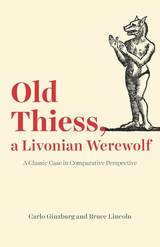
In this book, eminent scholars Carlo Ginzburg and Bruce Lincoln offer a uniquely comparative look at the trial and startling testimony of Old Thiess. They present the first English translation of the trial transcript, in which the man’s own voice can be heard, before turning to subsequent analyses of the event, which range from efforts to connect Old Thiess to shamanistic practices to the argument that he was reacting against cruel stereotypes of the “Livonian werewolf” a Germanic elite used to justify their rule over the Baltic peasantry. As Ginzburg and Lincoln debate their own and others’ perspectives, they also reflect on broader issues of historical theory, method, and politics. Part source text of the trial, part discussion of historians’ thoughts on the case, and part dialogue over the merits and perils of their different methodological approaches, Old Thiess, a Livonian Werewolf opens up fresh insight into a remarkable historical occurrence and, through it, the very discipline of history itself.
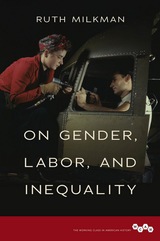
Milkman's introduction frames a career-spanning scholarly project: her interrogation of historical and contemporary intersections of class and gender inequalities in the workplace, and the efforts to challenge those inequalities. Early chapters focus on her pioneering work on women's labor during the Great Depression and the World War II years. In the book's second half, Milkman turns to the past fifty years, a period that saw a dramatic decline in gender inequality even as growing class imbalances created greater-than-ever class disparity among women. She concludes with a previously unpublished essay comparing the impact of the Great Depression and the Great Recession on women workers.
A first-of-its-kind collection, On Gender, Labor, and Inequality is an indispensable text by one of the world's top scholars of gender, equality, and work.

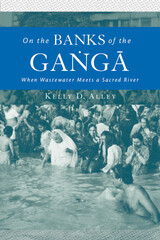
Alley investigates ethno-semantic, discursive, and institutional data to flesh out the interplay between religious, scientific, and official discourses about the river Ganga. Using a new outward layering methodology, she points out that anthropological analysis must separate the historical and discursive strands of the debates concerning waste and sacred purity in order to reveal the cultural complexities that surround the Ganga. Ultimately, she addresses a deeply rooted cultural paradox: if the Ganga river is considered sacred by Hindus across India, then why do the people allow it to become polluted?
Examining areas of contemporary concern such as water usage and urban waste management in the most populated river basin in the world, this book will appeal to anthropologists and readers in religious, environmental, and Asian studies, as well as geography and law.
Kelly D. Alley is Associate Professor and Director of Anthropology at Auburn University. In addition to being a prolific writer, she has conducted research on public culture and environmental issues in northern India for over a decade. Alley is currently overseeing a project to ameliorate river pollution problems in India.

When Sigmund Freud published his theory of the unconscious, in 1899, he popularized an idea that had fascinated generations of Jewish philosophers before him. In this book, Clémence Boulouque charts the development of the pre-Freudian unconscious from subcultural inquiry to dominant discourse during the long nineteenth century. Although Freud’s scientific notion differed from Schelling’s mythical description of the abyss from which creation springs, its resonance with older ideas was celebrated as an opportunity to express specifically Jewish contributions to modernity. Indeed, Boulouque shows that the pre-Freudian unconscious emerged from conversations in Jewish mysticism about otherness and coexistence. In the hopeful years before World War I, Boulouque argues, such reflections offered the possibility of emancipation not only to Jews but to all.
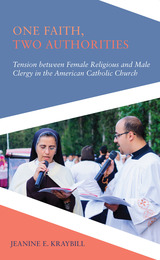
While female religious have grown to possess a sense of personal authority in issues impacting the laity, and have come to engage in social-issue-oriented activities, religious institutions have traditionally viewed men as the decision-makers. One Faith, Two Authorities examines the tensions of policy and authority within the gendered nature of the Catholic Church.
Jeanine Kraybilllooks at the influence of Catholic elites—specifically within the U.S. Conference of Catholic Bishops and the Leadership Conference of Women Religious—and their opinions on public policy and relevant gender dynamics with regard to healthcare, homosexuality, immigration, and other issues. She considers the female religious’ inclusive positions as well as their opposition to ACA for bills that would be rooted in institutional positions on procreation, contraception, or abortion. Kraybill also systematically examines the claims of the 2012 Doctrinal Assessment against the Leadership Conference of Women Religious.
One Faith, Two Authorities considerswhether the sisters and the male clergy are in fact in disagreement about social justice and healthcare issues and/or if women religious have influence.
At its core, this work presents a refreshing synthesis of modern psychological theory and the enduring relevance of Swedenborg’s 18th-century spiritual philosophy. The authors skillfully demonstrate how IFS, a cutting-edge therapeutic model developed by Richard Schwartz, aligns with and is enriched by Swedenborg's spiritual teachings. This unexpected pairing yields fresh insights into the nature of the human mind and spirit, providing readers with a comprehensive approach to understanding and nurturing their inner world.
Key Themes and Insights:
1. The Multiplicity of the Human Mind: Explore the concept that we are composed of various "parts" or aspects, each with its own perspective and purpose. This understanding challenges the notion of a monolithic self, opening up new avenues for self-discovery and healing.
2. Interconnectedness of Psychological and Spiritual Realities: Discover how our inner psychological landscape is intricately linked with spiritual dimensions. This holistic view offers a more complete picture of human experience and potential.
3. Inherent Goodness of All Parts: Learn to appreciate and work with all aspects of yourself, recognizing that even challenging parts serve a protective function. This compassionate approach fosters self-acceptance and inner harmony.
4. Transformative Power of Self-Exploration: Engage in practical techniques for inner dialogue and self-reflection, drawing from both IFS methodology and Swedenborg's spiritual practices.
5. Universal Framework for Spirituality in Psychotherapy: For mental health professionals, this book offers a non-denominational approach to incorporating spiritual dimensions into therapeutic practice, enhancing the depth and efficacy of treatment.
6. Accessible Application of Swedenborg's Teachings: For those familiar with Swedenborg's work, discover how his spiritual insights can be practically applied to personal growth and healing through the user-friendly lens of IFS.
Who Will Benefit:
- Mental Health Professionals: Gain valuable insights into integrating spirituality into your practice, enhancing your therapeutic toolbox with a unique, holistic approach.
- Spiritual Seekers: Deepen your understanding of the connection between psychological processes and spiritual growth, finding new pathways to inner peace and self-realization.
- Academics and Students: Explore a novel intersection of psychology and spirituality, opening up new areas for research and contemplation.
- Individuals Seeking Personal Growth: Whether struggling with inner conflicts or simply looking to enhance your self-understanding, this book offers practical wisdom and techniques for personal transformation.
Why This Book Matters:
In a world where mental health and spiritual well-being are increasingly recognized as interconnected, Opening the Inner World: Spiritual Healing, Internal Family Systems, and Emanuel Swedenborg offers a timely and invaluable contribution. It bridges the often-perceived gap between psychology and spirituality, providing a comprehensive framework for understanding the human experience in all its complexity.
The authors bring a wealth of knowledge and experience to this work. Chelsea Odhner, with her background in both IFS and Swedenborg's teachings, provides a unique bridging perspective. Robert Falconer contributes deep insights from his extensive work with IFS, porosity of mind, and trauma healing. Jonathan S. Rose, with his scholarly expertise in Swedenborg's writings, ensures a nuanced and accurate representation of Swedenborg's spiritual philosophy.
This book is not just a theoretical exploration; it's a practical guide to inner transformation. Readers will find themselves equipped with new tools for self-exploration, healing, and spiritual growth. The conversational style and real-world examples make complex concepts accessible, inviting readers to engage deeply with the material and apply it to their own lives.
Published by the Swedenborg Foundation, a respected non-profit organization with a long history of promoting spiritual inquiry and growth, this book represents a significant contribution to the fields of psychology and spirituality. It continues the foundation's tradition of offering thoughtful, life-changing content that promotes holistic well-being and spiritual understanding.
Opening the Inner World: Spiritual Healing, Internal Family Systems, and Emanuel Swedenborg is more than just a book; it's an invitation to a deeper understanding of yourself and your place in the spiritual and psychological landscape of existence. Whether you're new to these concepts or a seasoned explorer of the mind and spirit, this work offers fresh perspectives and practical wisdom for your journey of self-discovery and healing.
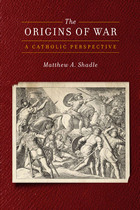
Debate rages within the Catholic Church about the ethics of war and peace, but the simple question of why wars begin is too often neglected. Catholics’ assumptions about the causes of conflict are almost always drawn uncritically from international relations theory—a field dominated by liberalism, realism, and Marxism—which is not always consistent with Catholic theology.
In The Origins of War, Matthew A. Shadle examines several sources to better understand why war happens. His retrieval of biblical literature and the teachings of figures from church tradition sets the course for the book. Shadle then explores the growing awareness of historical consciousness within the Catholic tradition—the way beliefs and actions are shaped by time, place, and culture. He examines the work of contemporary Catholic thinkers like Pope John Paul II, Jacques Maritain, John Courtney Murray, Dorothy Day, Brian Hehir, and George Weigel. In the constructive part of the book, Shadle analyzes the movement within international relations theory known as constructivism—which proposes that war is largely governed by a set of socially constructed and cultural influences. Constructivism, Shadle claims, presents a way of interpreting international politics that is highly amenable to a Catholic worldview and can provide a new direction for the Christian vocation of peacemaking.

Father Paul M. Washington rose to local and nation prominence as an unflagging supporter of civil and women's rights. One of a handful of black priests in a traditionally white church, he fought for understanding among all people, eventually serving twenty-five years as the Rector of the Episcopal Church of the Advocate in an inner-city Philadelphia neighborhood. Though his ideas about equality often went against the views of the Episcopal church leadership, he rejected threats of withdrawn funding or retaliation to follow his heart and his theology.
Father Washington's story is a window of insight into the struggles for justice and dignity in the latter half of the twentieth century. In the tumultuous 1960s he supported the Black Power movement, the Black Panther Party, and many other groups working for peace and justice, providing meeting places and guidance. He often found himself in the midst of racial disturbances—the riots on Susquehanna Avenue in 1963 and on Columbia Avenue in 1964, in front of the Board of Education where high school students protested the Eurocentric curriculum, and outside the walls of Girard College where citizens and civic leaders demonstrated against the school's exclusion of black children. In the 1980s, he helped Philadelphia city officials negotiate with MOVE members and was a vocal supporter of Ramona Africa, fighting for her release from prison. It was in his church on the corner of 18th and Diamond Streets that women were first ordained a priests in the Episcopal church. And it was one of his congregation, Barbara Harris, who became the first female Episcopal bishop.
In his evocative voice, Father Washington describes the pivotal events of his life and how each impacted upon his evolving ideas of the relationship between religion and justice. Spanning seven decades, his account is at once an insightful and unique historical account of political action, of the reformation of the church, of the changing urban landscape, and of a life graced by leadership and spiritual enlightenment.
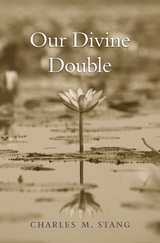
What if you were to discover that you were not entirely you, but rather one half of a whole, that you had, in other words, a divine double? In the second and third centuries CE, this idea gripped the religious imagination of the Eastern Mediterranean, providing a distinctive understanding of the self that has survived in various forms throughout the centuries, down to the present. Our Divine Double traces the rise of this ancient idea that each person has a divine counterpart, twin, or alter-ego, and the eventual eclipse of this idea with the rise of Christian conciliar orthodoxy.
Charles Stang marshals an array of ancient sources: from early Christianity, especially texts associated with the apostle Thomas “the twin”; from Manichaeism, a missionary religion based on the teachings of the “apostle of light” that had spread from Mesopotamia to the Mediterranean; and from Neoplatonism, a name given to the renaissance of Platonism associated with the third-century philosopher Plotinus. Each of these traditions offers an understanding of the self as an irreducible unity-in-duality. To encounter one’s divine double is to embark on a path of deification that closes the gap between image and archetype, human and divine.
While the figure of the divine double receded from the history of Christianity with the rise of conciliar orthodoxy, it survives in two important discourses from late antiquity: theodicy, or the problem of evil; and Christology, the exploration of how the Incarnate Christ is both human and divine.
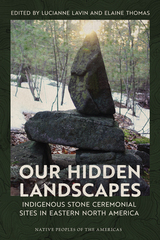
This volume introduces readers to eastern North America’s Indigenous ceremonial stone landscapes (CSLs)—sacred sites whose principal identifying characteristics are built stone structures that cluster within specific physical landscapes. Our Hidden Landscapes presents these often unrecognized sites as significant cultural landscapes in need of protection and preservation.
In this book, Native American authors provide perspectives on the cultural meaning and significance of CSLs and their characteristics, while professional archaeologists and anthropologists provide a variety of approaches for better understanding, protecting, and preserving them. The chapters present overwhelming evidence in the form of oral tradition, historic documentation, ethnographies, and archaeological research that these important sites created and used by Indigenous peoples are deserving of protection.
This work enables archaeologists, historians, conservationists, foresters, and members of the general public to recognize these important ritual sites.
Contributors
Nohham Rolf Cachat-Schilling
Robert DeFosses
James Gage
Mary Gage
Doug Harris
Julia A. King
Lucianne Lavin
Johannes (Jannie) H. N. Loubser
Frederick W. Martin
Norman Muller
Charity Moore Norton
Paul A. Robinson
Laurie W. Rush
Scott M. Strickland
Elaine Thomas
Kathleen Patricia Thrane
Matthew Victor Weiss

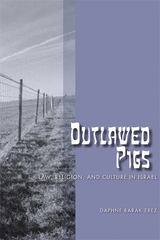
Daphne Barak-Erez specifically traces the course of two laws, one that authorized municipalities to ban the possession and trading in pork within their jurisdiction and another law that forbids pig breeding throughout Israel, except for areas populated mainly by Christians. Her analysis offers a comprehensive, decade-by-decade discussion of the overall relationship between law and culture since the inception of the Israeli nation-state.
By examining ever-fluctuating Israeli popular opinion on Israel's two laws outlawing the trade and possession of pigs, Barak-Erez finds an interesting and accessible way to explore the complex interplay of law, religion, and culture in modern Israel, and more specifically a microcosm for the larger question of which lies more at the foundation of Israeli state law: religion or cultural tradition.
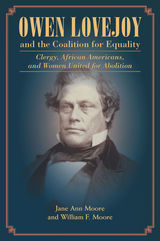
Owen Lovejoy and the Coalition for Equality examines how these three distinct groups merged their agendas into a single antislavery, religious, political campaign for equality with Lovejoy at the helm. Combining scholarly biography, historiography, and primary source material, Jane Ann Moore and William F. Moore demonstrate Lovejoy's crucial role in nineteenth-century politics, the rise of antislavery sentiment in religious spaces, and the emerging congressional commitment to end slavery. Their compelling account explores how the immorality of slavery became a touchstone of political and religious action in the United States through the efforts of a synergetic coalition led by an essential abolitionist figure.
READERS
Browse our collection.
PUBLISHERS
See BiblioVault's publisher services.
STUDENT SERVICES
Files for college accessibility offices.
RECENTLY PUBLISHED



UChicago Accessibility Resources
home | accessibility | search | about | contact us
BiblioVault ® 2001 - 2025
The University of Chicago Press