
 A SCHOLARLY BOOK REPOSITORY
7 start with O start with O
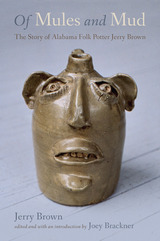
The life and times of Alabama folk potter Jerry Brown, as told in his own words
Born in 1942, Jerry Brown helped out in his father’s pottery shop as a young boy. There he learned the methods and techniques for making pottery in a family tradition dating back to the 1830s. His responsibilities included tending the mule that drove the mill that was used to mix clay (called “mud” by traditional potters). Business suffered as demand for stoneware churns, jugs, and chamber pots waned in the postwar years, and manufacture ceased following the deaths of Brown’s father and brother in the mid-1960s. Brown turned to logging for his livelihood, his skill with mules proving useful in working difficult and otherwise inaccessible terrain. In the early 1980s, he returned to the family trade and opened a new shop that relied on the same methods of production with which he had grown up, including a mule-powered mill for mixing clay and the use of a wood-fired rather than gas-fueled kiln.
Folklorist Joey Brackner met Brown in 1983, and the two quickly became close friends who collaborated together on a variety of documentary and educational projects in succeeding years—efforts that led to greater exposure, commercial success, and Brown’s recognition as a National Heritage Fellow by the National Endowment for the Arts. For years, Brown spoke of the urge to write his life story, but he never set pen to paper. In 2015, Brackner took the initiative and interviewed Brown, recording his life story over the course of a weekend at Brown’s home. Of Mules and Mud is the result of that marathon interview session, conducted one year before Brown passed away.
Brackner has captured Jerry Brown’s life in his own words as recounted that weekend, lightly edited and elaborated. Of Mules and Mud is illustrated with photos from all phases of Brown’s life, including a color gallery of 28 photos of vessel forms made by Brown throughout his career that collectors of folk pottery will find invaluable.

On Good Ground was first published in 1951. Minnesota Archive Editions uses digital technology to make long-unavailable books once again accessible, and are published unaltered from the original University of Minnesota Press editions.
Besides providing a vivid yet scholarly account of a religious order, this book reflects much of the regional history of the area where the nuns have done their work. The order maintains the College of St. Catherine and numerous other institutions in Minnesota and North Dakota.
To many Native American cultures, songs and stories are dramatic enactments of reality, and words bring reality into existence. In this chapter from his award-winning book, The Anguish of Snails, Toelken thoughtfully approaches a number of stories from Native American traditions, discussing how narratives can be touchstones of shared values among closely associated traditional people and how songs and stories go far beyond an evening's entertainment or "lessons” about life. A traditional narrative can be a culturally structured way of thinking and of experiencing the patterns that make culture real.
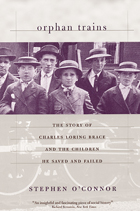
A powerful blend of history, biography, and adventure, Orphans Trains remains the definitive work on this little-known episode in American history.
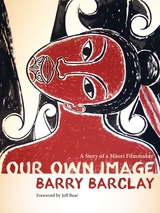
Acclaimed Maori filmmaker Barry Barclay’s Our Own Image relates the experiences of making his documentaries and his critically acclaimed feature-length film Ngati (1987), widely credited as the first fiction feature by a member of an indigenous community. Barclay details his views on the process of filmmaking within his own Maori community and discusses how his work differed from popular cinema, advocating for indigenous control, participation, and perspectives in media.
Our Own Image gives an in-depth depiction of the changes Barclay’s approach contributed to the field of documentaries, as well as displaying the respect for community Barclay brought to his filming technique. His insistence on letting people speak for themselves demonstrated authenticity to audiences, creating awareness of indigenous cinema in New Zealand and worldwide.
READERS
Browse our collection.
PUBLISHERS
See BiblioVault's publisher services.
STUDENT SERVICES
Files for college accessibility offices.
RECENTLY PUBLISHED



UChicago Accessibility Resources
home | accessibility | search | about | contact us
BiblioVault ® 2001 - 2026
The University of Chicago Press